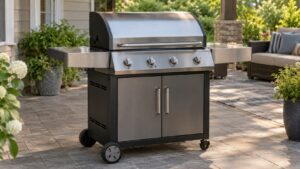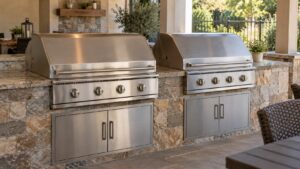
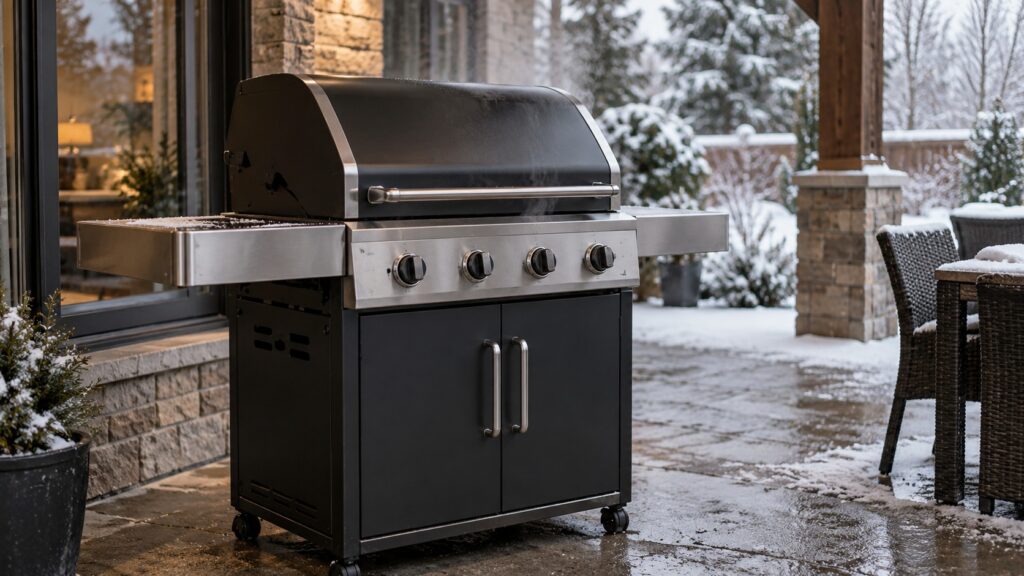
DCS grill winter use is possible for many cooks, and most of the trouble in cold weather comes from three things: a propane tank that has lost pressure, snow, ice and moisture on the grill, and the temptation to move the grill somewhere sheltered that is not safe. This guide covers how to prepare the grill and the cook for cold weather, what to expect from the heat and the fuel, how to light it safely and what to avoid. It sticks to the general habits that apply to any gas grill outdoors. The temperature range your grill is rated for, and the lighting steps for your model, are in your owner’s manual.
Can you use a DCS grill in cold weather?
Many people do. A gas grill is a simple machine that burns gas, and it will light in the cold as long as it gets gas and air. What changes in winter is how much heat reaches the food. Cold air, wind and a cold grill body all take heat away, and a propane tank that is very cold may not deliver the pressure the burners need. Check your owner’s manual for the temperature limits of your grill and for any cold-weather guidance, and follow them. If you cook in winter, expect longer preheating and plan for a cook that takes a little more attention than in July.
How does cold affect the fuel?
Propane and natural gas behave differently in the cold. Our natural gas versus propane guide notes that propane tanks can lose vapor pressure in very cold weather, while natural gas from a line is unaffected in the same way. If your grill runs on propane and the heat is weak, the tank may be the reason. A tank that is nearly empty also struggles to keep pressure under load. Start the season with a tank that has enough gas for the cook and keep a spare ready, so you are not changing a tank in the dark and the cold, and connect it only as the manual describes.
If the grill lights but never gets hot, our guide on low heat troubleshooting lists the usual causes, including the propane regulator safety state, clogged burners and gas flow. That guide explains that opening the propane tank valve too quickly can trip the regulator’s safety bypass so that the grill burns weakly; how to open the valve and reset the regulator on your grill is in your owner’s manual.
How should you prepare the grill and the area?
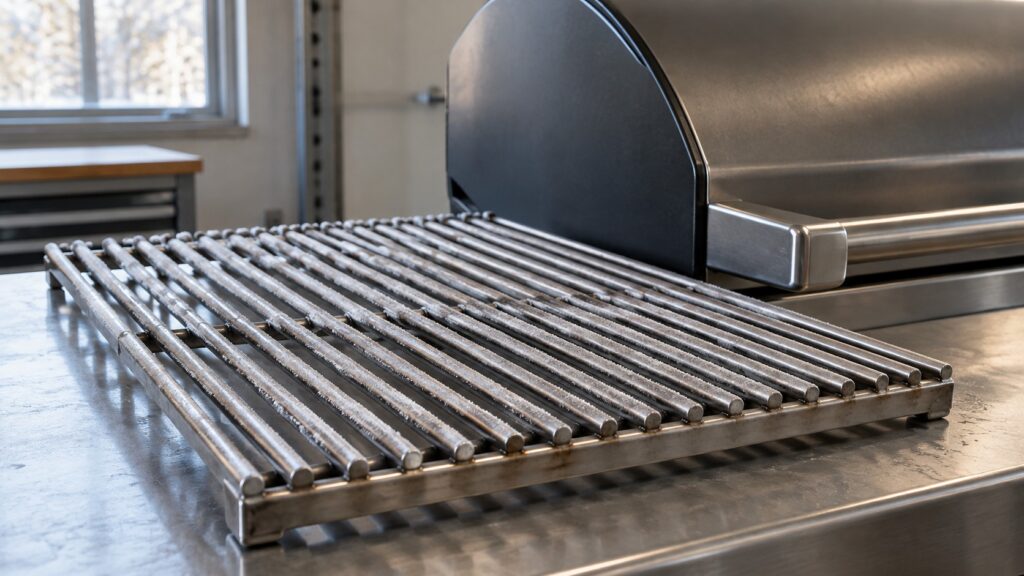
Clear snow from the top and around the grill, and brush it off the hood so that it does not fall into the cooking area when you open it. Check that the path to the grill is safe, with no ice underfoot, and that the grill is stable. Wipe moisture off the grates and the knobs. Look at the burners and the area around them for ice, and for the spiders’ webs and debris that can cause poor lighting. Keep the grill where wind cannot blow directly into the burners, but keep it in the open air.
Do not move the grill into a garage, a carport, a porch with walls or any covered space to get out of the weather. A gas grill produces carbon monoxide and needs open air, and a closed space adds a serious fire risk. Do not put it under an overhang that traps heat, either. Our grease tray cleaning guide is worth following before winter, because cold grease sets hard and a full tray is a fire risk.
How do you light and preheat in the cold?
Follow the lighting steps in your owner’s manual. Open the hood before you light and light the grill only as the manual describes. Our guide on how to light a DCS grill safely covers this in detail, including what to do if the burner does not catch. If a burner does not light, turn the knob off and do not keep trying; if you smell gas, follow the steps in the next section.
Allow extra time for the grill to come up to temperature, and give the grates time to dry out. A cold grill body takes longer to heat than a warm one. Do not leave the grill unattended while it heats. When you cook, open the hood only as often as you need to, because each opening lets out heat that is hard to recover in cold air. A thermometer for the food gives you a better guide than the clock.
What if you smell gas or something goes wrong?
If you smell gas, do not light anything and do not switch anything on or off. Leave the area and call the gas company or 911 from outside. Do not look for the leak yourself. Our gas smell safety steps explain what to do. Gas connections and parts are for a qualified professional only. If a burner will not light, the flame is yellow or the igniter has stopped working, our guide on weather or appliance faults helps you decide whether the cold is to blame.
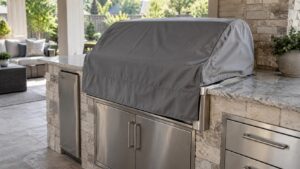
After cooking, turn the knobs off and close the gas supply as your manual describes, let the grill cool and brush off snow and moisture before you cover it. We are an independent repair company, not the manufacturer. If something does not work as it should after the cold season, our grill repair page explains how a visit works, and you can schedule a visit online.