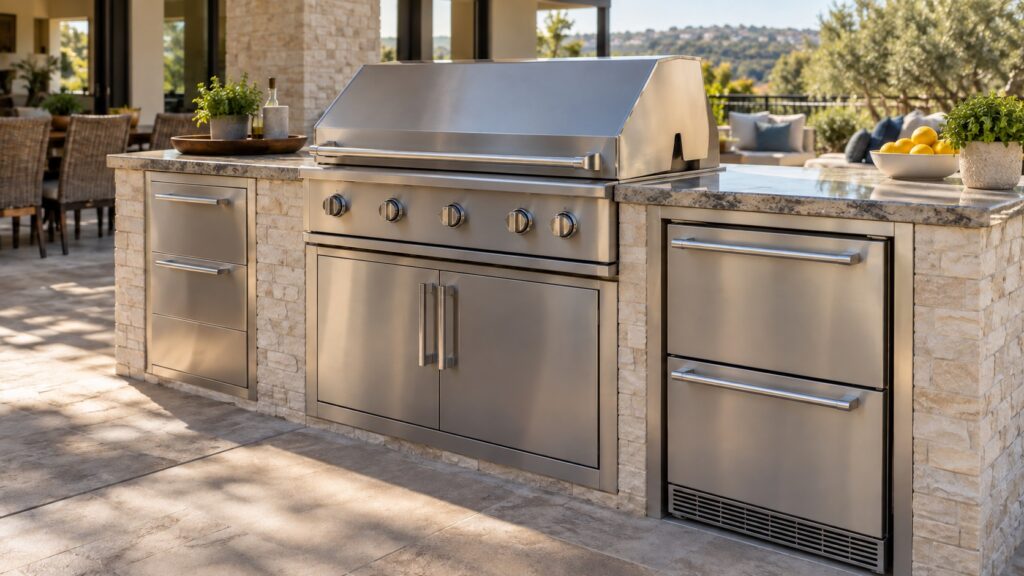
DCS outdoor appliances live somewhere no indoor appliance would survive a season: rain, sun, salt, freezing nights and a hundred-degree swing between February and August. A large share of the service calls we take on them are not failures at all — they are the weather doing what weather does, and the appliance responding correctly. Telling the two apart saves a visit, and more often saves you from replacing a part that was working.
The ambient temperature question nobody asks
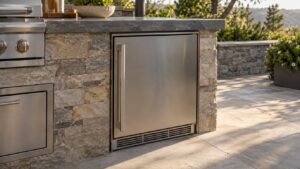
Outdoor refrigeration is rated for an ambient range, and the top of that range is lower than a patio in direct August sun. A beverage center in an uncovered island, with the sun on its door from noon onward, is being asked to hold a set point against conditions it was never specified for. It runs continuously, misses its temperature in the afternoon and recovers overnight — and from the kitchen that looks exactly like a failing compressor.
The tell is the pattern. A weather problem follows the day: worse in the afternoon, better by morning, worse in a heat wave, fine in October. A component failure does not care what time it is. Before pricing anything, note when the problem happens for three days. Our guides on temperature setup and how these units work cover what the appliance is actually capable of.
Ventilation matters more outdoors, not less
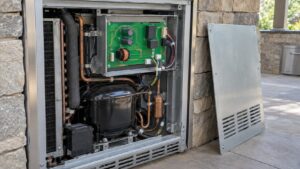
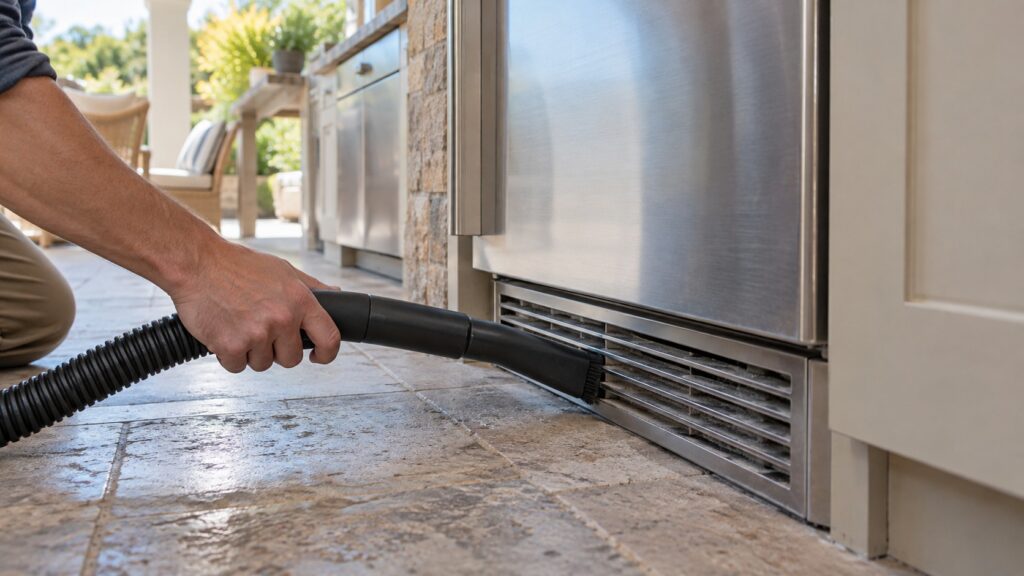
An outdoor refrigerator or beverage center rejects heat through a grille, usually at the base, and in an outdoor island that grille faces whatever the island was built with. A solid decorative panel across the front, a run of stone that was extended after installation, or simply years of leaf litter and cobweb at ankle height all do the same thing: they stop the appliance getting rid of its own heat.
This is the single most common thing we find behind a complaint about an outdoor unit running constantly. It is also the cheapest thing on this page to rule out — a vacuum and five minutes. Our page on outdoor refrigerator fault codes covers what the display is reporting once you have done that.
Water: where it belongs and where it does not
These appliances are built to be rained on. They are not built to have water sitting in places it cannot leave. The distinction matters because the symptoms of the second look like electrical faults:
- Condensation inside a door on a humid morning is normal and clears. Standing water in the base of a cabinet is not.
- A grill left uncovered collects rain in burner tubes and venturis; the next lighting attempt is a burner that pops, burns yellow or will not light at all.
- An igniter that clicks and will not spark after rain is usually damp rather than dead. Dry it and try again the next day before ordering anything.
- Water inside an electrical enclosure is never weather doing its job. That is a seal or a drain path that has failed, and it is a service call.
Cold, and the things that only fail in winter
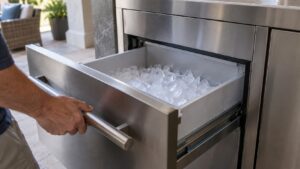
Freezing weather produces a specific set of symptoms that alarm people every spring. Door gaskets stiffen and stop sealing until they warm up. Grease in a knob mechanism thickens, and a knob that turned easily in September needs a firm hand in January. Water lines to an outdoor ice maker or beverage center freeze, which stops ice production entirely without anything having broken.
Some of that is simply seasonal. What is not seasonal is a water line that froze because it was never drained — that is how lines split, and the damage appears as a leak in spring rather than as a problem in winter. Our winterizing guide covers the drain-down, and it is worth doing even in a mild climate.
Rust is not corrosion until it is
Fine orange freckling on outdoor stainless is almost always surface contamination rather than the steel itself failing — airborne iron particles, sprinkler water, or fertilizer dust that has landed and oxidized. It wipes off with a stainless cleaner and a soft cloth, and it comes back because the cause is in the air rather than in the appliance.
What is worth attention is rust at a weld, at a fastener, or spreading from a scratch. That is the steel, and it progresses. The practical rule is the same either way: wash the appliance down with fresh water regularly, particularly within a few miles of the coast, and never clean outdoor stainless with anything abrasive or chlorine-based.
Three questions that settle it
Before deciding whether you have a fault, answer these. Does it follow the weather or the clock? Afternoon-only or season-only points at ambient conditions. Did it change suddenly or gradually? A component fails; weather degrades. Is it symmetrical? Every burner, the whole cabinet, all the lights — that is supply or environment, because a single part rarely affects everything at once.
If the answers point at weather, the fix is siting, shade, ventilation or a cover, and it costs nothing but effort. If they point at the appliance, it is worth a diagnosis rather than a guess.
When to call
We are an independent repair company, not a factory service arm. Pricing starts from a diagnostic visit and we confirm the estimate before any work begins, and where the problem is the installation or the environment rather than the appliance, we will tell you that. DCS outdoor refrigerator repair and DCS grill repair both start the same way, and you can schedule a visit online.