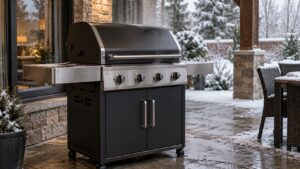
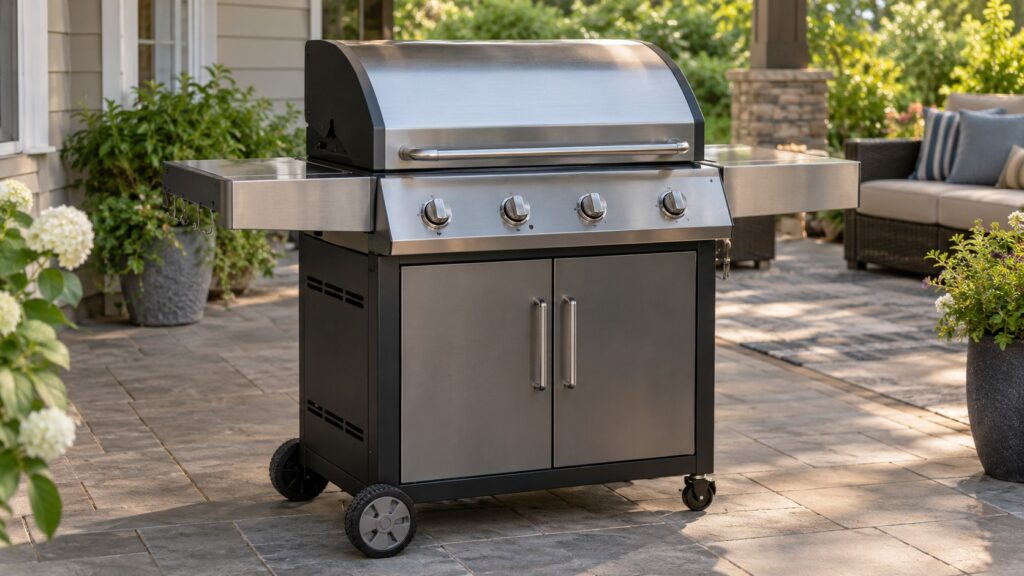
DCS grill cart assembly is mostly a matter of patience: check the parts against the list, build the base on a flat surface, fit the doors and shelves, set the wheels and their locks and then seat the grill head with enough helpers for the weight. What is not part of the job for an owner is the gas. Connecting the fuel, testing the connection and lighting the grill for the first time are covered by the manual and, for the gas connection itself, by a qualified person. This guide walks through the cart and base in a sensible order, explains what a freestanding grill needs from its location and says what to leave alone. The exact parts, hardware and steps for your model are in the assembly manual in the box.
How do you assemble a DCS grill cart?
Start by reading the assembly manual from front to back. Lay out the parts on a blanket or a piece of cardboard and check them against the parts list before you build anything. Counting screws and brackets now avoids a half-built cart and a missing bolt. Sort the hardware by size. Tighten everything only loosely at first, and snug it all down when the frame is square, since a frame fully tightened out of true will not sit flat and the doors will not line up.
Know which model you have before you start. Our grill model number guide shows where the rating plate is and how to read the model information. A cart, a head and a fuel type that do not match will not fit together, so verify before you open the boxes.
What goes where on the base?
The base usually has a frame, side panels, a bottom shelf, doors and, on some carts, shelves for tools or a place for a propane tank. The manual shows the order. As a rule, the frame goes together first, then the panels, then the shelves, and the doors are hung last so that they can be adjusted. Hang each door and check that it opens and closes without rubbing. If a door sags or catches, loosen the nearby fittings slightly, square the frame and tighten again.
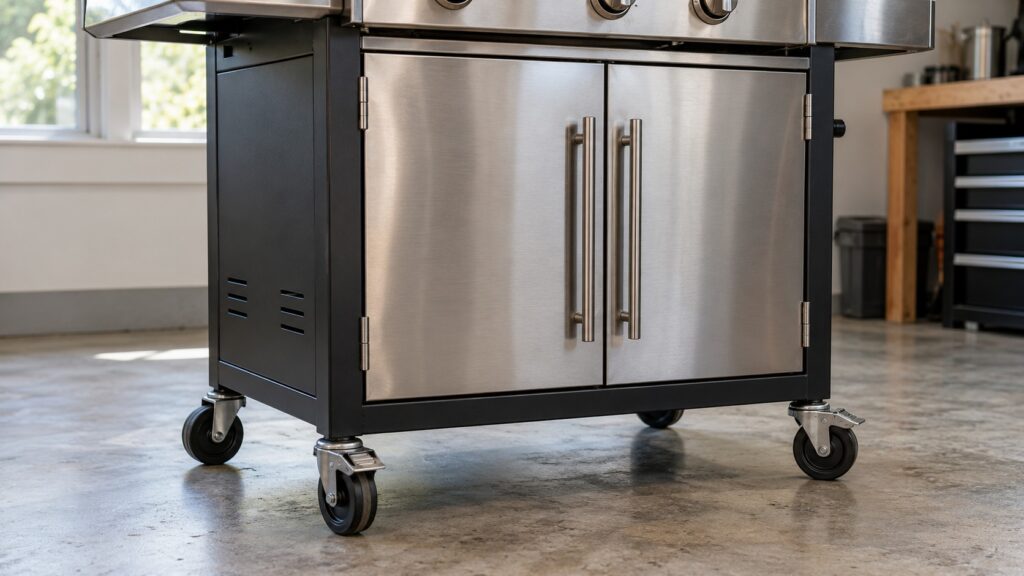
Handle the parts carefully. Stainless steel scratches and dents, and sharp edges can cut. Wear gloves, keep protective film on the panels until the work is done and do not drag parts across concrete. If the cart has a compartment for a gas cylinder, follow the manual for how it holds the cylinder, and do not use that space for anything else.
How do you fit the wheels and the locks?
A cart rolls on casters, and some of them lock. Fit the wheels as the manual shows, with the right ones in the right positions. Once the cart is where you want it, set the locks on the wheels that have them so that it cannot roll while you cook or while a door is open. Rolling a loaded cart over a lip or a step is a good way to tip it, so move it empty of loose items and on a smooth path, and lock the wheels again at the destination.
Check the cart for level and stability before the head goes on. A cart that rocks on its wheels will rock under a heavy head. If the ground is uneven, move the cart to a flat spot rather than packing it with shims, and follow the manual if it describes any feet or levelers.
How do you seat the grill head?
The grill head is heavy and awkward. Use as many people as the manual calls for, keep your back straight and lift it by the points the manual shows, not by the knobs, the handle or the hood. Set it onto the cart slowly and check that it seats fully in the frame. Our glossary entry on the grill head explains the term. Do not force a head that does not seat; a part may be out of position.
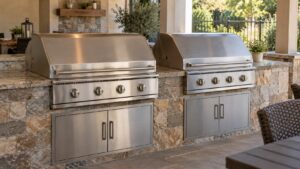
Place the finished grill outdoors, with safe distances from walls and anything that burns, and not under an overhang that traps heat, as our grill installation requirements guide explains for freestanding cart grills. Never use the grill in a garage, a carport or any enclosed space.
What is left to a qualified person?
The gas connection is for a qualified person. That covers connecting the supply, setting up a propane regulator and hose where the manual requires it, checking the connections for leaks and any change of fuel. Our guide on natural gas versus propane explains why a grill is built for one fuel and why conversions need the maker’s kit and a qualified installer. If you smell gas at any time, do not switch anything on or off or light anything, leave the area and call the gas company or 911 from outside. Do not look for the leak yourself.
When the grill is connected, follow the manual for the first lighting, and read our guide on how to light a DCS grill safely. We are an independent repair company, not the manufacturer. If a burner will not light or a flame looks wrong after assembly, our grill repair page explains how a visit works, and you can schedule a visit online.