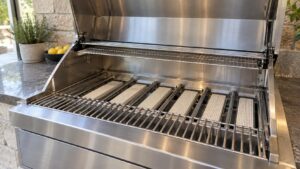
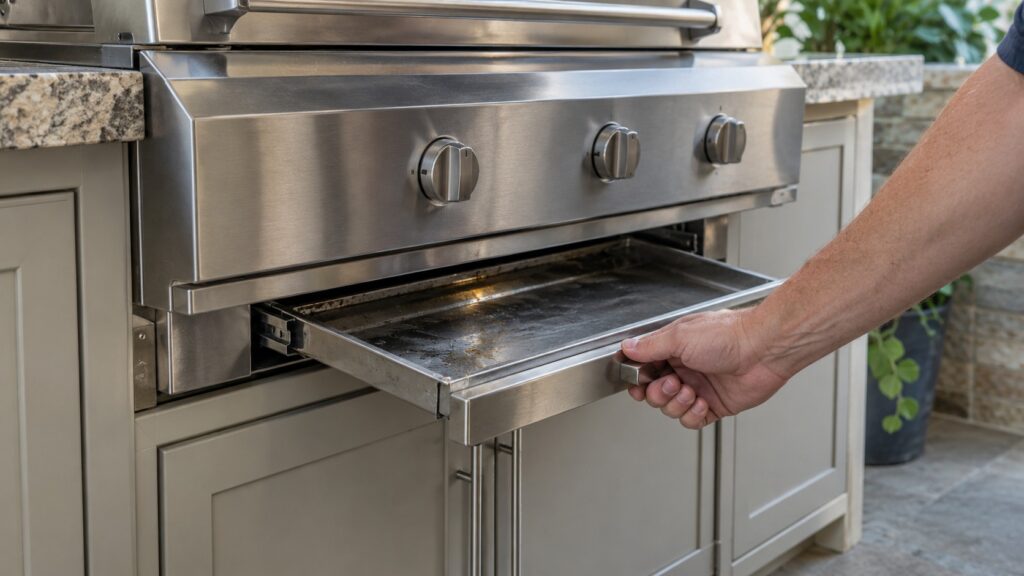
The DCS grill grease tray catches the fat that runs off the grates and the burners, and emptying and cleaning it regularly is the simplest way to prevent flare-ups, heavy smoke and the smell of burnt grease. Empty it after every few cooks, scrape and wash it every month in season, and never let old grease build up into a thick layer, because that layer is the fuel for the worst grill fires.
Why does the grease tray matter so much?
Everything that drips from the food falls through the grates, lands on the burner covers or the heat distribution plates and then runs toward the tray. If the tray is full or caked, the grease has nowhere to go, so it pools under the burners and ignites when the flame reaches it. That is the usual story behind a grill that flares up for no obvious reason, as we describe in our guide to DCS grill flare-ups.
A neglected tray also affects flavor. Old grease smokes and tastes bitter, so a dirty grill makes food taste stale even when you cook it well. And grease that creeps beyond the tray can reach the cabinet or the patio, which attracts pests and stains stone. Keeping the tray clean protects the food, the island and the grill.
How do you remove and empty the tray safely?
Only work on a grill that is cold and has the gas supply turned off at the valve. Locate the tray under the cooking area, usually accessible from the front or the underside, and slide it out slowly so the contents do not slop over the edge. If your grill uses a disposable liner or a grease cup, take it out, let the contents cool and dispose of them in a sealed container, not down a drain.
Wear gloves, because old grease is slippery and can be sharp where it has hardened with food. Place the tray on newspaper or a plastic sheet to catch drips. If you are not sure how the tray comes out on your model, check the owner’s manual for the exact release, and avoid forcing it, since a bent tray no longer catches grease where it should.
What is the best way to clean a greasy tray?
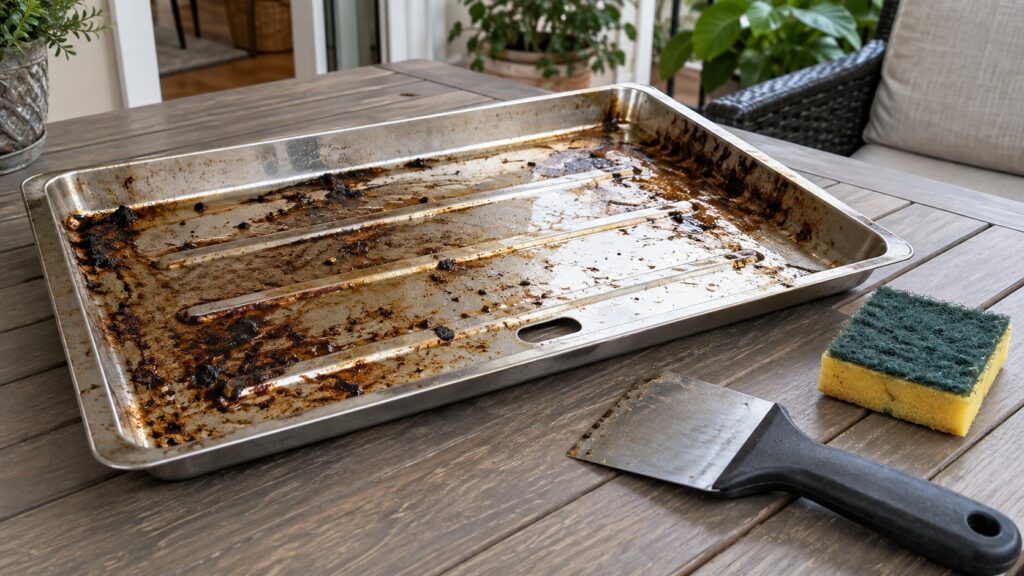
Scrape off the thick deposits first, using a plastic or wooden scraper that will not scratch stainless steel. Then wash the tray in the sink with hot water and a strong degreasing dish soap, and use a nylon brush on the corners. For baked-on grease, soak the tray in hot soapy water for a while before scrubbing. Rinse thoroughly and dry the tray before you put it back, because leftover soap will smoke on the next cook.
Do not use steel wool on stainless steel, and do not use oven cleaner on parts near the burners unless the manual allows it. Harsh chemicals can damage the finish and leave a residue that burns off as fumes. If grease has reached the grill’s interior, our guide to DCS grill burner cleaning covers the burners and the surrounding parts, and the DCS grill grate maintenance guide covers the surface above.
What else should you check while the tray is out?
This is a good moment to look under the burners. Check for pooled grease on the cabinet floor, for sooty residue around the burner ports and for any rust that has started on the tray rails. A flame that looks lazy or yellow may point to grease or debris near the ports, which our guide to a DCS grill yellow flame explains.
Look at the way the tray slides back in as well. A bent rail or a tray that sits crooked will let grease escape to the sides. Straighten a lightly bent rail only if it can be done by hand without tools, and replace a warped tray rather than live with the drips. Make sure the tray sits fully home before you light the grill.
How can you keep the tray cleaner between cleanings?
Keep a small supply kit near the grill so the job never feels like a project: a plastic scraper, a nylon brush, a roll of paper towels, a pair of gloves and a bottle of degreasing soap. When the tools are within reach, a two-minute check before each cook becomes automatic, and you catch a half-full tray long before it becomes a problem.
Trim excess fat from meat before grilling and let marinades drain, because dripping marinade creates more flare-ups than the meat itself. Use a drip pan or a foil liner in the tray if your manual allows it, and replace it as it fills. Burn off residue on the grates and the plates after cooking, with the lid open, then brush the grates before they cool. A short routine after each cook is easier than a big scrub once a season.
If you do a lot of fatty cooking, such as burgers, ribs or poultry, check the tray more often than the schedule suggests. In a cold or wet climate, cover the grill when it is not in use so rain and debris do not fill the tray, and plan a thorough cleaning at the start and end of each season.