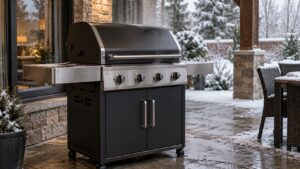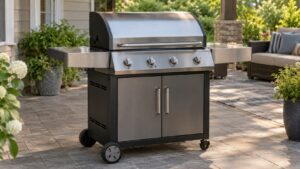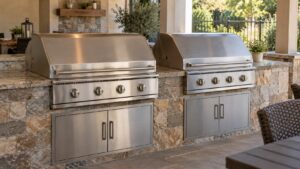
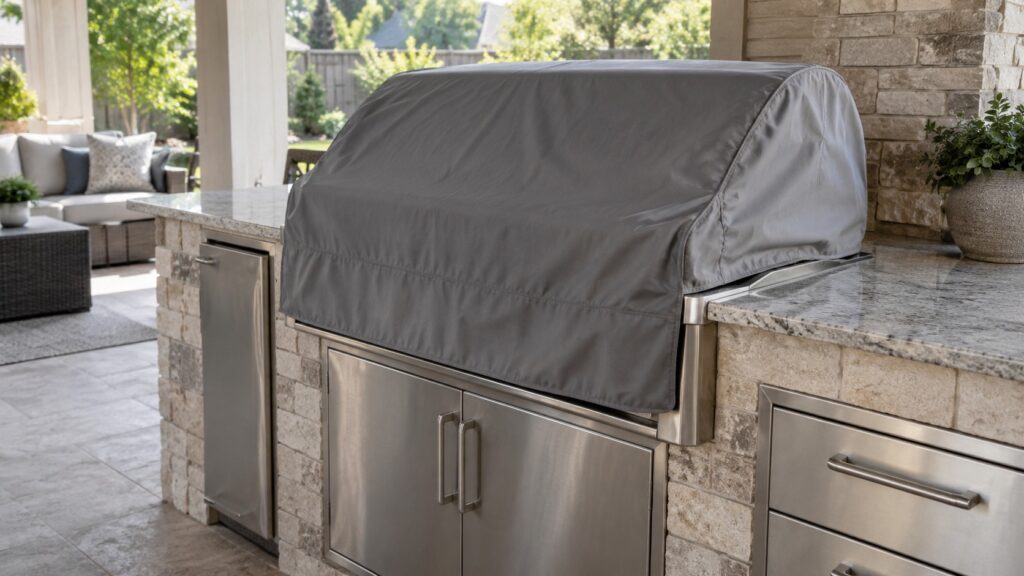
DCS grill covers do a simple job: they keep rain, dust, pollen, sun and pests off the grill between uses. That matters more than it seems, because moisture and insects in the burner box are behind many of the problems that bring people to our site, such as slow ignition, a clicking igniter and burners that clog. Our burner cleaning guide says it plainly: a grill cover keeps moisture and pests out of the burner box between uses, which dramatically reduces port clogging. These tips cover when to put the cover on, what to look for in one, and how to store the grill for a long off season.
Why does a grill need a cover?
An outdoor grill lives in the weather. Rain and dew get into the control panel area and onto the electrode, where they make the igniter click without sparking, as our igniter troubleshooting guide describes. Dust and pollen settle on the grates and in the burner box. Spiders and other insects like the shelter of the burner tubes, and a web in a venturi tube is a frequent cause of low heat and flare-ups. Sunlight can fade and dry plastic parts and knobs. A cover does not stop all of this, but it reduces it, and it is cheaper than the repairs it prevents.
When should you put the cover on?
Only when the grill is completely cool. A hot grill under a cover traps heat and can melt or scorch the fabric, and it can also trap moisture on hot metal. After cooking, let the grill cool fully, brush the grates and empty or clean the drip tray, then cover it. If the grill is wet from rain, wipe it down and let it dry first. Make sure the gas supply is shut off at the tank or the supply valve as your owner’s manual describes, and never cover a grill that is still on. If you have just washed down the island, give the grill time to air out before you cover it.
What makes a good cover?
Fit is the first thing: a cover made for your grill head, or the manufacturer’s own cover, sits snugly and stays put in wind. A loose tarp flaps, tears and lets water pool. Next is breathability: a cover with vents or a breathable fabric lets moisture escape, whereas an airtight cover can hold condensation against the stainless and encourage rust and mold. Look for a material that resists sunlight and water, and a hem or straps that keep it from lifting. Our grill head glossary explains why a grill head is a separate unit from the cart or island, which is useful when you choose between a head cover and a full island cover. Check the size against your grill’s specification and model number before you order.
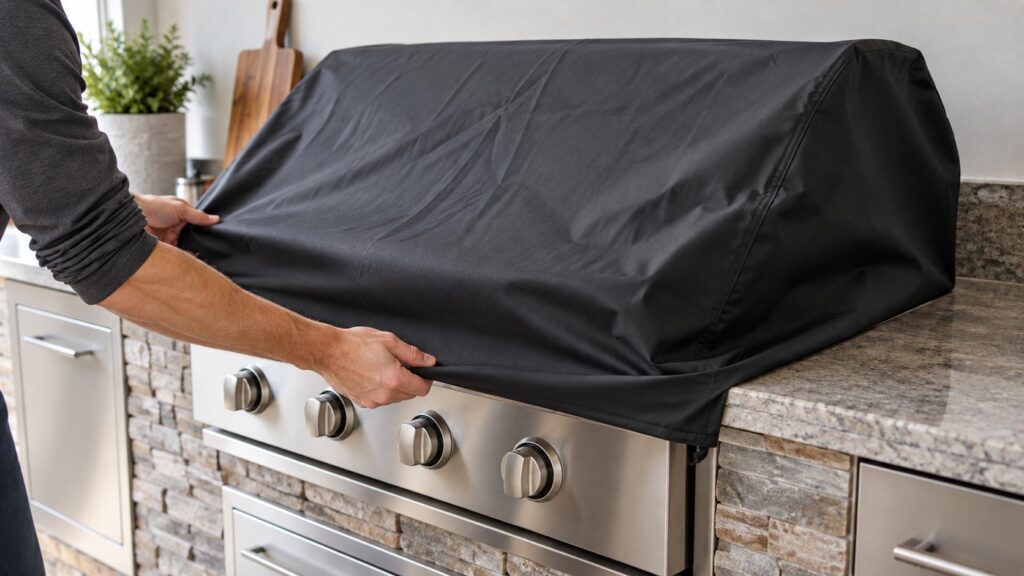
How do you prepare the grill for a long storage period?
Clean it before you cover it for the off season. Brush the grates, empty the grease tray and wipe the stainless, following our 304 stainless glossary. Clean the burners as our burner cleaning guide describes, and make sure the burner box is dry. Shut off the gas supply, and for a propane grill follow the owner’s manual for tank storage: tanks are stored outdoors, upright and away from ignition sources, and not inside a house or garage. Remove any batteries that your manual says to take out. Cover the grill and, if a cover cannot stay secure in high winds, tie it down.
What should you check when you uncover it?
Look before you light. With the gas off and the grill cool, lift the grates and check the burners and venturi tubes for webs or nests, look at the electrode area for moisture or carbon, and make sure the drip tray and the ceramic rods are clear. Our grate maintenance guide helps with the grates. If you find a nest or heavy webbing, clean it out before lighting. Do not light a grill that you suspect has a gas leak or a damaged hose: if you smell gas, leave the area and call your gas company or 911 from a safe distance, and do not turn anything on or off nearby.
What if the grill is already rusted or damaged?
Surface rust on a grate can be cleaned and the grate maintained; see our guide on rust on grates. Rust on the stainless body, damaged knobs or a burner box full of debris are worth a technician’s look, and so is an igniter that no longer sparks after storage. Our DCS grill repair page explains how a visit works.
One more tip for covers: check the cover itself every few months. A cover that has torn, stretched or become brittle in the sun no longer protects the grill, and a cover that sits in a puddle can wick water against the hood. Wash it with mild soap and water, let it dry completely and replace it when it stops fitting or tearing. If you store the cover indoors during a long off season, make sure it is dry before you fold it.