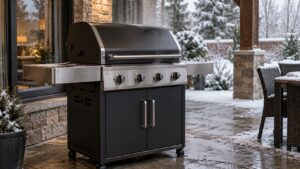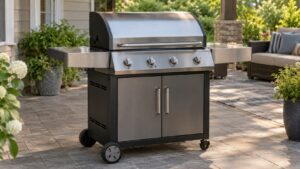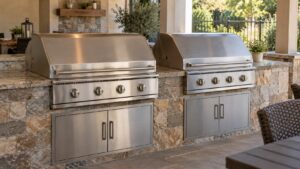
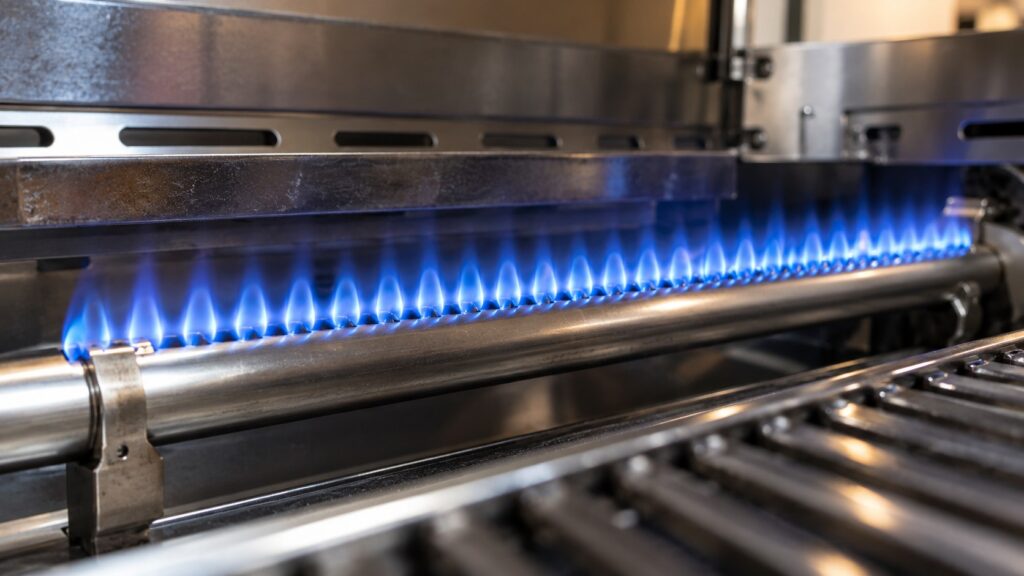
DCS BTU burner output is a number on a spec sheet that is easy to misread. BTU, short for British thermal unit, is a measure of heat, and a burner’s rating is how much heat energy it can use per hour at full output. A higher rating means more potential heating power, but it does not by itself mean better grilling, because how well a grill cooks depends on how the heat is spread, how clean the burner is, what fuel it runs on and whether the gas supply can feed it. This glossary entry explains the term and what you can and cannot conclude from the number.
What does BTU mean on a grill?
A BTU is a unit of heat energy. For a gas burner, a BTU rating describes how much fuel energy it consumes at full output over an hour, so it is a heat input figure, not a measure of the heat that reaches the food. Different burners on the same grill can have different ratings: the main burners and any additional burner your model has, such as a side or rear burner, are rated separately. The total across all burners is often quoted for the grill, but that total only matters if all of them run at once at full output, which is unusual.
What does DCS say about its burner output?
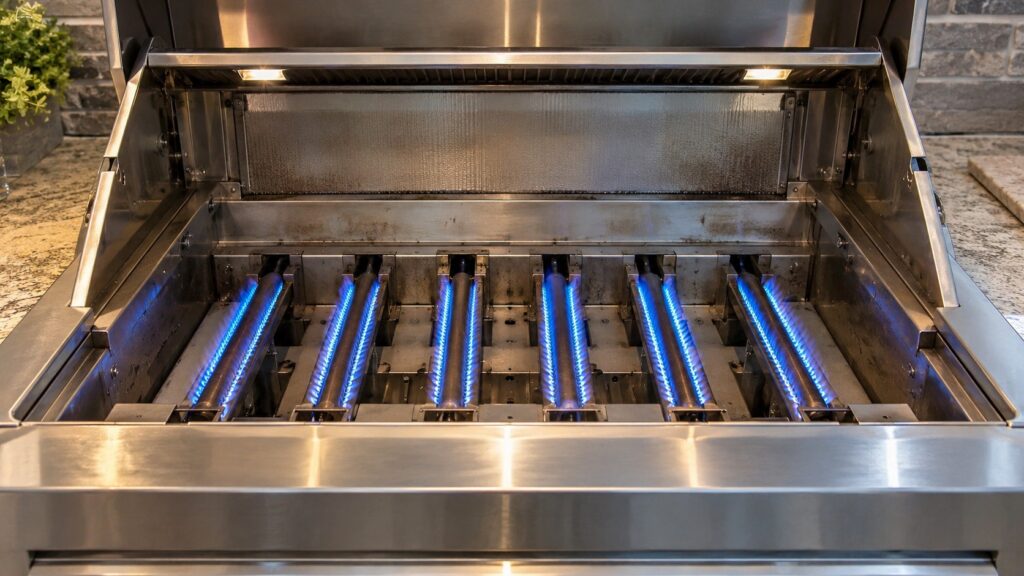
Our own pages describe the heavy U-shaped 304-stainless burners on Series 7 and Series 9 grills as rated around 25,000 BTU each, and the grill tower guide says the grate can hold anywhere from a gentle 300 degrees F up to roughly 1100 degrees F for steakhouse searing. Treat those as general descriptions: the exact rating of each burner on your grill is on the specification for your exact model, and it varies with series and fuel. Our U-shaped burner glossary explains the shape and why it covers the grate zone evenly.
Why is a higher BTU not automatically better?
Because heat has to go somewhere useful. A powerful burner with poor heat distribution creates hot spots, burns food and wastes fuel. DCS grills spread heat with ceramic rods above the burners, as our grill tower guide explains: the burner flame heats the Ceramic Radiant Glow rods, which re-radiate heat evenly. Grate size, hood design and how well the grill holds heat all affect the result. A grill with a modest rating and good heat control can sear and cook better than a grill with a high rating and uneven heat, so use BTU as one comparison point and not the only one.
Does fuel type change output?
Yes. Natural gas and propane carry different amounts of energy per unit of volume and are delivered at different pressures, so a grill is built and fitted with the right orifices for one fuel. Our natural gas vs propane guide explains that a correctly sized supply delivers all the BTUs the burners are rated for, and that an incorrect conversion causes low heat, yellow flames or unsafe operation. Conversions are not a casual swap; use the conversion kit specified for your exact model and a qualified installer. Do not change orifices or settings to chase a higher number.
What stops a burner delivering its rated heat?
Clogged ports and a blocked venturi are the most common reasons; our burner cleaning guide explains how to clear them. An undersized gas line starves the burners at full load, as our installation requirements note, especially when a line is shared with other outdoor appliances. A regulator problem, a nearly empty propane tank or cold weather can lower pressure. A burner that is not seated, or a cracked burner, burns unevenly. If the grill is slow to heat or will not reach searing temperatures, our low heat troubleshooting guide is the place to start.
How should you use the number when buying?
Compare burner ratings only between models you are considering, and read them alongside the grate area, the number of burners and the type of heat. Ask what the rating applies to: a single burner, a zone or the whole grill. Think about how you cook. A grill used mostly for high-heat searing benefits from strong, even burners; a grill used mostly for slow cooking benefits from low, steady control as much as raw output. Our 30 vs 36 vs 48 inch guide helps with size. For service questions, our DCS grill repair page explains how a visit works.
What should you look for on a specification sheet?
Read three things together: the rating for each burner, the fuel the rating applies to, and whether the figure is a single burner or a total. Ratings for natural gas and propane on the same model can differ, so make sure you are reading the line for your fuel. If a figure is given for the whole grill, ask what it includes, because a grill with a side burner or a rear burner will add those to the total. If a figure is missing from the brochure, the rating plate on your grill and the owner’s manual are the reliable sources, and a retailer or a technician can read them with you. Do not treat a number from a forum post or a different model as your own.
One practical point: a burner rating describes the burner at full output, but most cooking happens well below it. A grill that can run hot but also hold a low, steady flame is more useful on a normal evening than one that only runs flat out. When you read a spec sheet, look at the lowest setting too, if it is listed, and ask a retailer or the manufacturer how the grill behaves at a gentle heat. For service questions about a burner that no longer reaches the output it used to, a technician can check the supply and the burner.