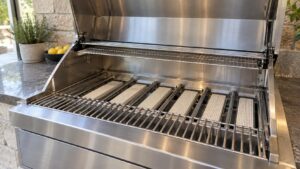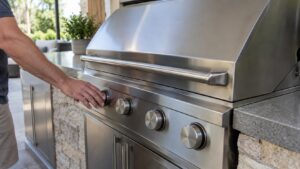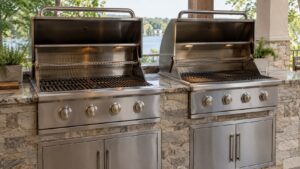
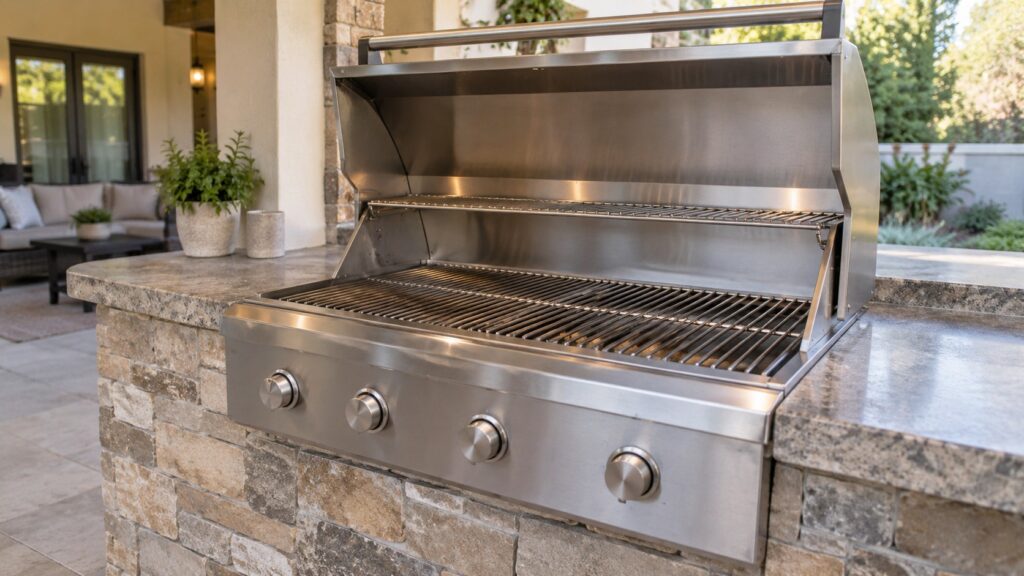
Choosing between a DCS grill 30 vs 36 vs 48 inch comes down to how many people you cook for and how much room your outdoor kitchen has, because the three widths share the same family look and differ mainly in cooking area and in what else the grill can do. The 30-inch grill suits a couple or a small patio, the 36-inch grill is the all-rounder for most households, and the 48-inch grill is for frequent entertaining or for cooks who want a rotisserie and a sear zone running at the same time.
How wide a DCS grill do you really need?
Count the people you cook for on a normal weekend, not on the biggest holiday of the year. A 30-inch DCS grill covers four to six burgers or a family meal for a small group, and it fits islands where space is tight. A 36-inch model gives you room for two temperature zones, so you can sear steaks on one side while vegetables finish gently on the other. A 48-inch model adds enough surface to run three zones, or to hold a rotisserie turning on the back burner while the main grates stay busy.
It is tempting to buy the largest size, but a big grill uses more gas, takes longer to preheat and costs more to cover and clean. If you cook for two most evenings, a 30-inch or 36-inch grill will feel better in daily use and still handle a crowd with a little planning. For a wider comparison of a whole outdoor setup, see our DCS outdoor kitchen suite buying guide.
What do the model prefixes tell you?
The model list for DCS grills includes the BGB, BGC and BFG families in 30, 36 and 48 inch widths, plus other built-in models such as the BE1 and BH1 groups. In the model numbers the two digits give the width, so a BGB36 is a 36-inch grill and a BGC48 is a 48-inch one. The letters point to the family and its feature set, and features change between production years, so confirm the details for your exact number in your owner’s manual or on the rating plate.
Our DCS grill model number guide explains how to read the plate and what each part of the number identifies, which is useful both when you shop and when you order a part later. If a seller lists a grill without a full model number, ask for it before you buy.
How do the sizes compare for burners and features?
As a general pattern, a wider grill has more main burners, and the larger models can add features such as a rotisserie burner, an infrared sear zone or a warming rack. The burners, igniters and grates are shared across the widths in a family, which makes parts simpler to source and service. In practice this means a 48-inch grill is not a different machine from a 36-inch one, just a bigger version with more of the same hardware and sometimes more options.
The feature that most changes how you cook is the rotisserie. Our guide to DCS grill rotisserie setup shows how the spit, the motor and the back burner work together, and it is worth reading before you decide whether a rotisserie is a must-have or an extra you will rarely use.
What should you check before ordering?
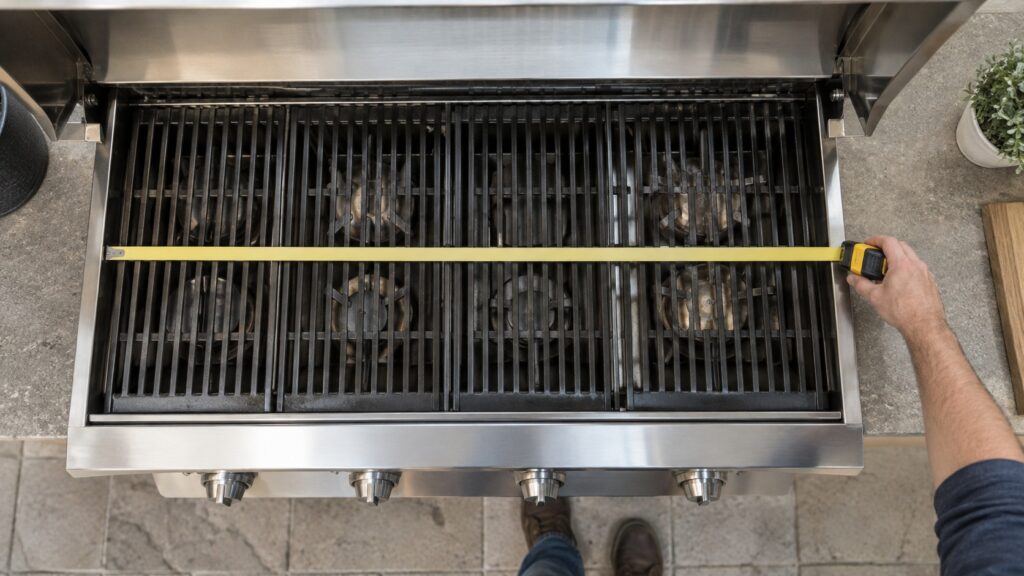
Measure the island cutout and compare it with the cutout dimensions in the installation instructions for the exact model, not with the width on the brochure. A built-in grill needs clearance on every side, a non-combustible enclosure and enough depth for the gas connection. Plan the gas supply too: natural gas and propane are not interchangeable without the correct conversion, and the supply line must be sized for the grill’s total demand. Our guide to DCS grill natural gas vs propane covers the fuel choice.
Think about the work area around the grill as well. A 48-inch grill needs more counter space on each side, a larger hood or overhead structure if the island is covered, and a path to move around it safely. If your island is already built, size the grill to the opening instead of the other way around. Installation requirements and the safety clearances are in our DCS grill installation requirements guide.
Is a bigger grill harder to maintain?
Slightly, because there are more burners, grates and a larger drip area to keep clean. The routine is the same on every width: brush the grates after cooking, empty the grease tray, check the burner ports and inspect the igniter. A larger grill just takes proportionally longer to do it. If you choose a bigger model, build the cleaning habit early, since grease buildup is the common cause of flare-ups and smoke, and it affects the larger surface the most.
Use the grill cover when it is not in use, and plan for seasonal checks if the grill sits in a cold or coastal climate. Maintenance is not a reason to pick a smaller size, but it is a reason to think about how often you will actually use the extra surface.