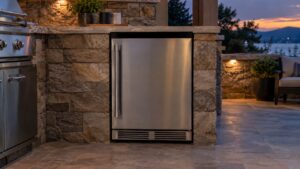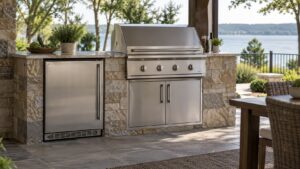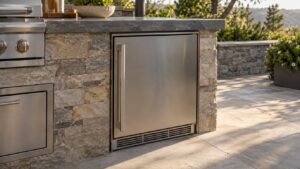
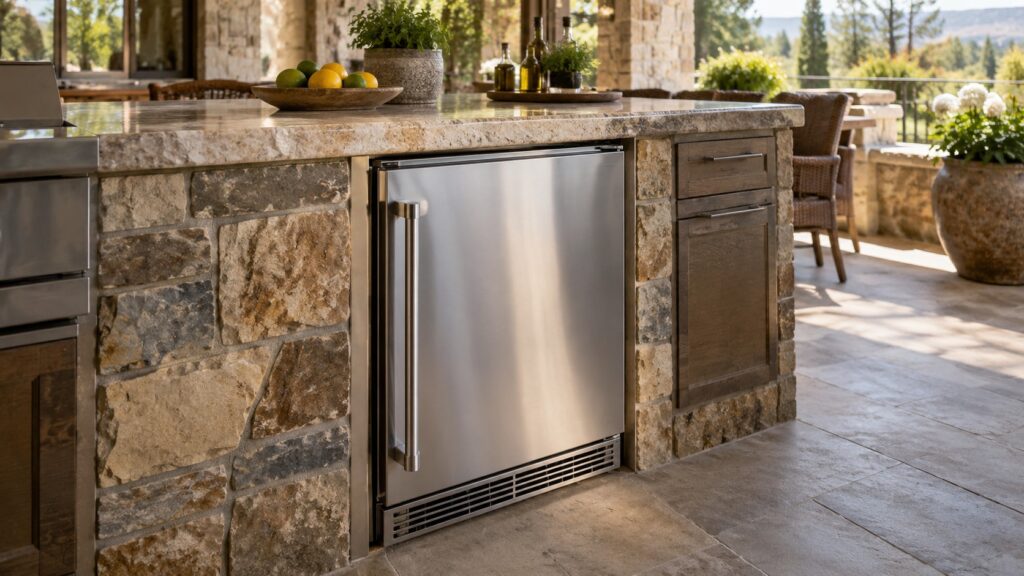
DCS outdoor refrigerator built-in clearance is the set of gaps and openings around the cabinet that let the cooling system release heat into the open air. The exact dimensions are model-specific and are printed in the installation instructions for your unit, so we do not quote figures here. What we can tell you is why the clearance exists, what a good cutout looks like, and which mistakes make a built-in refrigerator run warm: boxing it in, covering the grille, and putting it next to a heat source.
Why does a built-in DCS outdoor refrigerator need clearance?
Like any refrigerator, it moves heat out of the cabinet and releases it to the surrounding air. Our guide on how DCS outdoor refrigerators work explains that the compressor and condenser must shed heat to the outside, which is why built-in units need specific ventilation. If that air cannot move, the heat stays in the enclosure, the system works harder, and the cabinet cannot hold its set temperature, even though nothing is broken. A freestanding unit has air on all sides. A built-in is surrounded by stone, tile or cabinetry, so the openings you build into the enclosure do the job that open air does for a freestanding fridge.
Where does the air go in a built-in installation?
On built-in models the air path runs through the front of the unit, which is why the grille at the base is part of the cooling system rather than a trim piece. Air is drawn in and released through that opening, so it must have somewhere to go: an enclosure with no open path means the same warm air is drawn back in over and over. Follow the installation instructions for the vent openings and spacing for your model, check them against the cutout before the unit is set in place, and keep them clear after the outdoor kitchen is finished. A countertop overhang, a toe-kick panel added later or a decorative front that covers the grille all count as blocking the airflow.
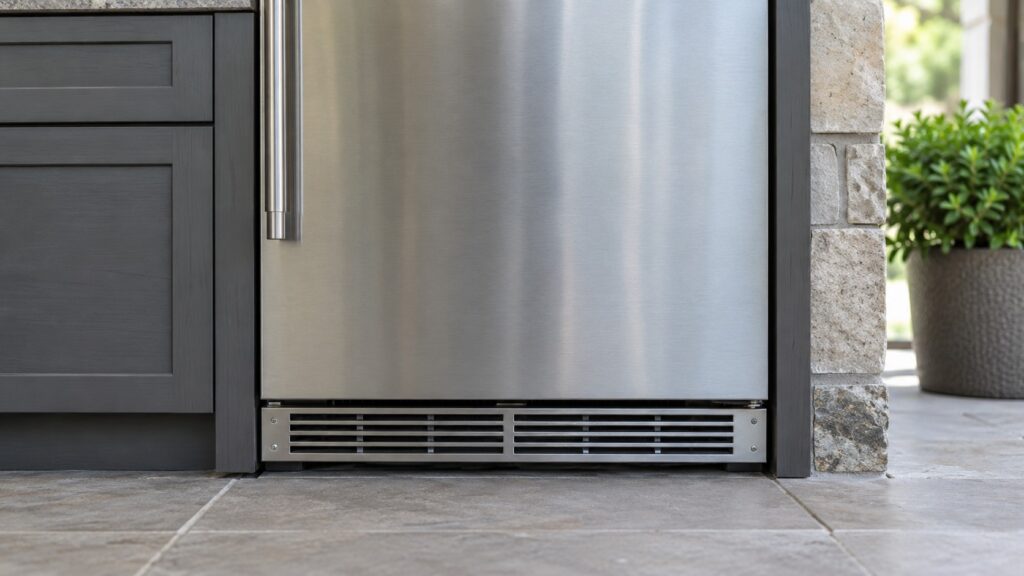
What should you check before the unit is set in the cutout?
Take the model number from the rating plate and the installation instructions, then check the opening against the instructions for height, width and depth, as well as the vent openings. Check that the floor of the cutout is solid and level, since the door seals and drain only work properly on a level unit. Plan the hinge side so the door does not hit the grill or a countertop corner; our door reversal guide explains which models can be reversed. Confirm that the power supply is in reach and correctly protected for an outdoor location, and leave the electrical connection to a qualified electrician. For a general list of outdoor requirements, our outdoor kitchen suite buying guide is a good companion.
Does it matter where the refrigerator sits next to the grill?
Yes. A refrigerator beside a hot grill or in full afternoon sun works harder than one in shade. Our outdoor refrigerator temperature setup guide notes that direct sun, a hot grill nearby and poor ventilation can push temperatures out of range. If you are still planning the kitchen, put the refrigerator at a sensible distance from the grill, shade it if you can, and never put grill heat shields where they block the grille. If the unit is already installed, you cannot change the layout easily, so keep the airflow open and the unit stocked, since a fuller refrigerator holds temperature better.
What are the signs of poor ventilation?
The refrigerator runs almost constantly, the cabinet is warm to the touch around the back and sides, drinks are less cold than they used to be, or a temperature code appears on the display. A refrigerator in a hot enclosure often seems fine in the morning and struggles in the afternoon. The codes themselves are explained in our outdoor refrigerator fault codes guide. A warm cabinet can also come from a worn door gasket, so check that as well; the door seal maintenance guide shows the dollar-bill test.
When should you call a technician or an installer?
Call a qualified installer for any change to the enclosure, the cutout or the power supply. Call us if the unit runs warm even though the grille is clear, the door is level and the seal is good; that points to a fault rather than a layout problem. Our DCS outdoor refrigerator repair page explains how a visit works. Do not remove the front grille or any panels yourself, and do not slide a built-in unit out of its cutout without help, since it is heavy and the connections sit behind it.
What mistakes cause the most trouble?
The common ones are all avoidable at the planning stage. A snug cabinet built to the exact width of the refrigerator with a solid back and a solid top leaves no path for air. A toe-kick or decorative front added after the unit was installed closes the grille. A tight stone overhang above the unit traps rising heat. A refrigerator placed directly beside the grill gets the grill’s heat on its side wall. Each of these can be fixed, but fixing them after the stone is set is far harder than checking them against the instructions before the cutout is built, so share the installation instructions with whoever builds the island.