
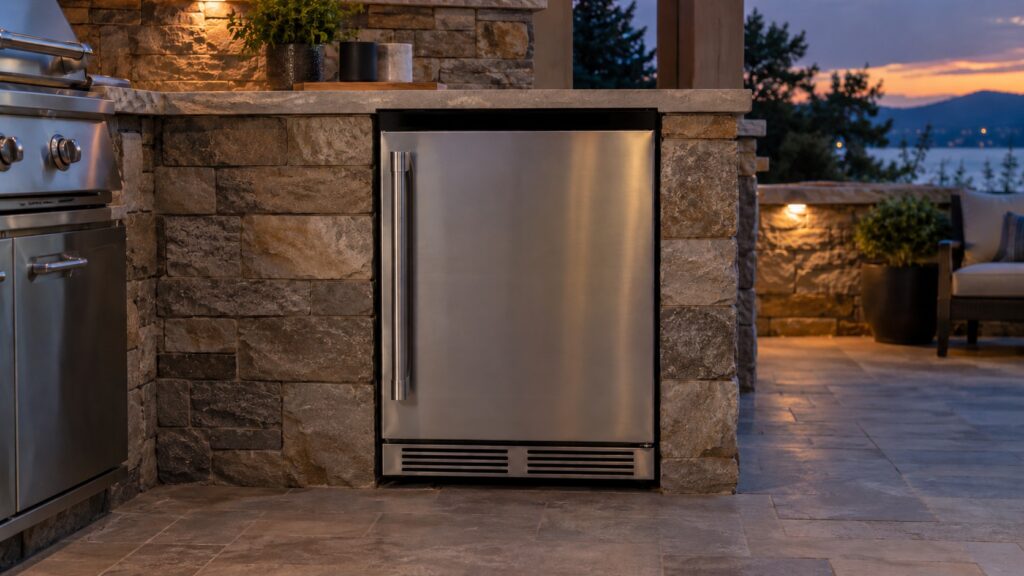
A DCS outdoor refrigerator not turning on, with a dark panel and no hum, is most often a power problem outside the appliance: a tripped GFCI outlet, a breaker that switched off after rain, or a cord that was knocked out of its outlet while someone cleaned the outdoor kitchen. Those checks cost nothing and are safe to do yourself. If power is clearly reaching the refrigerator and it is still dead, the cause is inside the unit, and that is a job for a technician.
Is the outdoor refrigerator actually getting power?
Start with the simplest question: does anything else on that outlet work? Plug in a lamp or a phone charger you know works. Outdoor outlets are normally protected by a GFCI, and these trip after rain, hose spray or a power surge. If the GFCI has a reset button, press it firmly. If the outlet is fed from a breaker panel, look for a breaker that has moved to the middle or off position and reset it once. If a breaker or GFCI trips again straight away, stop. A repeated trip means there is a fault, and pressing the button again is not a fix. Switch the breaker off, leave the refrigerator unplugged and call a technician or an electrician.
What if water or sparks are involved?
If there is water at the outlet, a burning smell or sparking, switch off the breaker at the panel while standing on a dry floor, and never pull a plug out of a wet outlet. Keep the door of the refrigerator closed, wait for the area to dry, and call a technician before turning the power back on. Do not use the refrigerator again until it has been looked at. Our outdoor faults, weather or appliance guide explains how weather can mimic an appliance fault.
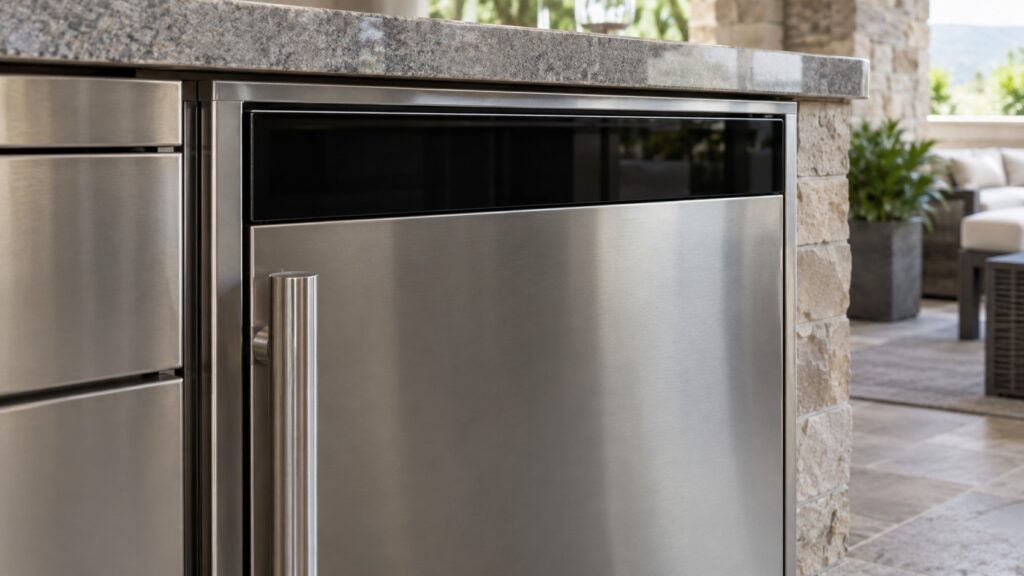
Is the cord seated and the unit pushed back correctly?
A built-in refrigerator is pushed back into a tight cutout, and the plug can be partly pulled from the outlet when the unit is slid forward for cleaning. Look behind the unit only if you can do so without moving it or reaching into a narrow gap; if you cannot see the plug, the access is the problem and a technician or installer should check it. Do not use an extension cord or a power strip to fix a short cord, and do not replace the cord yourself. A refrigerator should be on its own correctly protected outlet, and the installation instructions for your model describe the requirement.
What is the difference between a dead refrigerator and a refrigerator with a code?
Your outdoor refrigerator uses electronic controls, so a unit that has power but a problem usually shows a code or alert. A panel with nothing lit, no fan sound and no response to a touch is different: it means no power is reaching the controls, or the control board itself has failed. Our outdoor refrigerator fault codes guide covers the codes the unit shows when it is powered and unhappy, and our control board guide explains what the board does. If the panel is lit but the cabinet is warm, you have a cooling problem, and the not cooling page for outdoor beverage units is a useful reference.
Could the weather or the installation be involved?
Outdoor kitchens are hard on electrical connections. Rain driven sideways, a sprinkler that sprays the island, a pressure-washed counter or a flooded floor can all get moisture into an outlet box. A refrigerator that worked yesterday and is dead after a storm points to the circuit rather than the appliance. The reverse is also possible: a unit that was just installed and never ran may be waiting on a connection nobody finished. In both cases the sensible order is the same: confirm the outlet is live, confirm the protection device has not tripped, and only then suspect the refrigerator. Because the work involves house wiring and an outdoor circuit, have an electrician look at any outlet that trips repeatedly, shows corrosion or has water inside the box.
Keep the door shut while you investigate, even if you are impatient to see the inside. The cabinet stays cold longer when it is not opened, and a closed refrigerator buys you time to solve the problem without losing food. If the answer turns out to be a circuit that cannot be restored quickly, move the contents to a cooler with ice rather than leaving them in a warm cabinet.
What should you do with the food in the meantime?
Keep the door closed. Food safety guidance from the FDA says a closed refrigerator keeps food safe for about four hours without power, so if you cannot restore power within that time, move perishables to a cooler with ice. Do not taste food to judge it, and throw away anything that has been above 40 degrees F for too long. Once power is restored, give the refrigerator time to cool back down before you reload it, and check the temperature with a separate thermometer.
When should you call a technician?
Call when power is confirmed at the outlet and the unit is still dead, when a breaker or GFCI keeps tripping, when you smell burning, or when the cord or plug looks damaged. Those are cases for a professional because they involve wiring and the control board. Our DCS outdoor refrigerator repair page explains how a visit works, and you can also book a visit directly.