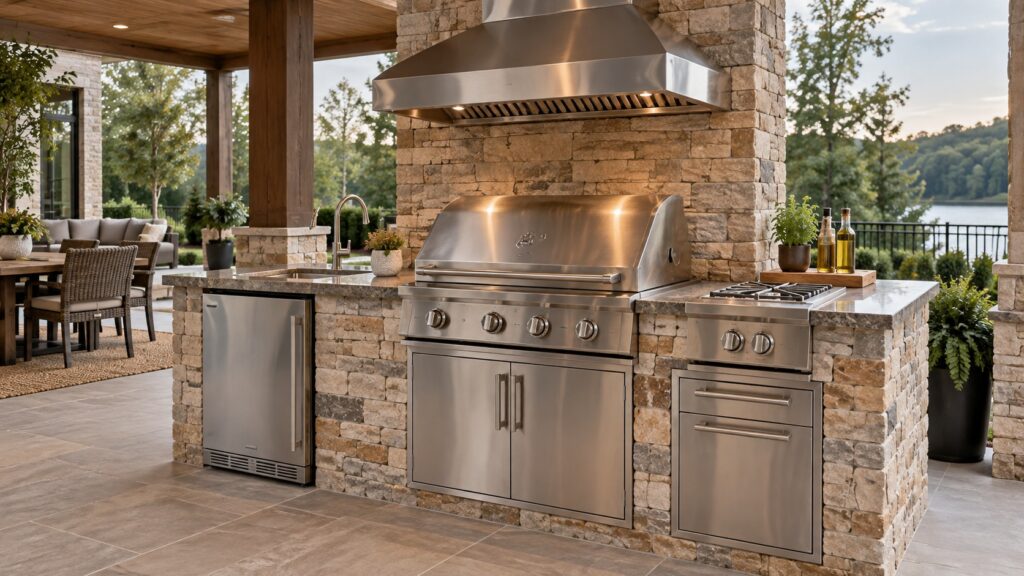
Planning a DCS outdoor kitchen means choosing appliances that share the same utility rough-ins, the same enclosure clearances and the same duty cycle — not picking a grill, a hood and a refrigerator separately and hoping they fit together. The four pieces that make up most DCS outdoor kitchens are a grill, a side burner or a rangetop module, a range hood or ventilated enclosure, and an outdoor refrigerator or beverage center. Getting the sizing and utility plan right before you order saves a second round of cutouts.
How do I size a DCS grill for the island bay?
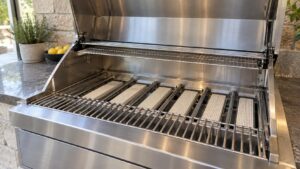
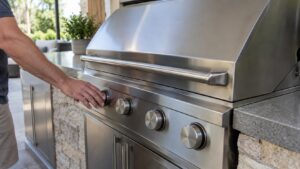
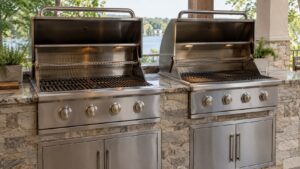
Grill width decides almost everything downstream. A 30-inch grill suits a couple who cooks for two to four people and fits a compact island; a 36-inch grill is the common choice for a family island with a side burner alongside it; a 48-inch grill is built for entertaining and usually pairs with a wider hood and a larger refrigeration section. Measure the finished island opening before ordering, not the appliance’s boxed dimensions — DCS specifies a minimum side clearance to combustible material on every grill head, and that clearance is what actually sets the smallest bay you can build.
Do I need a range hood over an outdoor grill?
It depends on the layout. A grill against a wall or under a covered patio roof needs a hood or a ventilated soffit to carry smoke and heat away from the structure; an island grill in open air, away from overhangs, often runs without one. If you are building under any roof, covered pergola, or near a combustible wall, plan the hood into the utility layout from the start — retrofitting duct runs through a finished island is far more disruptive than routing them during construction. Our range hood installation requirements guide covers the duct sizing and makeup-air planning that a covered layout needs.
Outdoor refrigerator or outdoor beverage center — which fits the kitchen?
An outdoor refrigerator (the RF24RE and RF24DE lines) is a full-height, single-zone unit built for everyday food and drink storage next to the grill. An outdoor beverage center (the RF24BC and RF24IM lines) is a shorter, drawer-style or single-door unit aimed at drink chilling and, on the IM models, a dedicated ice maker. If the outdoor kitchen is doing double duty as a food-prep station, the full refrigerator earns its footprint; if it is mainly a bar for entertaining, the beverage center uses less bay width for the same guest-facing function. Our beverage chiller vs. kegerator guide covers the third option if draft beer is part of the plan.
Side burner or full rangetop — how do I decide?
A side burner module is a single or double burner set into the counter beside the grill, sized for a sauce pot or a wok while the grill does the main cooking. A full rangetop panel — with the interchangeable grill, griddle or wok modules covered in our rangetop module glossary — is a wider cooking surface meant to stand on its own rather than support a grill. Choose the side burner when the grill is doing most of the work and the counter is doing the rest; choose the rangetop when stovetop cooking outdoors is as important as grilling.
Should I budget for covered storage or a full enclosure around the appliances?
Every appliance in a DCS outdoor kitchen is built to live outdoors, but how much shelter the layout gets still changes the maintenance schedule and, over time, the appearance of the stainless surfaces. A fully open island in a coastal or high-humidity climate sees more salt exposure and needs more frequent stainless cleaning than the same layout under a covered patio roof. A grill cover for the off-season, or a roofed structure over the whole island, is not required for any DCS appliance to function, but it does reduce how often the grill, hood and refrigeration doors need attention and slows cosmetic weathering on brushed stainless panels.
Factor this into the budget alongside the appliances themselves: a roof or a set of appliance covers is a smaller cost than any single repair call, and it is far easier to add before the island is finished than to retrofit around appliances that are already plumbed and wired in place.
What utility rough-ins does an outdoor kitchen need before the appliances arrive?
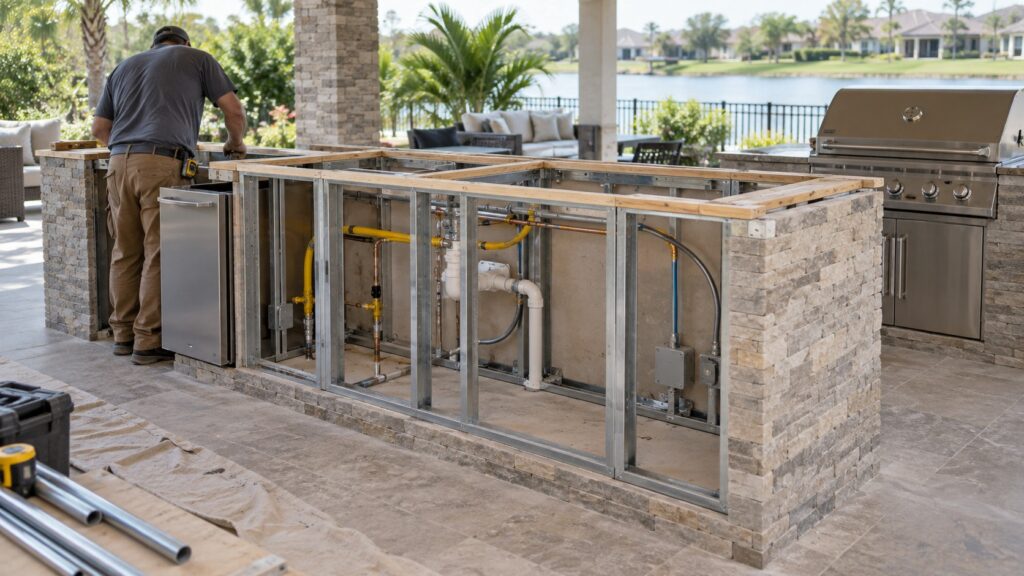
Every gas appliance needs its own sized gas line run to the appliance location, sized for its BTU rating rather than shared off a single undersized branch. Refrigeration and ice-making appliances need a dedicated water line and a drain if the model calls for one, plus a 120V electrical circuit that is rated for continuous outdoor use. A hood adds a duct run and, on a covered layout, a makeup-air path. Planning all four rough-ins against the finished island drawing — before the masonry or decking goes in — is the single step that prevents a mid-project redesign.
Natural gas or propane — does it change which appliances I can combine?
Each DCS gas appliance is ordered for a specific fuel type and cannot be field-converted on every model, so decide the fuel for the whole kitchen before ordering rather than per appliance. Our natural gas vs. propane guide covers the trade-offs — propane needs a tank or a buried line and gives you portability of choice, natural gas needs a permanent gas line but never needs a refill. Whichever you choose, order the side burner, rangetop and grill for the same fuel so a future swap does not mean reordering the whole lineup.
One more sequencing point saves real money: order every gas appliance for the finished layout at the same time, even if installation happens in stages. Grill, side burner or rangetop, and any secondary burner all need to agree on fuel type and, on multi-appliance runs, the gas supplier often needs the total connected load to size the meter or regulator correctly. Ordering piece by piece over several months risks discovering midway through that the existing gas service cannot support one more appliance without an upgrade, which is a far more expensive fix once the island is finished than a single conversation with the installer before anything ships.
We install and service complete DCS outdoor kitchens as an independent company, not a factory service arm, and we can walk a rough-in plan before you pour concrete or set pavers. DCS grill service, range hood service and outdoor refrigerator service all start from the same visit if you want a full-kitchen assessment, and pricing starts from a diagnostic call. Schedule a visit online or call 1-844-487-0065.