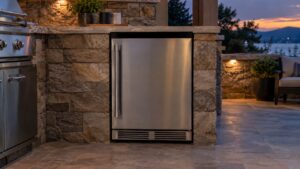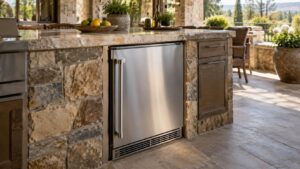
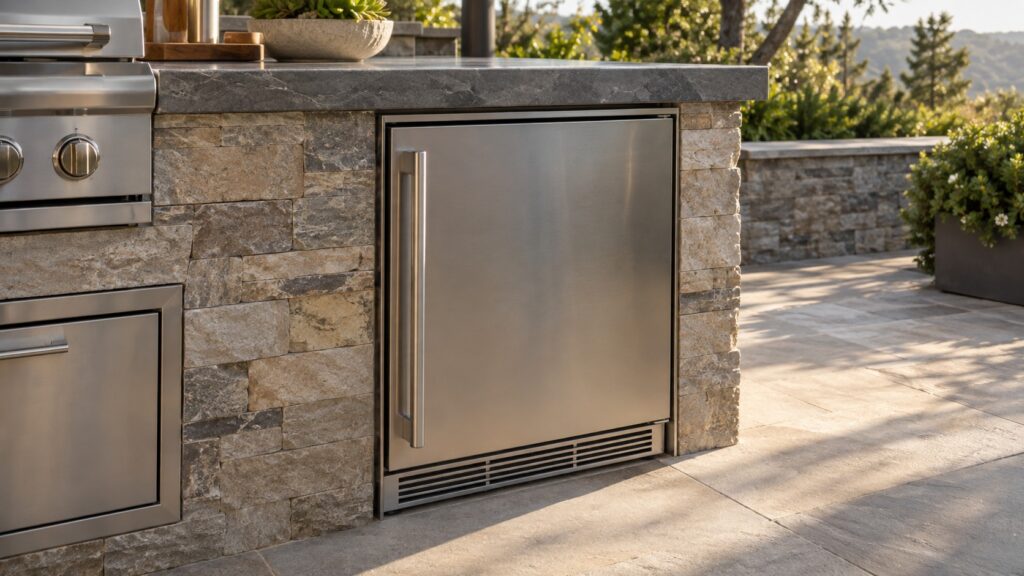
A DCS outdoor refrigerator door seal works harder than almost any other part on the cabinet: it is the boundary between conditioned cabinet air and outdoor heat, humidity and UV exposure, opened and closed dozens of times through a season. A gasket that has hardened, cracked or pulled loose lets warm, humid air leak into the cabinet continuously, and the compressor runs longer to compensate — often for months before anyone notices anything beyond a slightly higher power draw.
Why does outdoor exposure age a door gasket faster than an indoor refrigerator’s?
An indoor refrigerator gasket lives in stable temperature and humidity for its entire life. An outdoor cabinet’s gasket cycles through summer heat that can soften rubber compounds and winter cold that stiffens them, plus direct UV exposure that indoor gaskets never see. That repeated expansion and contraction, combined with UV breakdown of the rubber, is why an outdoor gasket can show cracking within a few seasons where an indoor one lasts a decade. Direct sun exposure accelerates this the most, so a cabinet installed with the door facing full afternoon sun will need gasket checks more often than one in partial shade.
How do I check whether the seal is still doing its job?
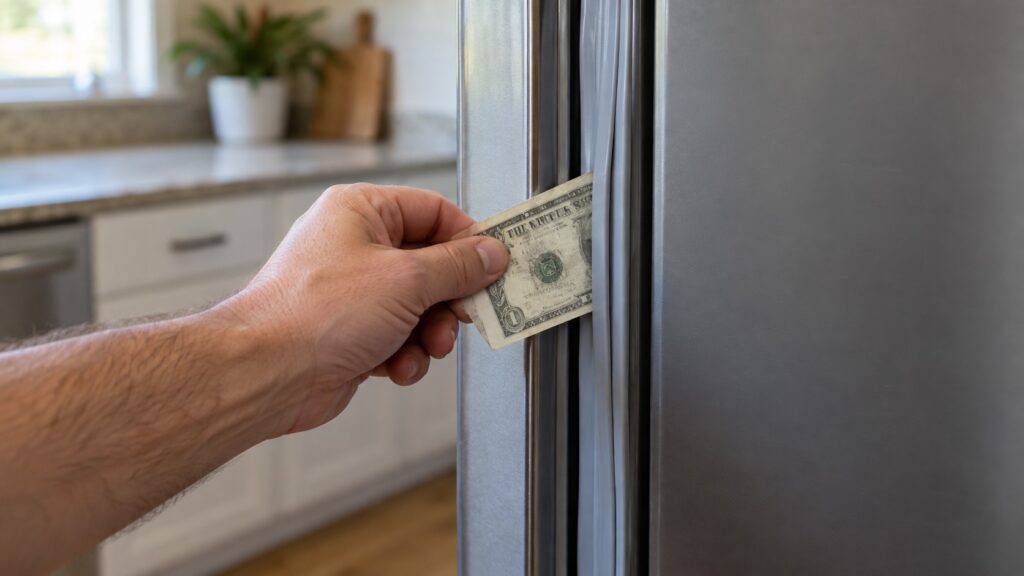
Run the dollar-bill test at several points around the door frame, not just one corner: close the door on the bill so it crosses the gasket line, then pull gently. A good seal grips the bill with noticeable resistance; a seal that lets it slide out freely is not sealing at that point, even if the gasket looks fine by eye. Test the top, bottom and both side edges separately, since a gasket can seal well on three sides and fail only where the door has sagged slightly on its hinges.
What does a failing gasket actually cost in cabinet performance?
A gap in the seal lets warm, humid outdoor air leak continuously into the cabinet, and the compressor has to run longer and more often to hold the set temperature against that constant inflow. This shows up first as a compressor that seems to run more than it used to, and later as condensation forming inside the cabinet or on the door frame — moisture that has no business being there in a properly sealed unit. On a unit with an ice maker, that same humidity load is one of the causes covered in our ice maker troubleshooting guide, since a struggling seal and a struggling ice maker often trace back to the same root cause.
How do I clean the gasket without damaging it?
Wipe the gasket with warm water and a mild dish soap on a soft cloth, working into the folds where grime and salt residue collect on units near a coastline. Avoid solvents, bleach and anything abrasive — they dry out the rubber compound faster than sun exposure alone and shorten the gasket’s working life rather than extending it. Dry the gasket fully before closing the door, since trapped moisture in the folds contributes to the same hardening and cracking that heat and UV cause on their own.
Can a sagging door cause the same symptom as a bad gasket?
Yes, and it is worth ruling out before replacing a gasket that may be perfectly fine. Outdoor cabinets take more physical handling than indoor ones — leaned on, bumped by serving trays, opened with a full hand rather than a light touch — and hinges loosen faster as a result. If the dollar-bill test fails only at the bottom or on the hinge side, check hinge alignment and tightness before ordering a replacement gasket; a hinge adjustment is a five-minute fix that a new gasket will not solve on its own.
How does a coastal or high-humidity location change the maintenance schedule?
Salt air and high ambient humidity both accelerate the same rubber breakdown that sun and heat cause on their own, so a unit installed near the coast or in a humid climate should move from a three-month check to a monthly one during the warmest part of the year. Rinse salt residue off the gasket and the surrounding door frame with plain fresh water between full cleanings — salt crystals left to sit in the gasket’s folds work like fine sandpaper every time the door opens and closes, wearing a groove that eventually becomes a permanent gap.
When does a gasket need to be replaced rather than cleaned?
Replace the gasket once it shows visible cracking, has pulled away from its channel at any point, or fails the dollar-bill test at more than one location after hinge alignment is confirmed correct. A gasket ordered by exact model number seats correctly in the door channel; a universal or mismatched gasket often will not, and a poor-fitting replacement can leave the same gap it was meant to fix. Our winterizing guide covers the seasonal transition where gasket wear is easiest to catch, since a unit going into winter with a marginal seal is the one most likely to develop a real leak by spring.
Note the model number and door style (left-hinge or right-hinge, single or double door) before ordering, since the gasket profile differs between them even on cabinets that look similar from the front. Ordering by width alone, without confirming the hinge side and profile, is the most common reason a replacement gasket arrives and does not seat the way the original one did.
We are an independent repair company, not a factory service arm, and we source gaskets from reputable supply channels matched to your exact model. DCS outdoor refrigerator repair covers gasket replacement and hinge adjustment, and pricing starts from a diagnostic visit with the estimate confirmed before any work begins. Schedule a visit online or call 1-844-487-0065.