A DCS grill gas regulator is the part that controls the pressure of the gas reaching the grill. Gas arrives from a line or a tank at a pressure that varies, and the burners are designed to run on a steady, lower pressure, so the regulator takes whatever comes in and delivers a consistent pressure to the valves and burners. Without it, the flame would change with the weather, the tank level and the length of the supply line. This guide explains what the regulator does, why natural gas and propane are different, and which symptoms point at the gas supply rather than the burners. It does not describe adjusting or testing anything, because that work belongs to a qualified installer.
What does a gas regulator do on a grill?
It is a pressure-reducing valve. Gas enters at the supply pressure, passes through the regulator, and leaves at a lower, steady pressure that suits the burners. A diaphragm and spring inside respond to the pressure downstream and open or close to keep it constant. That is the general principle for regulators on gas appliances. The exact design, the pressure figures and the location differ by grill, fuel and installation, so we do not give numbers. They are in your installation instructions, and the setting is not something an owner changes. A regulator that is working properly is invisible: the flame is steady, the burners light and the heat is even.
Why do natural gas and propane need different setups?
Our natural gas vs propane guide explains that DCS denotes natural gas with an N suffix and propane with an L suffix, and that the grill is built and orificed for one fuel. Propane carries more energy per cubic foot and runs at higher pressure, while natural gas comes from a plumbed line. The regulator and the orifices, the small openings that meter gas into each burner, are matched to the fuel. That is why the guide warns that conversion needs the manufacturer’s orifice and regulator kit and that an incorrect conversion causes low heat, yellow flames or unsafe operation. Never swap parts or drill orifices.
Where does the regulator sit in an installation?
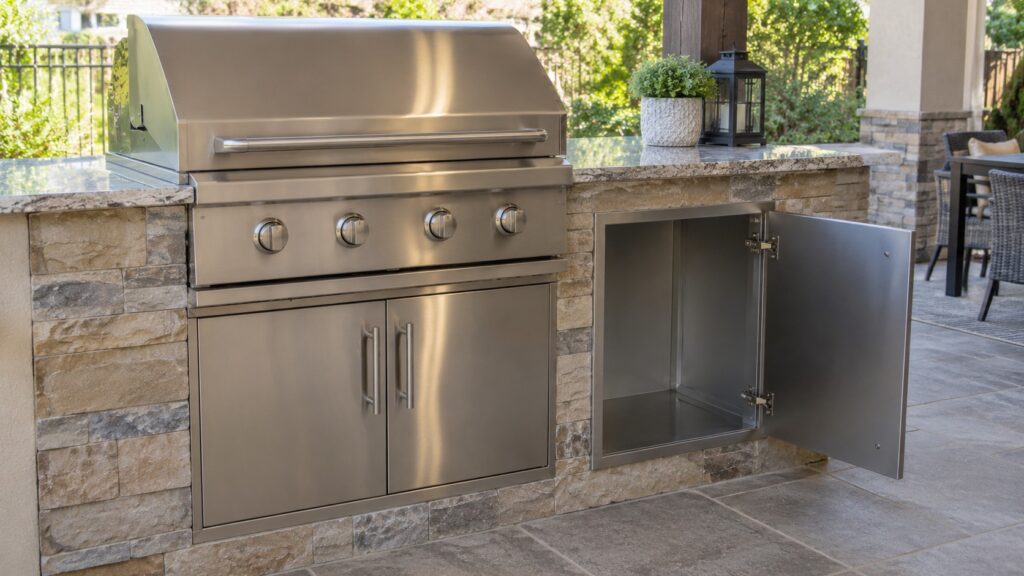
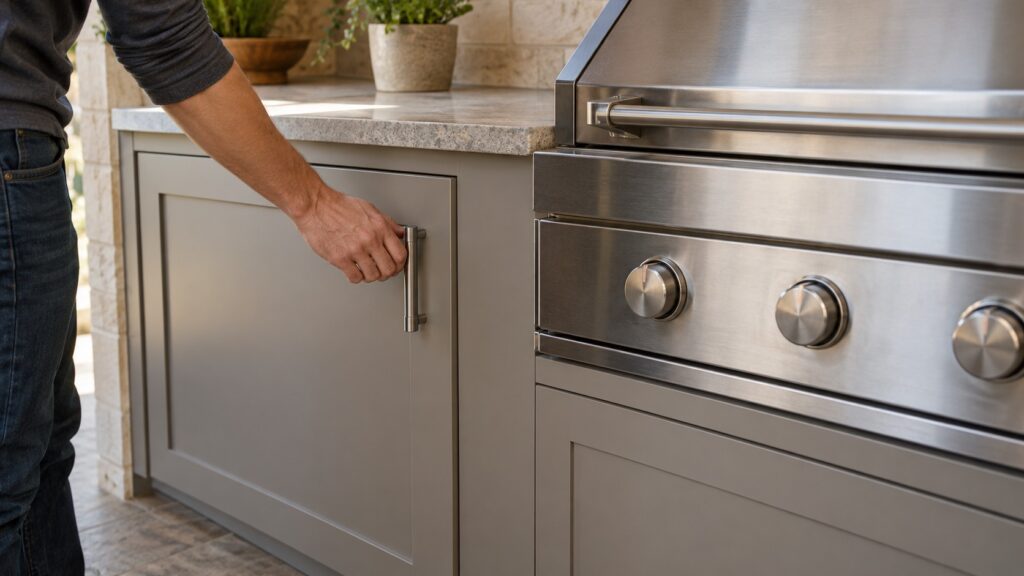
In a built-in installation the gas arrives through a supply line, with a shutoff valve and the connection into the grill. In a propane cart the regulator and hose connect the tank to the grill. The exact layout is described in the installation instructions for your model and in our grill installation requirements, which stress a correctly sized line, a non-combustible enclosure with ventilation, and a leak check by a qualified installer. We do not describe leak testing at home. If you smell gas, do not turn anything on or off, put out any flame, leave the area and call your gas company or 911 from a safe distance.
What symptoms point at the gas supply rather than the burners?
Low heat on every burner at once, flames that are weak or lazy across the whole grill, or a grill that worked well and then slowly weakened can point at supply or regulator trouble instead of dirty burners. A propane tank that is nearly empty or very cold can also lower pressure, and a line shared with other outdoor appliances may be starved when everything is on. A yellow flame can come from a fuel mismatch or a conversion that was not done correctly. A single burner with a problem is more often a clogged port. Our low heat troubleshooting and yellow flame guides cover the owner-level checks.
What can you do safely as an owner?
Follow your owner’s manual for anything involving the gas supply, keep the area around the connections dry and protected, and never leave the grill running unattended. Keep burners and venturi tubes clean, since a dirty burner mimics a pressure problem; our burner cleaning guide shows how. Keep vents in the enclosure clear. Do not loosen fittings, do not try to adjust the regulator, do not check connections with a flame and do not run a grill that you suspect of leaking. A suspected leak is a reason to shut off the supply and call a professional, not to experiment.
When should you call a technician or installer?
Call when heat is low on all burners and cleaning has not helped, when you want to convert between natural gas and propane, when the grill was moved or re-plumbed, or when you suspect a fault in the regulator or the line. Gas work should be done by a qualified person, and the installer should test the connections. Our DCS grill repair page explains how a visit works, and our gas smell safety steps page covers what to do if you suspect a leak.
Why does the regulator matter for safety?
Pressure that is too high makes flames tall and unstable and can overheat parts; pressure that is too low gives weak flames, poor ignition and heat that cannot reach the grate. Either way, the grill is not behaving as designed. That is why the regulator, the orifices and the fuel type are treated as one system and why nobody should change one without the others. A grill that has been moved to a different fuel, a different supply line or a different outdoor kitchen should have its supply checked by a qualified installer before it is used. Keep documents such as the installation instructions and any conversion paperwork with the grill, so a technician can see how it was set up.