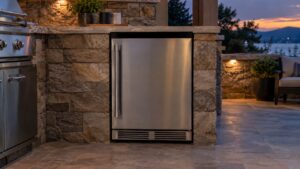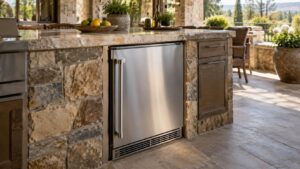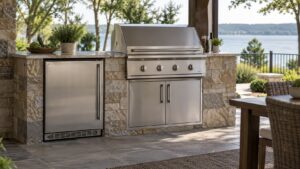
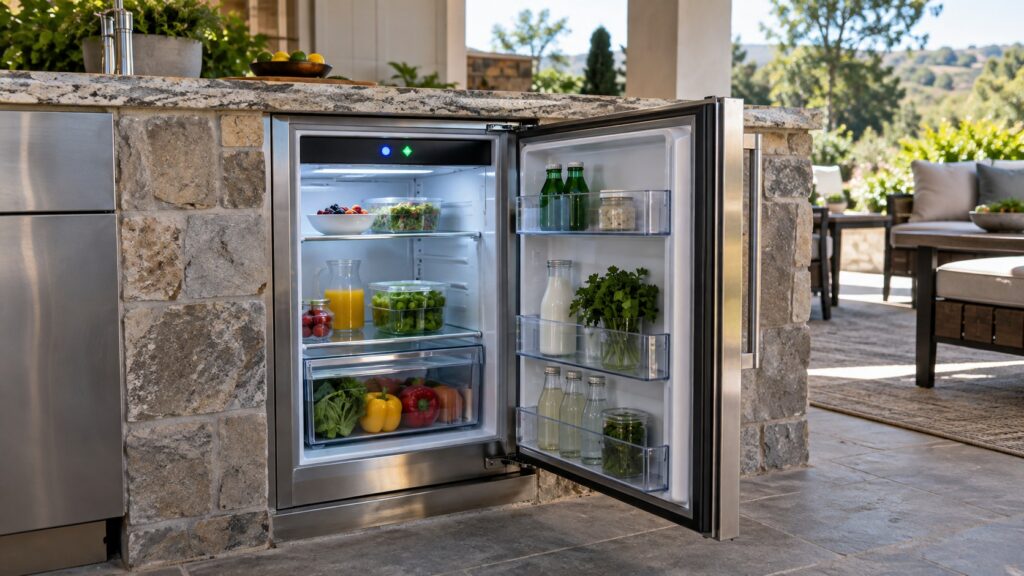
The DCS refrigerator temperature codes are the four letters the control shows when a compartment is no longer holding the temperature it was asked to hold: CH means the cabinet (fresh food) section is too warm, CL means the cabinet section is too cold, FH means the freezer section is too warm, and FL means the freezer section is running too cold. Each one is a report about a measured temperature, not a diagnosis of a part, and on an outdoor refrigerator the difference matters more than it does indoors.
What does CH mean on a DCS outdoor refrigerator?
CH says the fresh food cabinet is warmer than the control wants it. The ordinary causes come in a clear order. A door that was propped open during a party, a cabinet packed so full that the return air path at the back is blocked, a seal that has hardened over a couple of outdoor seasons, or a condenser grille so coated in lint and cottonwood that the compressor cannot dump heat into a 95 degree patio.
The unordinary causes are fewer and heavier: a failed evaporator fan, a defrost cycle that runs and never terminates, a sensor reading high, or a loss of refrigerant charge. The first group you can work through yourself in twenty minutes. The second group is service work, because the sealed system is not something to open in a backyard.
What does CL mean, and why is a cabinet that is too cold a fault?
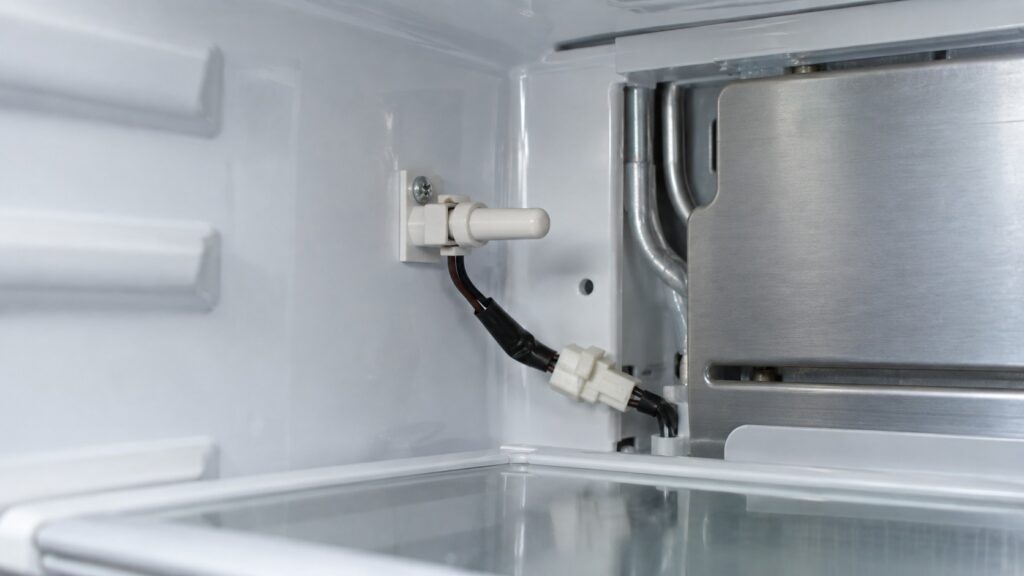
People are often surprised that CL is a fault at all. It is, for two reasons. Produce and bottled drinks freeze and split at cabinet temperatures a few degrees too low, and more importantly, a compartment that will not stop cooling is telling you that something has stopped asking it to stop. That is usually the cabinet sensor reading warmer than the air actually is, so the control keeps calling for cooling it does not need, or a damper that has stuck open and is feeding the fresh food side with freezer air.
Check the obvious first. A temperature setting that was nudged down by a sleeve brushing the panel accounts for a surprising share of CL calls, and our guide on setting the temperature on a DCS outdoor refrigerator covers what the numbers on the display actually control.
What do FH and FL mean on the freezer section?
FH is the freezer equivalent of CH: the freezer compartment has been measured above its band. On outdoor units it appears most often after a hot afternoon with a lot of door traffic, and it clears on its own once the load pulls down. An FH that will not clear overnight is different, and the usual suspect is frost. When an evaporator ices over, air stops moving through it, and a compressor that runs continuously cools nothing at all.
FL, the freezer running too cold, is the rarest of the four. On a unit with one compressor and one evaporator, the freezer has no independent way to overshoot unless the control is being fed a bad number. In practice FL is a sensor conversation, and it is worth reading alongside the RL sensor failure code, which the same control uses when it decides a probe has failed outright rather than drifted.
Why do outdoor refrigerators show these codes seasonally?
Because they are the only refrigerators in the house that live in the weather. An indoor unit works in a room that never leaves the 65 to 78 degree range. A DCS outdoor refrigerator built into a stone island sees 100 degree air in August, sun on the door, and radiant heat coming off the countertop and the grill next to it. In January the same cabinet may sit in 20 degree air, where a compressor that is not designed for a low ambient can short cycle and let the cabinet drift.
So the seasonal pattern is real: CH and FH cluster in summer, CL clusters in winter. That does not mean the codes should be ignored. It means the temperature outside belongs in the diagnosis, and our guide on telling weather apart from a real fault walks through how to make that call before anyone opens a panel.
What can you check before calling anyone?
- The door. Close it, hold a dollar bill in the seal at four points, and pull. If it slides out with no drag anywhere, the gasket is the fault.
- The condenser. On a built-in unit, the grille is at the bottom of the door or the toe kick. Vacuum it. A blanket of dust is the single most common cause of CH on an outdoor unit.
- The load. Pull the cabinet back from the rear wall so air can return, and clear anything sitting against the vents inside.
- The ventilation. An island that was built without side openings cooks its own appliance. This is a build defect, not a refrigerator defect.
- Time. After a big door event, give the unit four hours before you judge it.
Leave the evaporator panel, the fan and the water circuit alone. There is a water line behind a unit with an ice maker, and a partly loosened fitting that lets go at two in the morning floods a cabinet you built into stone.
When does a temperature code mean a sensor rather than the sealed system?
There is a useful tell. If the cabinet feels like the code says it should, the sealed system is the problem; if the cabinet feels normal but the display is unhappy, the sensor or the control is the problem. Put a thermometer on a shelf, give it an hour, and compare. A cabinet reading 38 degrees on a thermometer while the display throws CH is a measurement problem, not a cooling problem, and it is fixed with a probe, not a compressor.
The control reaches the display through a chain of parts, and a break anywhere in it shows up as a temperature complaint. Our explainer on how the DCS refrigerator control board works follows that chain from the thermistor to the compressor relay, and the full list of what this control can report is in our DCS outdoor refrigerator fault code guide.
When to call a technician
Call when a code survives a clean condenser, a good seal and a full night of running; when the compressor runs without stopping; when you find frost on the back wall of the freezer section; or when CH and FL appear together, which is the signature of air going where it should not.
We are an independent repair company, not a factory service arm. Pricing starts from a diagnostic visit and we confirm the estimate before any work begins. DCS outdoor refrigerator repair covers sensors, fans, defrost and the sealed system, and you can schedule a visit online or call 1-844-487-0065.