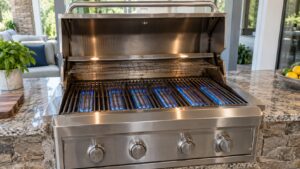
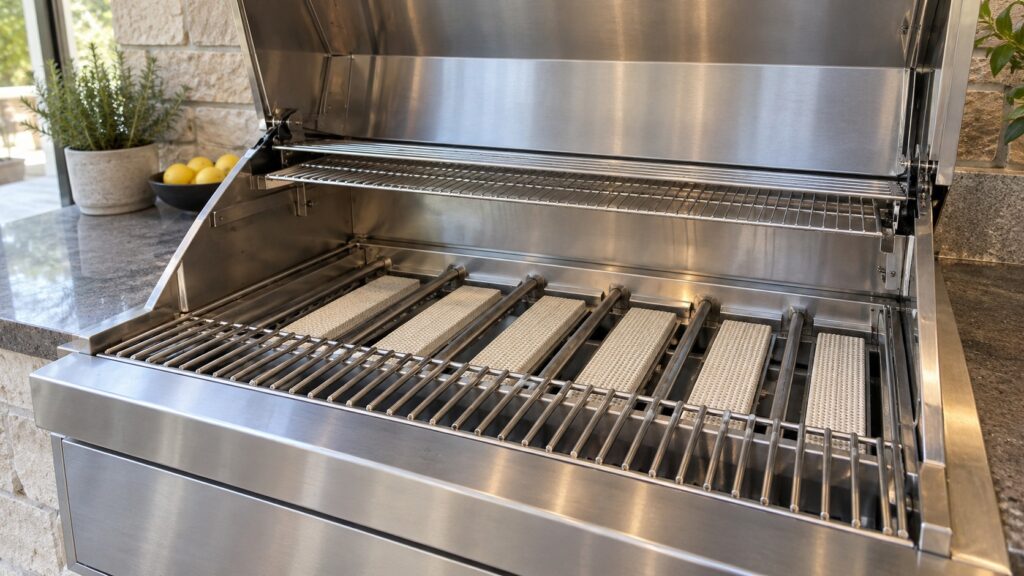
The DCS grill ceramic radiants are the rows of ceramic rods that sit above each burner. DCS calls the system Ceramic Radiant Glow: the burner flame heats the rods until they glow, and they re-radiate that heat upward as steady infrared energy. They also catch drippings, which vaporize and add flavor. Because they take the heat and the drippings, they are the part of the grill that gets dirtiest and wears fastest. Care is simple: keep them free of heavy carbon, brush them gently when cool, never scrub or pressure-wash them, and replace a rod that is cracked or broken.
What are the ceramic radiants on a DCS grill?
Our glossary entry on Ceramic Radiant Glow describes them as ceramic rods placed between the burner and the cooking grate. Our grill tower guide explains that on Series 7 and Series 9 grills they sit above a U-shaped stainless burner and together form the grill tower. The burner heats them, they glow, and the heat is released as even infrared energy across the grate. That is why a DCS grill sears well and why a rod that is missing or damaged shows up as a cold or uneven patch on the grate.
Why do the rods get dirty?
Drippings from the food fall through the grates and land on the rods. The rods are hot enough to vaporize most of that, and what does not vaporize bakes into a crust of carbon. A thin layer is normal. A thick, flaky layer insulates the rod, so it heats and glows less evenly, and it can smoke or flare when fat lands on it. Cleaning matters for taste as well as performance: old residue produces acrid smoke that goes onto the food. The glossary notes that keeping the rods free of heavy carbon buildup helps them heat and glow properly, and that a burn-off on high after each cook helps.
How do you clean ceramic radiants safely?
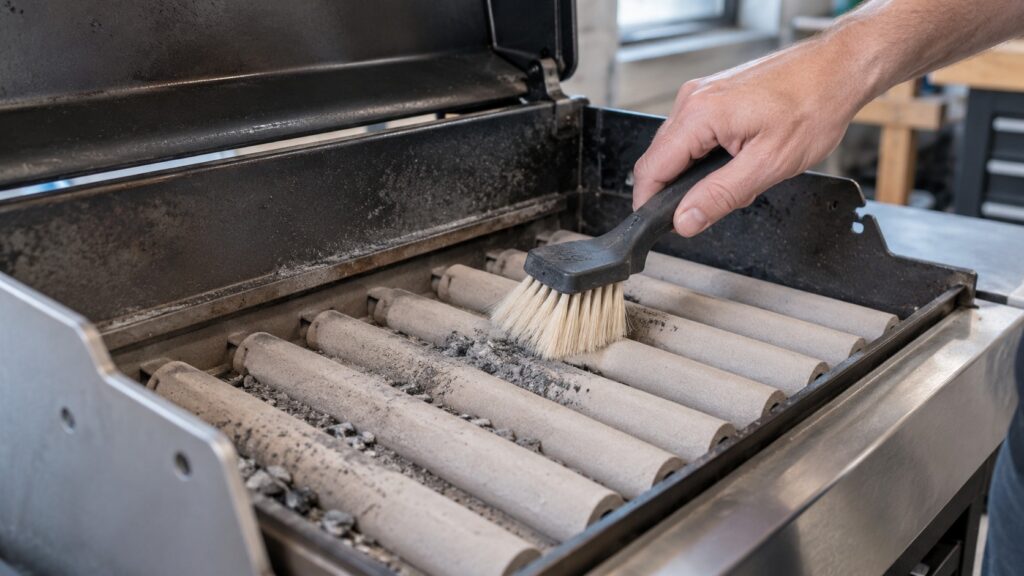
Do it in two stages. First, after cooking, a short burn-off with the lid open and the burners on high, following your owner’s manual for the burn-off steps, turns loose residue to ash. Switch the grill off and let it cool completely. Second, with the grill cold and the gas supply off, lift the grates and brush the rods gently with a soft bristle or nylon brush to remove the ash, working along the rods. Do not use a wire brush with force, water on a hot rod, oven cleaner or other harsh chemicals, which can damage the ceramic and leave residue that burns off as smoke. Our grate maintenance guide covers the grates above.
What does damage to a ceramic rod look like?
Look for cracks, chips and breaks, rods that have shifted out of position, and surfaces that have flaked. A hairline mark is worth watching; a clean break or a missing piece needs attention. A rod that has slipped can sit crooked against the burner, so look at how the rods rest before you assume one is faulty. A damaged rod does not heat evenly, so food cooks unevenly over that area and drippings can reach the flame directly, which raises the chance of flare-ups. The glossary says that a cracked or broken rod should be replaced to maintain even heat, and that the replacement should be a part that fits your model. Our grill flare-ups guide explains what to do when flames jump.
Can you replace a rod yourself?
Rods are removable parts that sit in the grill, and the exact way yours are held differs by model, so follow your owner’s manual for the way to lift them out and put them back. The gas must be off and the grill completely cool. Do not remove or loosen any burner, valve or gas connection to get at a rod, and do not force a rod that does not move. If you are unsure which rod fits your model, take the model number from the rating plate; our grill model number guide explains where to find it. If a rod is cracked and the burner underneath shows damage too, have a technician look at the whole assembly.
What else affects how the radiants perform?
Clean burner ports and clear venturi tubes keep the flame even, so the rods heat evenly; our burner cleaning guide covers that side. Heavy grease build-up in the drip tray feeds flare-ups, so keep the tray clean. A cover keeps moisture and pests out between uses. Give the rods time to reach a glow before searing, as the glossary suggests. If the grill is slow to heat or the flame is yellow even with clean rods, the problem is on the gas side, and our low heat troubleshooting guide is the next step.
When should you call a technician?
Call if several rods are cracked, if the burner beneath is damaged, if flare-ups continue after cleaning, or if the grill heats unevenly with clean ports and intact rods. Never try to repair gas parts or ignition parts yourself. Our DCS grill repair page explains how a visit works.
A simple habit keeps the rods in good shape: look at them each time you clean the grates. A quick glance tells you whether one has shifted, whether grease has pooled in a corner or whether a new crack has appeared. Catching a loose rod early costs nothing, while a rod that falls and breaks during a cook can drop onto the burner. If you grill often, plan a deeper clean at the start and the end of the season, and leave the rods dry and covered when the grill is stored.