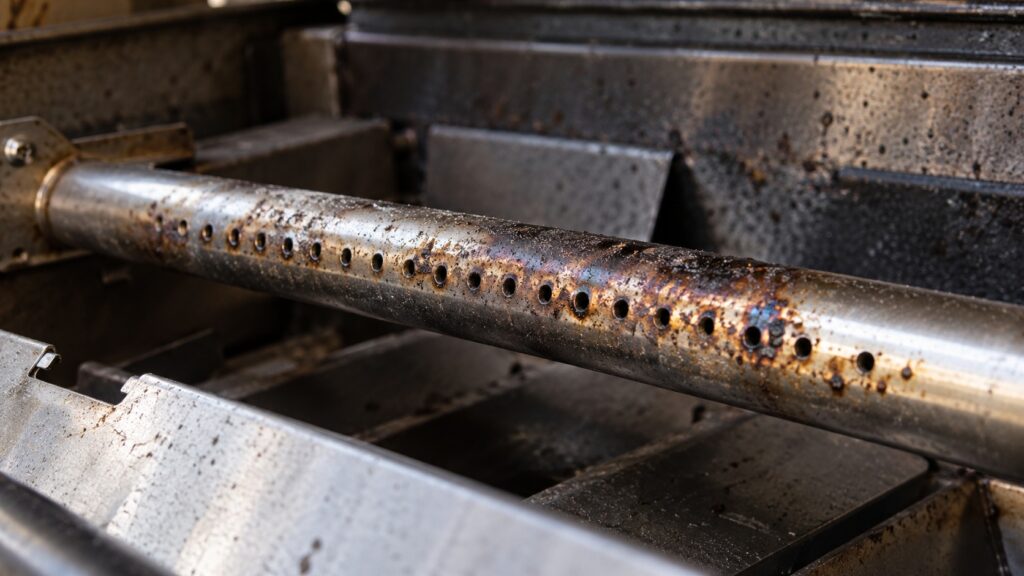
The DCS grill burner repair or replace question is usually easier than it looks. A burner that is weak, yellow or uneven is most often dirty, and cleaning fixes it. A burner that has cracked or burned through needs replacing with a burner that fits your model, which is a routine job for a technician. Replacing the whole grill head is the right answer only when several major parts have worn out together, or when the grill is being replaced for another reason. This guide helps you sort which case you are in before you spend money.
What do DCS grill burners look like, and how do they fail?
Our glossary entry on the U-shaped burner describes a heavy 304-stainless burner bent into a U so that two parallel runs of flame sit under each grate zone. Stainless tolerates the heat and the outdoor exposure better than cast brass or aluminized steel, which is a reason these burners last. The usual failures are clogged ports from baked-on grease, a venturi tube blocked by a spider web or nest, and, much less often, a crack or a burn-through. Each has a different remedy, so the first job is to tell which one you have.
When is cleaning enough?
If the flame is yellow-tipped, leans to one side or is weak on part of the burner, clogged ports or a blocked venturi are the likely cause. Our burner cleaning guide says that a thorough cleaning two to three times per grilling season keeps burners lighting quickly and heating evenly, and it explains that stainless burners tolerate brushing but that a brass brush can smear softer metal over the ports. Cleaning costs little compared with any repair. If you have not cleaned the burners this season, do that before deciding anything else, following the owner’s manual with the gas off and the grill cool.
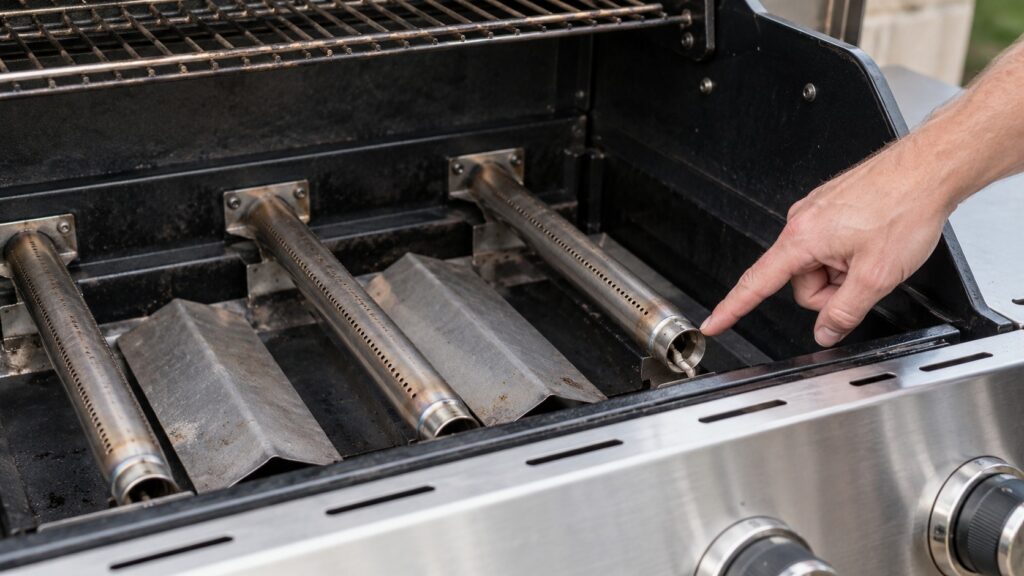
What does a damaged burner look like?
Look for a visible crack, a hole where the metal has burned through, a section that has warped, ports that are enlarged or missing, or heavy corrosion. A burner that flames erratically even after cleaning, or one with uneven flame along a split, is a sign of damage. The glossary says that a burner that cracks or burns through should be replaced. Do not use a burner that is cracked. A leaking or cracked burner can let flame appear in the wrong place, and it is not worth the risk. Replacement involves disconnecting parts that sit near the gas valves, so leave it to a technician.
Could the problem be something other than the burner?
Yes, and often. A burner that will not light may need a new electrode or may be missing gas, as our igniter troubleshooting guide explains. Low heat on all burners often comes from the gas supply, the regulator or a fuel mismatch rather than the burners themselves, and our low heat troubleshooting guide covers that. A yellow flame can point to a conversion or a clogged burner; see yellow flame. Replacing a burner that was never the problem is the most common waste of money, so get a diagnosis before you order a part.
When does replacing the grill head make sense?
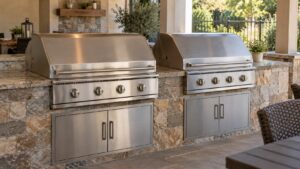
Our grill repair vs replace guide covers the full decision. In brief, a burner is a wear item, and a head with fresh burners and radiants cooks like a new one, so a burner replacement is rarely a reason to replace the grill. The picture changes when the burners, the valves, the hood and the body are all worn, or when the finish is badly corroded. Our grill head glossary explains that heads are bought, serviced and replaced independently of the cart or island, and that a replacement head must match the cutout. Measure the opening before assuming a newer model will drop in.
What should you ask before deciding?
Ask what exactly failed, whether other burners are showing the same wear, and whether a cleaning would have fixed it. Ask whether the replacement burner is one that fits your model. Ask about the condition of the radiants, grates and valves at the same visit, since a technician already at the grill can often tell you what is next to wear. Compare the quote with the cost of a new head plus the work of fitting it into your island, and do not forget the fuel type: a replacement must match natural gas or propane, as our fuel comparison explains. Our grill repair cost guide explains how we handle estimates.
How can you make burners last longer?
Most burner trouble is preventable. Clean the ports and the venturi tubes a few times a season, keep the drip tray from overflowing so grease does not pool around the burners, and use a cover between uses so pests and moisture stay out. Burn off residue after cooking according to your manual, and do not use a brass brush on stainless. Look for early signs of trouble, such as a flame that has become yellow or lazy or an ignition that takes longer than it used to, and deal with them before a burner is damaged. These habits are cheap, and they are the reason many DCS grills run for years before a burner needs replacing.