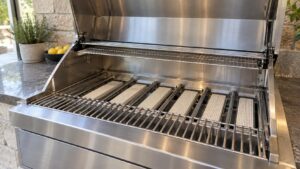

Good DCS grill grate care keeps food from sticking and protects the 304-stainless cooking surface for years. DCS grates are durable, but heat, salt, and acidic marinades still demand a simple routine. This guide covers cleaning, oiling, and long-term protection.
Clean after every cook
- Run all burners on high for 10-15 minutes to carbonize residue.
- Brush the hot grates with a stainless grill brush, working with the bars, not across.
- For stubborn spots, let the grates cool and scrub with warm soapy water and a non-abrasive pad.
Oil and condition
While the grates are warm (not hot), wipe them with a paper towel dipped in a high-smoke-point oil such as grapeseed or canola. This builds a light protective film that reduces sticking and guards against moisture.
Protect against rust and pitting
- Dry the grates fully before closing the lid – trapped moisture causes surface rust.
- Rinse off salty or acidic marinades promptly; they etch stainless if left on.
- Never use steel wool or chlorine cleaners, which scratch and corrode the finish.
- Use a fitted grill cover to keep rain and pollen off the cooking surface.
Seasonal deep clean
A few times a season, remove the grates and soak them, then clean the burners and radiant tray beneath – see our burner cleaning guide. For finish-care recommendations specific to your model, consult the manufacturer’s site at dcsappliances.com. If a grate is warped or heavily pitted, our team can source genuine replacements; schedule a visit.
Why stainless still needs care
304-grade stainless resists corrosion far better than chrome or cast iron, but it is not maintenance-free. Surface rust (“tea staining”) can appear from salt air, hard-water minerals, or contact with steel tools. The good news is that this is cosmetic and wipes off with a stainless cleaner and the grain of the metal.
Sticking food is usually technique
If food sticks even on clean grates, the surface is likely too cool or under-oiled. Preheat fully, oil the food rather than the grate when searing, and let proteins release naturally before turning. Forcing a flip tears the crust and leaves residue behind.
Long-term ownership
Grates that are cleaned, oiled, and kept covered routinely outlast neglected ones by years. If you are restoring a long-neglected DCS grill, pair grate care with a full burner service for the best results, and review our heat troubleshooting guide if performance has dropped.
Dcs Grill Grate Care: Key Takeaways
To recap on dcs grill grate care: work through the simple checks first, keep the appliance clean and correctly set up, and address small symptoms before they grow. The guidance above on dcs grill grate care reflects how our certified technicians approach the same issues in the field, and following it keeps your DCS appliance performing the way it was built to.
- Start with the easiest, lowest-cost checks and confirm the basics before replacing parts.
- Use only genuine DCS-specified parts so performance and safety are not compromised.
- Keep up a regular maintenance routine, which prevents most problems and protects long-term value.
- Know when a job needs a professional, especially anything involving gas, sealed-system refrigeration, or mains wiring.
If the steps here do not resolve your situation, the next move is a proper diagnosis rather than guesswork. Our team covers DCS cooking and outdoor appliances across all 50 states and 120+ metro areas, and the booking form accepts requests 24/7. You can schedule a service appointment at any time, review full specifications on the manufacturer’s site at dcsappliances.com, or browse comparable units on our model pages. Acting early on dcs grill grate care almost always means a smaller, simpler, and less expensive repair down the line.
When to call a DCS technician
It is worth being clear about the line between sensible owner maintenance and work that belongs with a professional. Routine cleaning, simple resets, and basic setup are well within reach for most owners and are exactly where this guide focuses. Anything involving a gas connection, a sealed refrigeration system, internal wiring, or a part that must be calibrated or pressure-tested is different: those repairs carry real safety and warranty implications and should be handled by a certified technician with the correct tools and genuine DCS parts. A DCS appliance is a long-term investment built from 304 stainless to last for decades, so it is almost always worth maintaining and repairing properly rather than letting a small problem compound. When in doubt, a quick diagnostic visit removes the guesswork, protects the appliance, and gives you a clear, written quote before any work begins so there are never surprises.