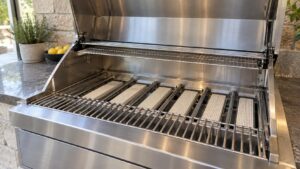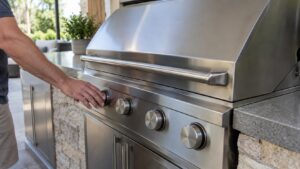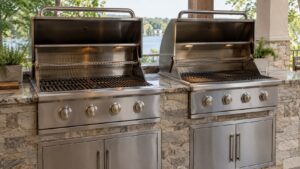
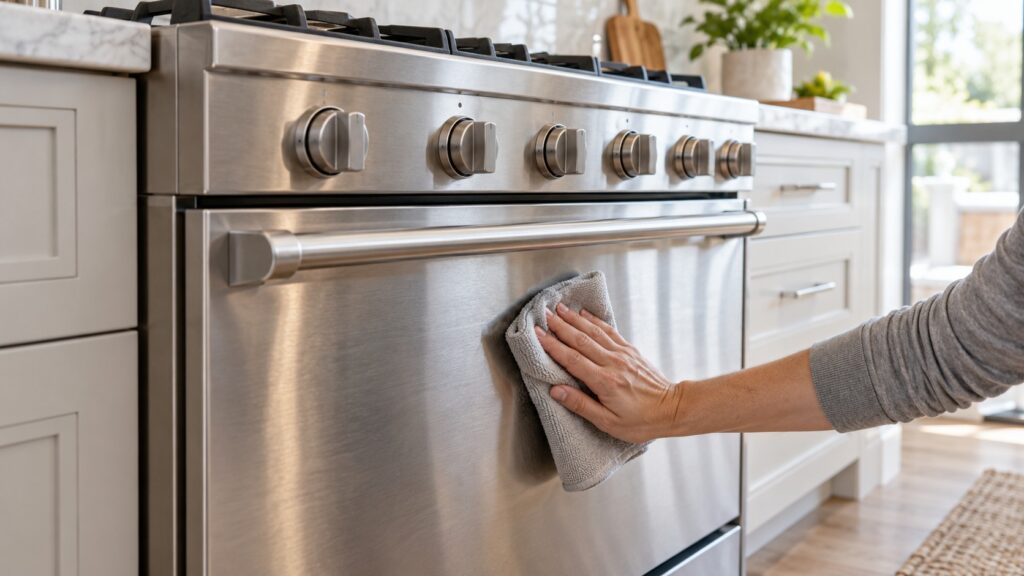
Here is how to clean DCS stainless steel: wipe with the grain using a soft cloth, warm water and a few drops of mild dish soap, rinse, and dry right away. That handles fingerprints, splashes and everyday grease on a range, hood, grill or outdoor refrigerator. For baked-on grease, heat discoloration and rust-colored specks there are gentle next steps, and a short list of things that should never touch the finish: steel wool, chlorine bleach and abrasive powders.
How do you clean DCS stainless steel day to day?
Look closely at the surface and you will see fine lines running one way. That is the grain, and cleaning along it keeps the finish even. Dampen a soft cloth with warm water and a little mild dish soap, wipe in long strokes along the lines, then go over it with a clean damp cloth to remove soap, and dry with a soft towel. Drying matters. Water left to evaporate on stainless leaves spots, and in hard-water areas those spots are the mineral deposits themselves.
Do it while the surface is cool. A warm panel can be wiped, but a hot one will streak and can bake the cleaner on. Wipe up splashes, grease and acidic spills such as tomato, citrus and vinegar promptly, because left on, they dull the finish. For routine upkeep of a whole range, our guide to DCS range deep cleaning puts the exterior in context with the burners and oven.
How do you remove fingerprints and streaks?
Fingerprints are oils, so a damp cloth with a drop of soap lifts them, and a second pass with a cloth dampened with white vinegar and water can remove the film that is left. Dry along the grain. If you use a commercial stainless cleaner, spray it on the cloth and not on the appliance, and use a little, because too much leaves a greasy film that attracts more prints. Avoid putting polish on the knobs or on the cooking surface of a grill, and never use a stainless polish on food-contact parts such as grates.
If streaks persist, you are probably adding a film instead of removing one. Wipe the area with plain water and a clean cloth, dry it, and start over with less product.
What works on baked-on grease and splatter?
Give the soap time instead of force. Lay a cloth soaked in hot, soapy water over the spot for several minutes to soften it, then wipe with the grain. If grease remains, use a nylon scrubbing pad, never steel wool, and keep strokes along the lines. Rinse thoroughly, because grease and cleaner left on a hot surface bake into a brown film that is harder to remove than the original mess.
Around the burners and the back of a rangetop, grease collects fastest, and a hood above a range gets a film of its own. Our guide to DCS range hood deep cleaning covers the hood and its filters, and the cooktop cleaning guide covers the surface around the burners.
Can you remove heat discoloration and rust-colored spots?
Blue, gold or rainbow tinting near the burners and on grill hoods is heat tint, caused by the metal’s protective layer thickening under heat. Mild tint can often be reduced with a cleaner made for stainless or a paste of baking soda and water rubbed gently with the grain, but heavy tint may fade rather than disappear. It is cosmetic, not damage.
Rust-colored specks are different. DCS uses 304-grade stainless, which resists corrosion well, but it is not rust-proof. Specks usually come from iron landing on the surface: a scrap of steel wool, a cast iron pan scraped across it, or iron in the water. Outdoors, salt air and rain can bring a light brown tea-colored stain. A non-abrasive cleanser made for stainless lifts most of it if you act early and wipe with the grain. Our glossary entry on 304 stainless steel explains the grade.
What should you never use?
Steel wool and steel brushes leave scratches and embed iron particles that rust later. Chlorine bleach and cleaners containing chloride attack the protective layer and cause pitting. Abrasive powders scratch, and a pad rubbed across the grain leaves visible cross-hatching that no cleaner removes. Oven cleaner sprayed on outside panels, harsh drain cleaners and acid-based cleaners left to dry on the metal can stain or etch it. If a product label warns against stainless, believe it.
Rinse after any cleaner, and rinse the sides of an outdoor appliance after a wash, a salt-air day or a storm. Cover a grill when it is not in use, which keeps dust, pollen and rain off the hood. If a surface is dented, deeply scratched or leaking at the seams, that is a repair and not a cleaning question, and DCS grill repair or the other service pages can look at it.