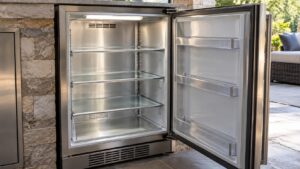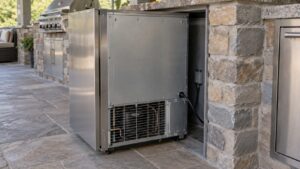
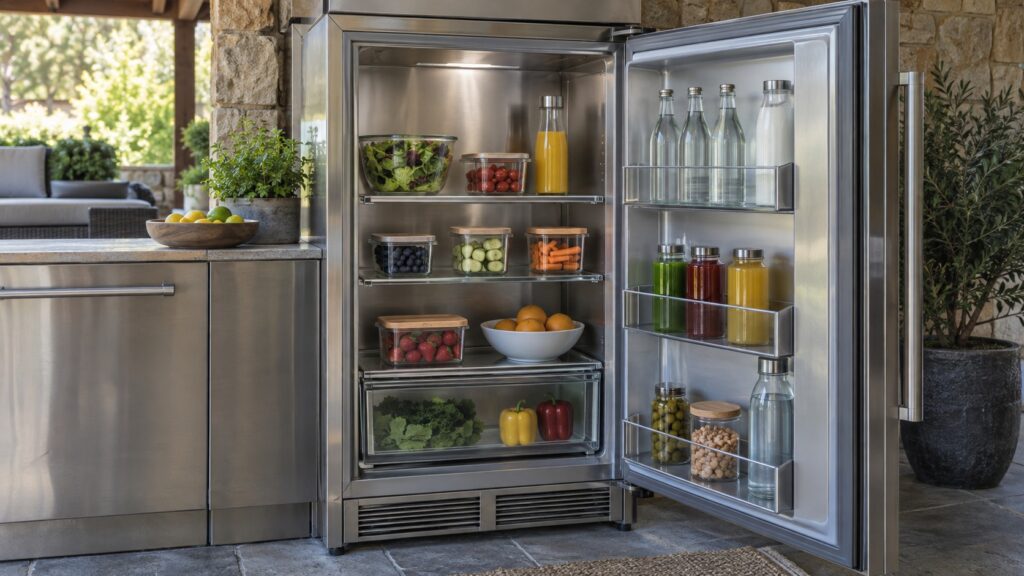
DCS outdoor refrigerator airflow tips come down to one habit: leave room for cold air to move. Cold air has to circulate inside the cabinet, and heat has to escape around the outside of it. When shelves are packed against the back wall, interior vents are covered or the front grille is blocked, you get warm spots, a compressor that runs longer and, on an ActiveSmart unit, temperature codes that did not need to appear. A well-loaded outdoor refrigerator is usually a more stable one.
Why does airflow inside the cabinet matter?
A refrigerator keeps its contents cold by circulating chilled air, and your DCS outdoor refrigerator relies on sensors that read the cabinet temperature. If a tall bottle, a tray or a big container sits in front of an interior vent, the air cannot circulate and the sensor reads one temperature while the items on the far shelf sit warmer. Our outdoor refrigerator temperature setup guide says the same: do not overload the cabinet or block the interior vents, because that creates warm spots and warm-cabinet codes.
How should you load the shelves?
Treat the shelves as places for air to flow around items, not as a storage wall. Group similar items, keep the heaviest containers low and leave a small gap between packages and the back wall. Put drinks you want coldest where the air is coldest and keep produce and delicate items away from the coldest spot, since the position of the coldest area differs by model; the owner’s manual or a separate thermometer can show you. Do not line shelves with foil, paper or mats that cover the shelf’s open design. Keep the door bins and drawers for what they were designed for, so heavy items do not strain hinges or seals.
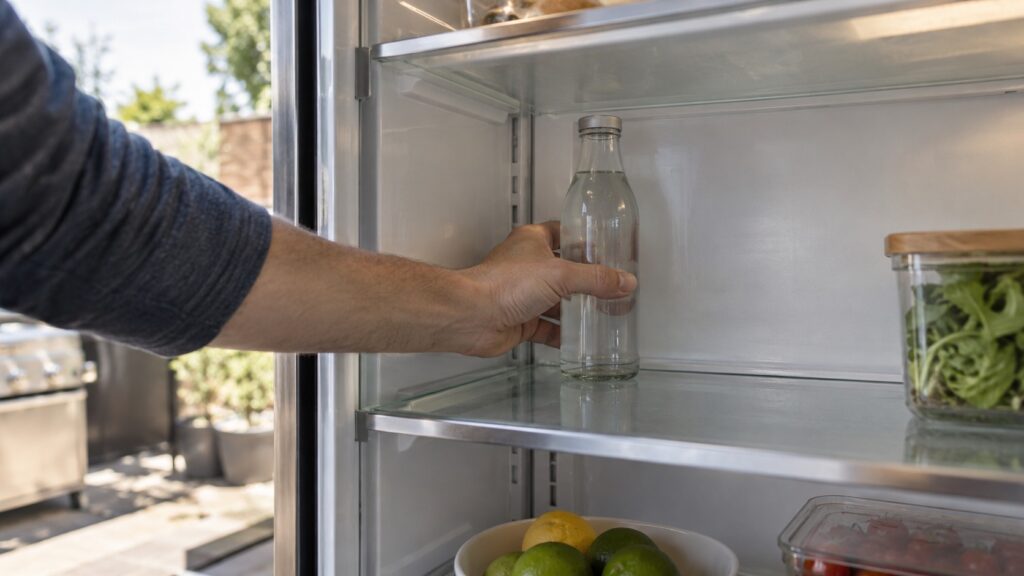
What about hot food and warm drinks?
A big load of warm drinks raises the cabinet temperature all at once, and the cooling system has to catch up. Cool items first when you can, or load in smaller batches. If your model offers Rapid Cool-Down, our Rapid Cool-Down glossary explains it: use it after loading warm items and then let the refrigerator return to normal operation. Never put hot food straight into the cabinet, and do not use Rapid Cool-Down as a permanent setting. Constant changes to settings also stop the refrigerator from settling, so make one adjustment at a time and wait.
Where does the outside airflow come in?
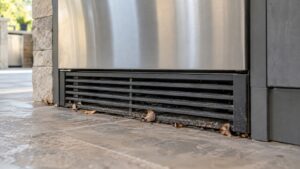
The cooling system releases heat to the air around the unit, and built-in models do it through the front grille. If the refrigerator sits in an enclosure, nothing should block that path: no storage in front of the grille, no decorative panel across it and no cover pulled over the unit while it runs. Our guide to how DCS outdoor refrigerators work describes why ventilation is as important as the sealed system. A little dust or leaf litter on the grille can also reduce airflow, so wipe the outside of the grille now and then with a dry cloth and leave anything deeper to a technician.
How do door habits affect temperature?
Every time the door opens, warm, humid air flows in. In an outdoor kitchen that air can be hot, so the cabinet takes longer to recover. Decide what you want before you open the door, take it out and close it fully. Check that nothing sticks out from a shelf and keeps the door slightly ajar, because on a model with a door alert an unlatched door will trigger it, and a door that does not seal fully lets warm air leak in. Our door seal maintenance guide covers how to test the gasket.
How do you check whether your loading habits are working?
Do not judge by touch or by the display alone. Put a separate refrigerator thermometer on a middle shelf and another on the shelf that tends to be warmest, read them at the same time of day for a few days and compare. If the readings differ by a lot between shelves, air is not circulating, so rearrange the load. If both are warm in the afternoon and fine in the morning, the problem is probably heat in the surroundings, such as sun on the front of the unit or a grill running next to it. Our temperature setup guide suggests giving the unit time to stabilize after any change, so make one adjustment at a time and give each one a day before you judge it.
Avoid the temptation to turn the setting colder to fix a warm shelf. A lower setting does not move air to the spot that is not getting any, and it can push the cabinet toward a too-cold code in cool weather. Fix the airflow, then leave the setting alone. For parties, load early, let the cabinet recover before guests arrive and keep door openings short, because a crowded outdoor kitchen is the hardest test of an outdoor refrigerator.
When are warm spots a sign of something else?
If the cabinet stays warm even with a sensible load, a clear grille and a good seal, or if a temperature code keeps returning, loading is not the cause. A faulty sensor, a failing fan or a sealed-system problem needs a technician, and you should not open panels to look. Our fault codes guide explains what the common codes mean, and the DCS outdoor refrigerator repair page explains how a visit works.