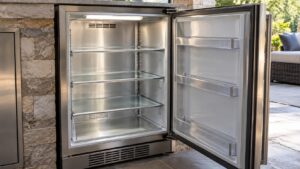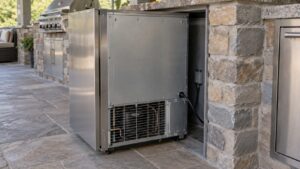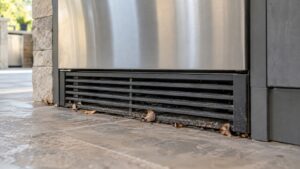
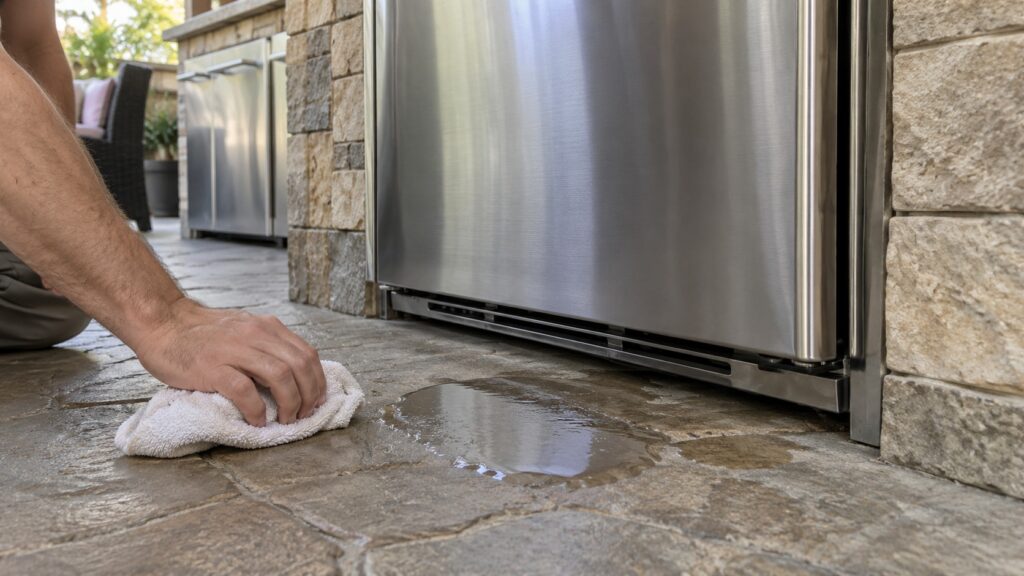
A DCS outdoor refrigerator leaking water has four usual explanations: a drain that is clogged or frozen so meltwater overflows, a door seal that lets in humid air that condenses, a water line or fitting on a model that makes ice or serves water, or simply weather reaching the cabinet from outside. Where the water appears, and when, tells you which one. A small amount of moisture that wipes away is normal in a humid place, but a puddle that returns after you dry it is not.
Is the water really coming from the refrigerator?
An outdoor kitchen gets rain, hose spray, melting ice from a cooler and drips from the countertop above. Before you assume the refrigerator is at fault, dry the floor and the front of the unit, and watch for a few hours without washing anything near it. Photograph where the water first appears. If it only shows up after rain or after the island is hosed down, the cause is the weather or the cleaning, and our outdoor faults: weather or appliance guide explains how to tell the two apart.
Could a blocked or frozen drain be the cause?
An automatic-defrost refrigerator melts frost from its cooling surface from time to time, and the meltwater has to run away through a drain. DCS outdoor refrigerators are described on our model pages as having automatic defrost, so a drain that is blocked by debris or frozen by a cold night can send that water into the cabinet or onto the floor. Where the drain sits and how it is cleared depends on the model, so use your owner’s manual. Do not poke into the drain area with a sharp tool or take off a panel to reach it. Empty the cabinet, dry it, and if water returns, that is a technician’s job.
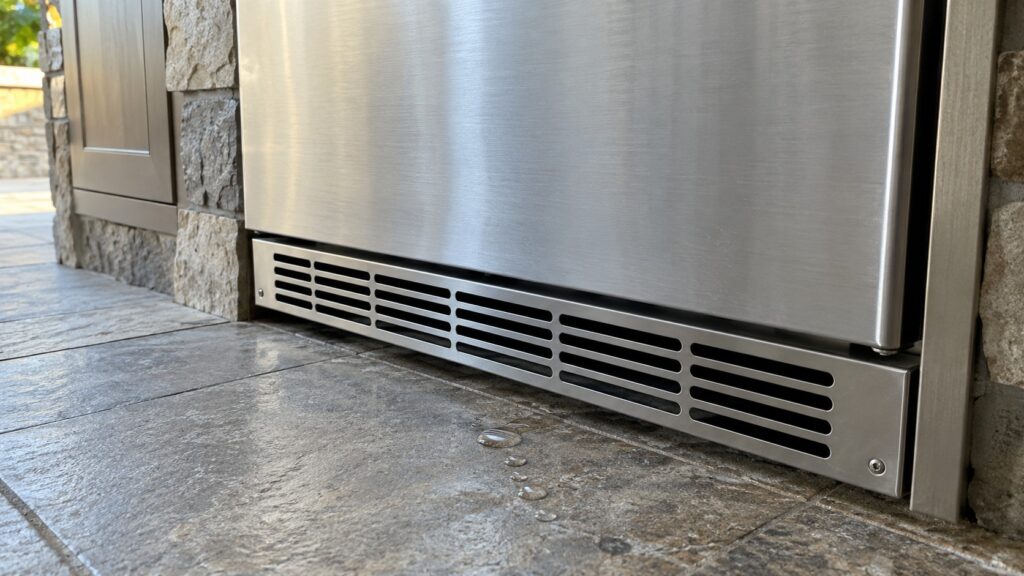
Is the door seal letting in humid air?
Outdoors in summer, the air is warm and wet. A gasket that is cracked, hardened or not touching evenly lets that air in, and the moisture condenses on the cold surfaces and runs down. The same thing happens if the door was left slightly ajar by a bottle sticking out of a shelf. Our door seal maintenance guide describes the dollar-bill test and how to clean the gasket with mild soap and water, never with solvents. Also make sure the unit sits level, because a unit tilted away from the door lets it hang open a little.
What if the model has an ice maker or water line?
Most of the DCS outdoor refrigerators on our model pages are plain refrigerators; the ice makers are in the outdoor beverage storage line. If your unit has a water supply, a leak at a fitting, a cracked line after winter or an overfull ice bin can all produce water on the floor. Shut off the water supply first, then the power if the water is anywhere near electrical parts. Our winterizing guide explains why a frozen, cracked water line is the most common winter damage, and the outdoor beverage water leak page covers units with ice makers.
What should you do right now if water keeps appearing?
Move the food to a cooler if the leak is large, since you may need to switch the unit off. If water has reached the outlet, the cord or the area around the controls, switch off the breaker at the panel while standing on a dry floor, and never pull a plug from a wet outlet. Mop up the water, because a wet stone or tile floor is a slip hazard, and keep the door closed on the food you have not moved. Do not run the refrigerator while standing in water, and do not remove the grille or any panel to see where the water starts.
How can you tell condensation from a real leak?
Condensation is a thin film or a few beads of moisture, usually on the outside of the cabinet near the door in humid weather, and it wipes away and does not return as a puddle. A real leak produces water that keeps collecting, in the same place, after you dry it. Put a dry paper towel or a flat piece of cardboard under the front edge for a few hours and look at where it gets wet. If water is on the floor in front, look at whether the door is closing fully and whether the cabinet is level. If the water seems to come from under the unit, do not slide a built-in refrigerator out of its cutout to look, because the connections sit behind it and the unit is heavy.
Also think about timing. Water that appears a day or two after the unit was loaded with ice or warm drinks is often melt and condensation from the load. Water that appears after a cold snap and a warm-up points to a drain that froze and thawed. Water that appears only after a particular activity, such as hosing down the island, points to spray. Writing down when it happens makes the diagnosis faster for a technician and often answers the question for you.
When should you call a technician?
Call if the water returns after you have dried it, cleaned the seal and checked the level; if you see water near the controls or wiring; if the cabinet is warm as well as wet; or if the leak comes from the back or the base where you cannot reach. Our DCS outdoor refrigerator repair page explains how a visit works.