DCS cooktop igniter replacement is the last step, not the first. Most burners that click without lighting need a dry cap, a clean electrode or a reseated burner, not a new part. Our pages say that a cracked electrode needs to be replaced, and that is the case this guide is about: how to tell a dirty electrode from a failed one, what you can safely do yourself (drying and cleaning only), how to order the right part and what a technician does. We will not give you a step-by-step for taking a gas cooktop apart, because the access, the safety steps and the settings depend on the model and belong in the manufacturer’s instructions or in a qualified technician’s hands.
How do you know the igniter electrode has failed?
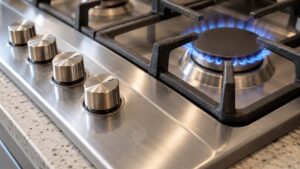
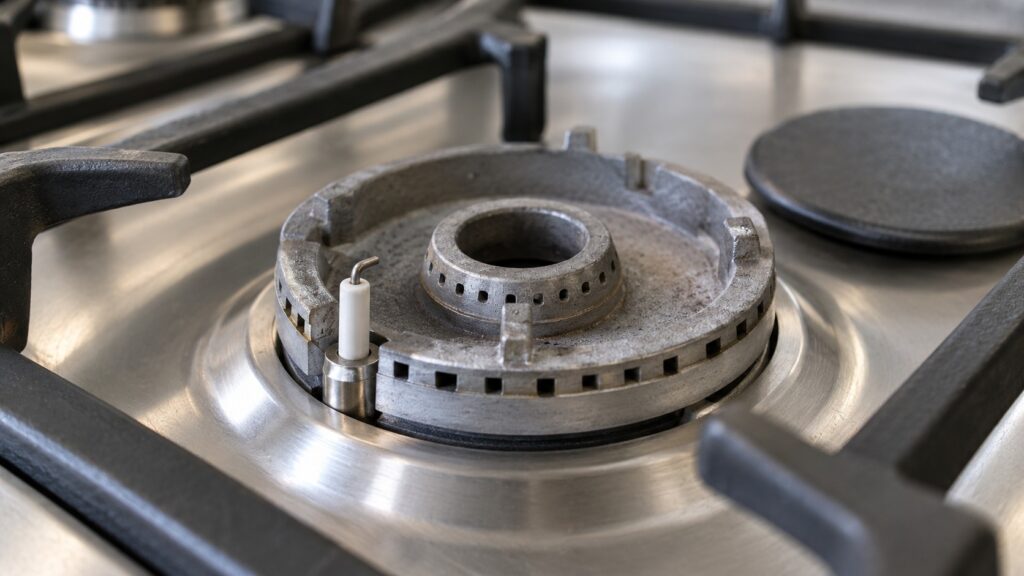
An electrode is the small ceramic-and-metal part beside each burner that makes the spark. DCS gas cooktops use mechanical spark ignition and manual valves, so there is no control board and no error code, and a problem shows up as a symptom at the burner. The symptoms that point to the electrode are a burner that clicks without lighting, a burner that does not spark at all while the others do, and a spark that jumps to the wrong place. Our page on a cooktop burner that will not ignite lists the usual causes in order: a misseated or wet cap, a fouled electrode, or a gas-flow issue. Work through the cheap causes first.
Look at the electrode with the burner cool. A hairline crack, a chipped ceramic or a loose, dangling wire is a failed part. Food baked on the tip is not, and it can be cleaned.
What should you try before replacing anything?
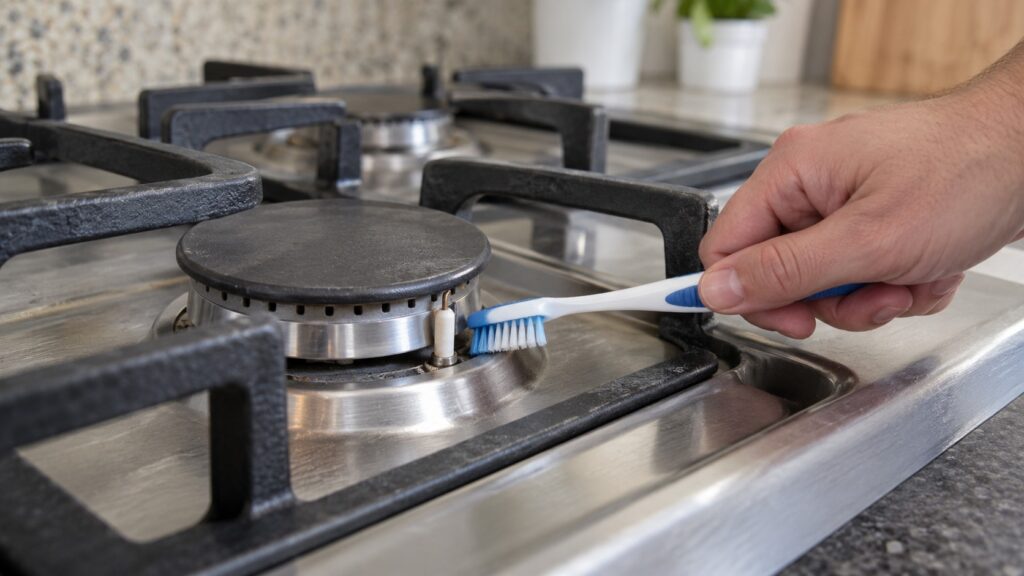
Dry and clean first. Let the cooktop cool and make sure all burners are off. Lift the grate and the burner cap, dry the cap and the base thoroughly, because moisture from cooking or cleaning is a common cause of non-stop clicking, and reseat the cap squarely so it does not tilt the spark gap. Clean the electrode and the porcelain around it with a dry toothbrush, and clear the gap with a toothpick, as our guide to a rangetop that will not stop clicking describes. Do not spray cleaner onto the electrode, and do not use a wet brush. Our cooktop continuous clicking page covers the case where the igniter keeps clicking after the burner has lit.
Is the module the problem, not the electrode?
Sometimes. On many sealed-burner appliances one spark module fires all the electrodes together, so turning one knob makes every burner click until that burner lights. That is normal. If no burner sparks at all, the module or the power supply is more likely than six failed electrodes. If only one burner fails to spark and its electrode looks cracked, the electrode is the likely culprit. A technician can test the spark and the wire, which is better than guessing. You can read how the burners are built in our guide to how DCS sealed burners work.
Can you replace the electrode yourself?
We recommend leaving it to a qualified technician, and we do not publish a procedure for it. The electrode sits next to the gas burner, and the work involves opening up a gas appliance, disconnecting a wire and refitting the part so that the spark gap is correct. The access and the settings differ by model and belong in the manufacturer’s instructions and a technician’s hands. Do not bend the electrode, do not change the gap by eye and do not run the burner with a part left loose.
Gas: only a specialist. Any work on gas valves, connections, orifices or the regulator must be done by a qualified gas professional. If you smell gas at any time, do not light anything and do not switch anything on or off. Leave the area, turn off the gas at the source if you can do so safely, and call your gas company or 911 from outside. Never check for leaks with a flame, and do not use a gas appliance that you have worked on until it has been checked.
How do you order the right part?
Get the model and serial number from the rating plate first, because the electrode that fits one cooktop may not fit another. Our site lists models such as the 36-inch drop-in gas cooktop CDV2-365, and our DCS appliance parts guide explains how to match a part to a unit. Use a genuine part for your model rather than a generic substitute, because the length, the mounting and the wire connection must match. If your cooktop is an older one, check availability before you start.
What does a technician do?
A technician confirms that the burner cap, the base and the gas supply are not the cause, tests the spark at the electrode, checks the wire and the module, and replaces the failed part. They then check that the burner lights smoothly and that the flame is blue and stable, and they check the connections for leaks with the right equipment. A part swap is usually far cheaper than a new cooktop, and our cooktop repair or replace guide explains when replacement makes sense. Our DCS cooktop repair page explains how a visit works.
How do you keep the new electrode working?
Most electrode problems are caused by moisture and spills, so the habits are simple. Wipe spills promptly, dry the caps after cleaning, seat them squarely and avoid soaking the burner base. Our DCS cooktop cleaning and care guide covers the routine, and our page on a cooktop weak flame covers what to do if the flame looks poor after cleaning.