If you are weighing a dcs grill series 7 vs 9 choice, start with the model pages, because the two series share more than they differ. On our site, Series 7 grills such as the BGB, BGC and BE1 are described with U-shaped burners and the Grill Tower, while Series 9 grills such as the BFG and BH1 are described with Ceramic Radiant Glow and an integrated rotisserie. The 36-inch built-in BGB36-BQR and BFG36-BQR both list three U-shaped 304-stainless burners, so the difference on paper sits mostly in how the pages describe the heat assembly and what comes with the grill. This guide goes through it plainly. DCS, a Fisher & Paykel company, makes both series, and we are an independent repair service, so we compare what we see, not what brochures promise.
What is the difference between DCS Series 7 and Series 9 grills?
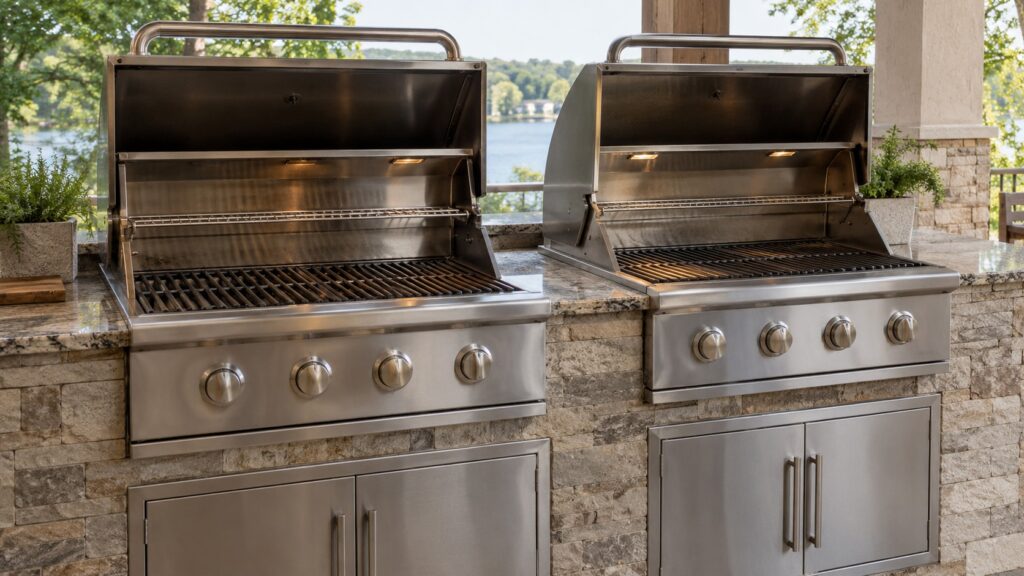
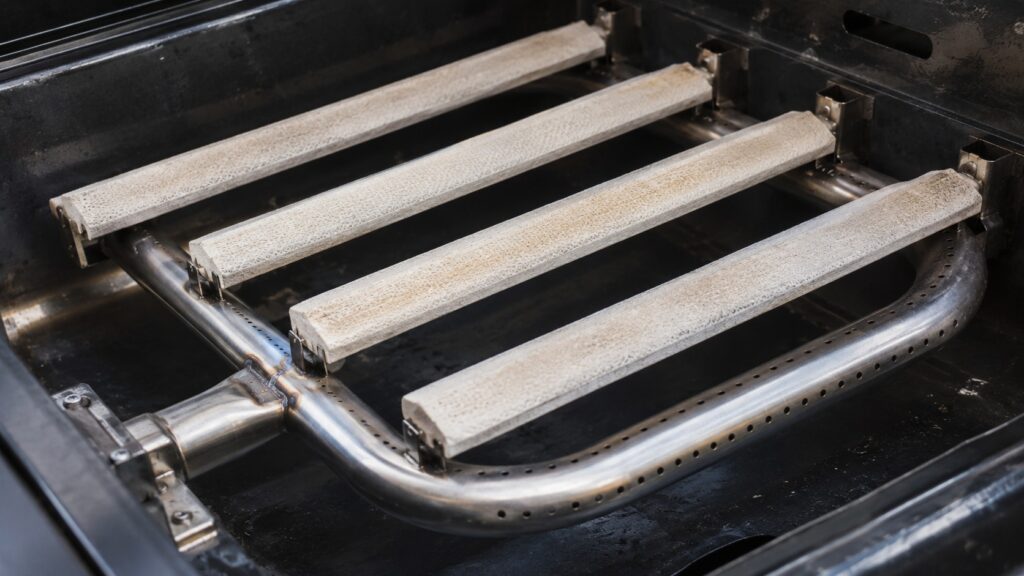
The clearest difference on our model pages is how they are described and whether a rotisserie is listed. A Series 7 BGB36-BQR is described as a 36-inch built-in grill with U-shaped burners and the Grill Tower. A Series 9 BFG36-BQR is described as a 36-inch built-in grill with Ceramic Radiant Glow and a rotisserie. Look further down and the specifications of both list a Grill Tower with Ceramic Radiant Glow rods; the BFG36-BQR adds a rotisserie with a rear infrared burner. Our glossary entries on the U-shaped burner, the Ceramic Radiant Glow rods and the Grill Tower explain each part, and the Grill Tower page notes that the tower idea is core to both series, so read the individual model page rather than assuming a part is missing.
Rotisserie is also not exclusive to one series on our pages: the Series 7 BGC cart model is listed with an integrated rotisserie. If a rotisserie matters to you, check the model, not the series.
Which grill suits which cook?
If you mostly grill steaks, burgers and vegetables, compare the burners, grilling area and grates listed for each exact model. If you roast whole chickens or cuts on a spit, the rotisserie and its rear infrared burner are the reason to look at a model that has one, and our glossary entry on the rotisserie infrared burner explains how it works. If you cook for a crowd and like a side burner or a social cart, look at the Series 9 BH1, which our page lists as a freestanding social grill with a side burner. None of this means one series is better. It means you should match the features to how you cook.
How do the specifications compare on the 36-inch pages?
If you compare the BGB36-BQR and the BFG36-BQR pages line by line, most of the listed numbers match: three U-shaped 304-stainless burners at about 25,000 BTU each, about 75,000 BTU in total, and a primary grilling area of about 558 square inches, with a temperature range listed from 300 to 1,100 degrees Fahrenheit and continuous spark ignition that works independently on each burner. The Series 9 page also lists the rotisserie with a rear infrared burner. Treat these as the figures on our model pages and confirm them against the spec sheet for the exact model you are buying, because figures can change between production runs. The practical conclusion is that the choice between these two is about features, not about raw heat.
How do you read the model number?
The letters in a DCS model number carry a lot of information. The series letters at the front, such as BGB, BGC, BFG, BE1 or BH1, identify the generation and the head design. The number that follows is the width, commonly 30, 36 or 48 inches. On many models a trailing N is natural gas and a trailing L is propane, so read the plate. Our DCS grill model number guide shows where the rating plate is and what each group means, and it is worth reading before you buy a used grill or order any part, because two heads that look alike can belong to different series and take different burners.
Natural gas or propane: does it change the choice?
It does, and it is not a setting. A DCS grill is built and fitted with orifices for one fuel, so you need the right version for your supply. Our guide to natural gas vs propane compares the two. Conversions require the correct kit and a qualified technician.
Gas: leave it to a specialist. Gas connections, regulators, orifices and conversions are work for a qualified gas professional, never an owner. If you ever smell gas, do not light anything and do not switch anything on or off. Move away from the grill, turn off the gas at the source if you can do so safely, and call your gas company or 911 from a safe distance. Never test for leaks with a flame.
What should you check before buying a new or used grill?
Measure the cutout or the cart space, because openings have shifted between generations. Confirm the fuel suffix. Check that every burner lights, that the flame is blue and even, and that the grates, the grease tray and the rotisserie parts are intact. Ask about the age, because parts availability depends on the series. Our DCS appliance parts guide explains how to source parts for an older unit, and the grill installation requirements list what an island or cart installation needs.
What about upkeep and repairs?
Whichever series you choose, keep the burner ports clear, wipe the rods and grates, and empty the grease tray, as our burner cleaning guide describes. A part swap is usually far cheaper than a new grill, and our grill repair or replace guide shows how to weigh a repair. Our DCS grill repair page explains how a visit works.