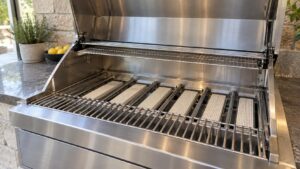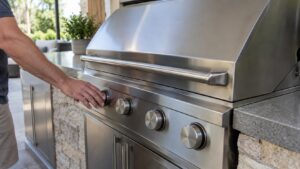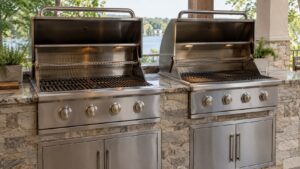
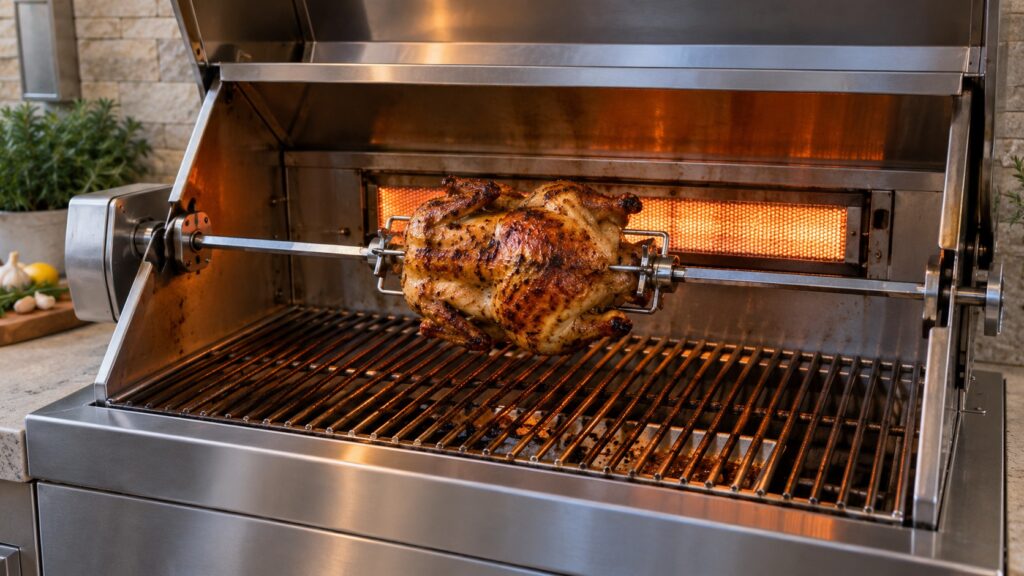
A DCS grill rotisserie motor that turns slowly, stalls under a load or does not turn at all is usually worth repairing, because the motor is a modest, replaceable part and the grill around it is the expensive piece. Before you pay for a new motor, check the simple causes: a bent spit, an unbalanced load, a loose fork or a dead outlet. Replace the whole grill only when the motor problem comes with deeper damage such as rust-through, a failed gas system or a cabinet that is falling apart.
Is a DCS grill rotisserie motor worth repairing?
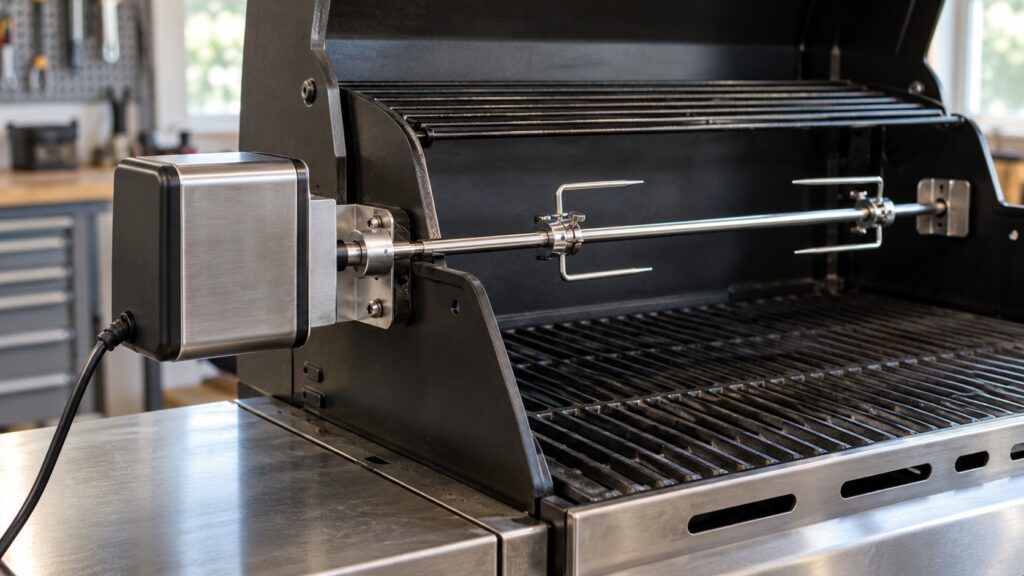
Almost always, if the grill is otherwise in good shape. The motor is an electric part with a simple job: it turns the spit at a slow, steady speed so the meat cooks evenly. It is mounted on the side of the grill, it is removable, and it is separate from the gas system, so replacing it does not involve burners or valves. Compared with a new built-in grill, a motor swap is a small repair, and it returns a feature that you may have paid for in the original purchase.
It also helps to compare it with the rest of the grill. A grill that has good burners, solid stainless steel and a sound cabinet has many years of service left, so one tired motor should not decide its future. Our broader guide on whether to repair or replace a DCS grill covers the bigger decision.
What should you check before blaming the motor?
Many rotisserie problems are not the motor at all. An unbalanced load is the most common: if the meat is heavy on one side, the spit labors through each rotation and may stall at the heavy point. Center the meat on the rod, tie it so it is compact, and tighten the forks so nothing shifts. A bent spit rod binds in the bearing at the far end and slows the turn, so roll the rod on a flat surface to check that it is straight.
Check the power next. Make sure the motor is plugged into a working, grounded outlet and that the cord is not cut or crushed. Try the motor with no load on the spit. If it turns freely empty and struggles with a load, the load or the rod is the cause. If it does not turn even empty, the motor, the cord or the outlet needs attention. Our guide to DCS grill rotisserie setup shows how to balance and mount a load correctly.
What failures point to the motor itself?
A motor that hums but does not turn, a grinding or clicking noise from the housing, a motor that works for a few minutes and then stops, and a motor that is hot to the touch after short use all point to internal wear. Moisture and heat are hard on outdoor motors, so corrosion at the plug or a seized gear is common on grills that live uncovered. The motor housing sits close to the heat of the grill, which ages seals and lubricants over time.
Do not oil the motor or open the housing yourself. The gearing is sealed and designed to run without service, and adding oil can attract grit. Disconnect the power, let everything cool and take note of the model number on the grill and on the motor. A technician can confirm the failure and fit the right replacement. Our DCS barbecue grill repair problems guide lists other common issues that appear alongside motor trouble.
What if the rotisserie burner is the problem?
Sometimes the spit turns fine but the heat is the problem, which is a burner question rather than a motor question. The rotisserie burner at the back of the grill is a separate gas part, and if it will not light or burns weakly, the meat cooks slowly even though the spit is turning. Our glossary entry on the DCS rotisserie burner explains how that burner works.
That distinction matters when you decide between repair and replace. A burner or igniter problem is a gas repair for a technician, while a motor problem is an electrical swap. If both fail on an old grill that is also rusting, the combined cost and the age of the unit may tip the decision toward replacement. Ask for a diagnosis that covers both so you can compare.
When does replacing the grill make sense?
Replace when the problems are structural or widespread, not when one accessory fails. Signs include rust-through in the firebox or the cabinet, burners that are failing across the board, a gas system that no longer passes inspection and parts that are no longer available for your model. Repeated repairs on different systems within a short period suggest the grill is wearing out as a whole.
If the grill is sound, repair the motor and keep cooking. A part swap is usually far cheaper than a new built-in grill, and installation of a new one means more than just the grill itself: the cutout, the gas connection and the finish work all add to the cost. Book a diagnosis through DCS grill repair if you are not sure which side of the line your grill is on.