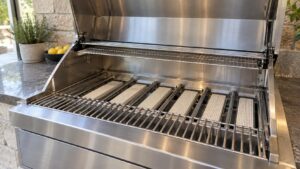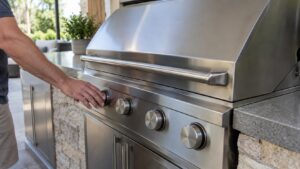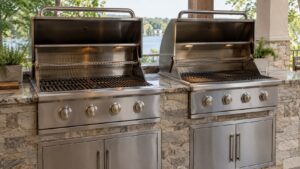
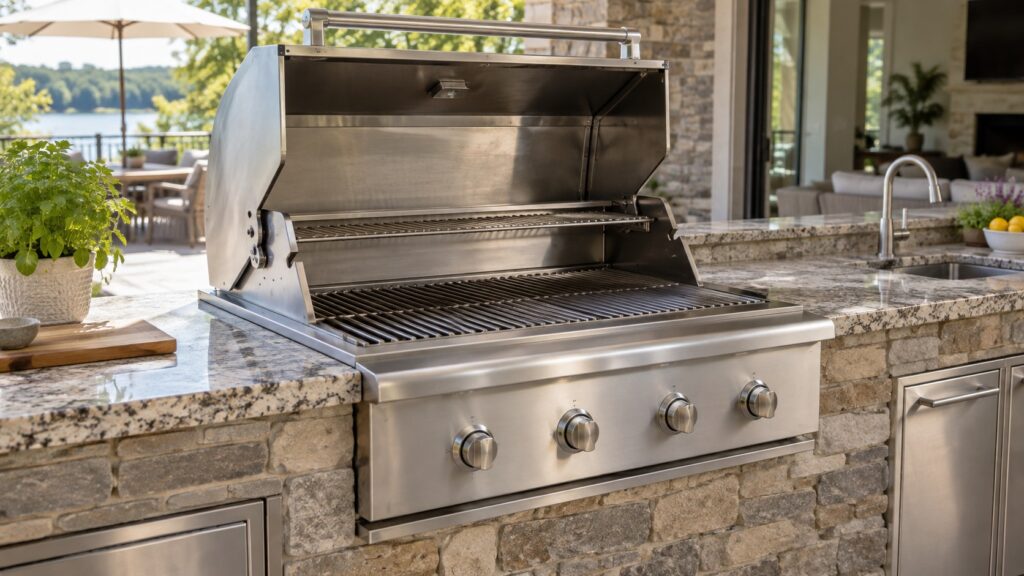
A DCS grill head is the cooking unit itself — burners, grates, hood, controls and the stainless body around them — as distinct from the cart, the island or the cabinetry it sits in. The term matters because it is how these grills are sold, serviced and replaced: you buy a head and then decide what carries it, and years later you can replace a head without touching the island it was built into.
Why the distinction is practical, not pedantic
When a grill is built into a masonry island, the island is permanent and the head is not. Heads have a service life measured in a decade or two of outdoor use; a stone island lasts as long as the house. Treating the two as one appliance leads people to conclude that a tired grill means rebuilding an island, which is rarely true and always expensive.
The reverse matters too. A head that is replaced has to match the cut-out it goes into, and cut-out dimensions are a property of the head rather than of the island. Measure the opening before assuming a newer model will drop straight in.
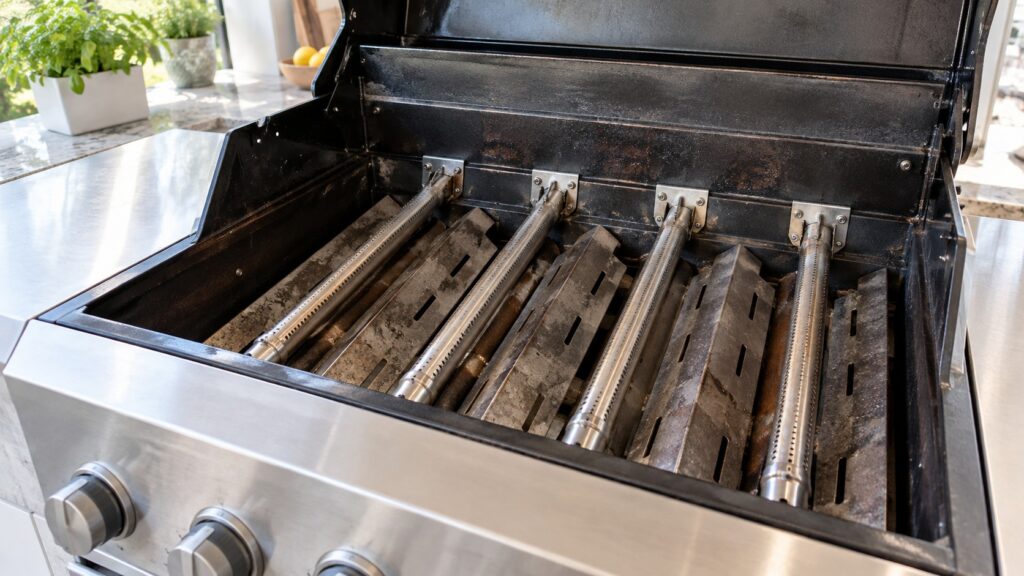
What is inside a head
- Burners — the tubes that carry gas from the valves to the cooking area, and the most common wear item on any grill.
- Radiants or briquette trays — the layer between the burner and the food that spreads the heat and vaporizes drippings.
- Grates — cast iron or stainless, and the part that decides sear marks and cleanup effort.
- Hood and thermometer — what turns the grill into an oven for indirect cooking.
- Ignition and valves — the spark system and the controls, and the parts most affected by rain.
The grill tower, where fitted, is a separate assembly with its own explainer — see our grill tower glossary and how it works.
Built-in versus cart, and what changes
Mechanically, nothing. The same head cooks the same way on a cart as in an island. What changes is everything around it: ventilation, gas supply, clearance to combustibles, and how easy it is to service.
A built-in head needs the island to provide ventilation openings on the sides, because a gas appliance sealed into a masonry box has nowhere to vent a leak or shed heat. This is a safety requirement rather than a performance one, and it is the single most common thing missed when an island is built by a contractor unfamiliar with outdoor kitchens. Our grill installation requirements guide covers the openings and the clearances.
Sizing a head, and the number that is not width
Heads are described by width, and width is the wrong number to choose on. What matters is usable cooking area and how it is divided: a head with three independently controlled burners gives you a genuine indirect zone, while the same width with two does not. If you cook a roast on the grill, zones matter more than square inches.
The second number worth asking about is the rotisserie provision. A head built for a rotisserie has the motor mount, the socket and usually a dedicated rear burner; adding one later to a head without them is not straightforward. Our rotisserie setup guide covers what it involves.
What wears out first
In outdoor service the order is fairly consistent. Burners go first — they are thin steel in a corrosive environment, and they are consumable. Radiants and briquette trays follow. Igniters and their wiring are next, particularly on a grill that lives uncovered. Grates last well but stain and pit. The stainless body outlasts all of it if it is washed down regularly.
Almost none of that is a reason to replace a head. Burners, radiants, igniters and grates are all parts, and a head with fresh ones cooks like a new grill — see our repair or replace guide for where the line actually sits.
Keeping a head serviceable
Two habits do most of the work. Cover it when it is not in use, because rain in the burner tubes is what produces yellow flames, popping and hard starting the next time. And wash the stainless down with fresh water regularly, particularly near the coast, because surface contamination is what people mistake for the steel corroding.
Burn-off after cooking, brush the grates while warm, and empty the grease tray before it overflows into the cabinet below. Our guides on burner cleaning and grate maintenance cover both routines.
Fuel, and the decision made at the head
A head is built for natural gas or for propane, and the difference lives in the orifices behind the valves. Conversion is possible with the correct kit and a qualified technician; it is not a setting, and it is not something to improvise with parts from another brand. A head run on the wrong fuel produces lazy yellow flames that soot everything, or weak flames that will not sear — and in both cases people spend months blaming the burners.
Settle it before ordering. If an island is plumbed for natural gas, the head has to match; if the only supply is a propane cylinder in the cabinet, the head has to match that instead and the cabinet has to be built to vent it. Our guide on natural gas against propane covers the trade in detail.
When to call
A burner that will not light while its neighbors do, uneven heat across the cooking surface, flare-ups that have become constant, or an igniter that clicks without sparking after the grill has dried out — those are parts within the head, and they are ordinary work.
We are an independent repair company, not a factory service arm. Pricing starts from a diagnostic visit and we confirm the estimate before any work begins. DCS grill repair covers burners, ignition, valves and the rotisserie, and you can schedule a visit online.