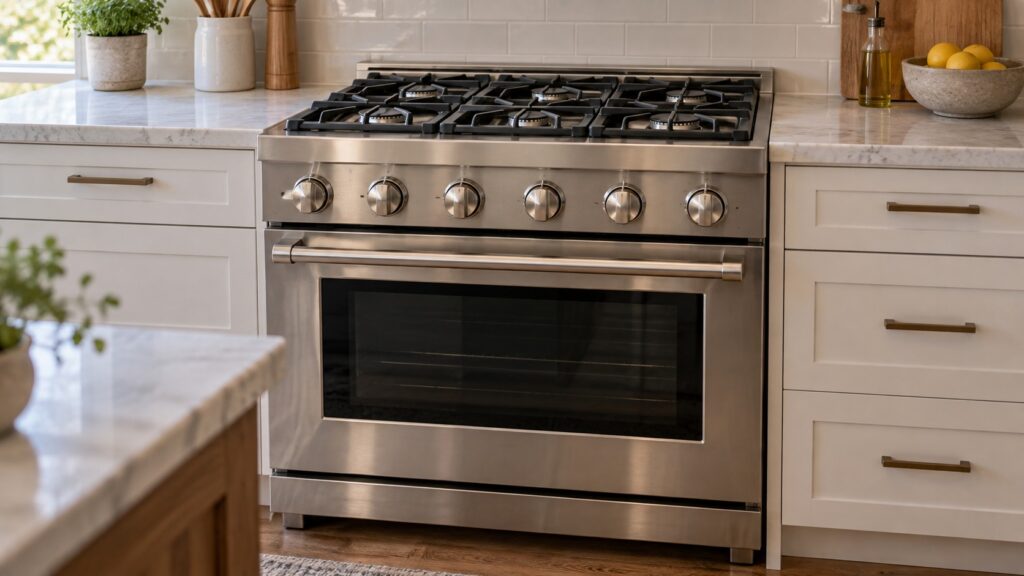
A DCS dual fuel range pairs a gas cooktop with an electric oven in one appliance, so you get an open flame on top and the even, dry heat of an electric oven below. An all-gas DCS range uses gas for both. The difference decides what you need behind the wall, how the oven behaves and which parts a technician will carry, so it is the first term to get straight before you buy, install or repair a DCS range.
What does dual fuel mean on a DCS range?
Dual fuel means two energy sources in one appliance. The cooktop burns gas, which gives instant response and a visible flame, while the oven heats with electric elements, which tend to hold a steady temperature and give a drier heat that many bakers prefer. The two halves are separate systems that happen to share a cabinet, a control area and a name on the front.
The practical result is two connections. A dual fuel range needs a gas line with a shutoff valve for the burners and a dedicated high-voltage circuit for the oven, while an all-gas range needs the gas line and a normal outlet for the igniters, the clock and the oven controls. If your kitchen has only one of those, the choice may already be made.
How are DCS range model names organized?
The DCS range models on our list fall into families such as RDV2, RDT, RGV2, RGS and RGSC, followed by digits that carry the width, for example 30, 36 or 48 inches. In the names on our list, the RDV2 and RDT groups are dual fuel designs and the RGV2, RGS and RGSC groups are all-gas designs. Letters and suffixes also separate griddle, grill and double-oven versions, and features change between production years, so check your own manual and rating plate before you act on a name alone.
If you are comparing a range with a separate cooktop and oven, our guide on DCS range vs rangetop explains the trade-offs. Our DCS model number guide shows how to read a plate when you need to identify a part.
Which related terms should you know?
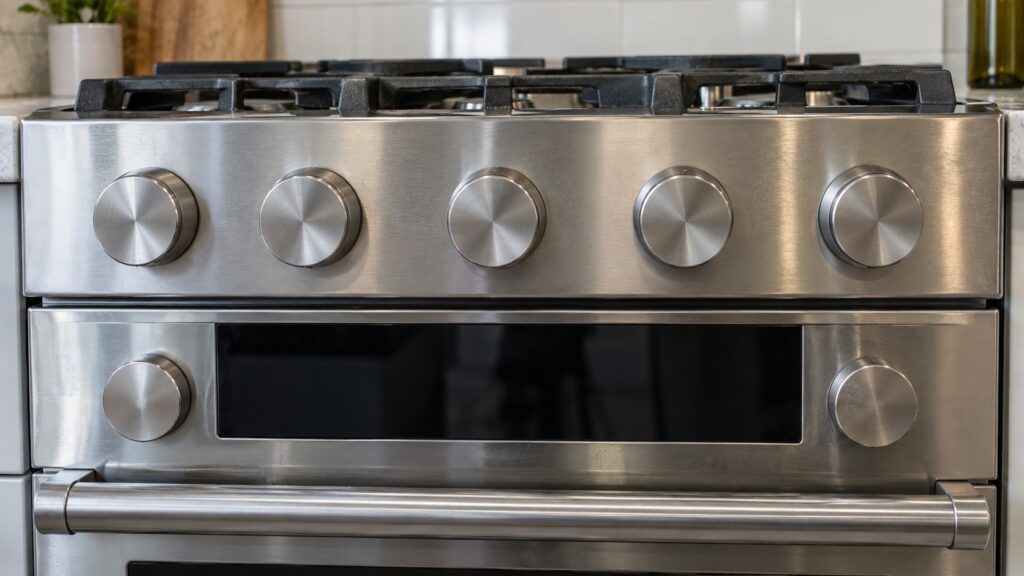
A sealed burner is a gas burner whose base is sealed to the cooktop, so spills run onto the surface and not into the well below. DCS sealed burners are explained in our guide to how DCS sealed burners work. Convection means a fan in the oven moves hot air around, which evens out baking and can shorten cook times, and our guide to how DCS convection ovens work covers the principle.
The bake element is the electric heater at the bottom of a dual fuel oven, and the broil element is the one at the top. On an all-gas oven those jobs are done by gas burners instead. When a technician says the bake element has failed, they are describing a dual fuel part, and when they say a bake burner or igniter has failed, they are describing an all-gas part. The vocabulary tells you which side of the line your range is on.
What changes when something fails?
The symptoms look similar but the causes differ. On a dual fuel range, an oven that will not heat points to the bake element, the temperature sensor, the oven controls or the high-voltage supply. On an all-gas range, it points to the oven igniter, the safety valve, the thermostat or the gas supply. The cooktop is gas in both cases, so a burner that will not light is the same family of problem regardless of the oven.
That is why the first question we ask on a call is which type of range you have. Our guide to a DCS oven not heating walks through the steps by symptom. If you smell gas at any point, stop and follow the safety steps rather than testing further.
Which type suits your kitchen?
It also helps to know how the two types feel in daily use. Gas burners respond the moment you turn the knob, and you can see the flame to judge the heat. An electric oven preheats more quietly and its temperature tends to stay level through a long bake. Many cooks like the pairing for exactly that reason, while others prefer the simplicity of one fuel for the whole range.
Choose dual fuel if you bake often and want the steadier electric oven, and your kitchen has or can add the high-voltage circuit. Choose all gas if you prefer gas for both cooking and baking, or if you do not want a heavy electrical circuit. Neither is better in every case, and the cooktop experience is the same. Consider what you already have behind the wall, since adding a new gas line or a new circuit is a project that needs a licensed professional.
If you are replacing an old DCS range, match the new range to the existing hookups where you can. A like-for-like swap is simpler than changing fuels, and it keeps cabinets and floors the way they were.