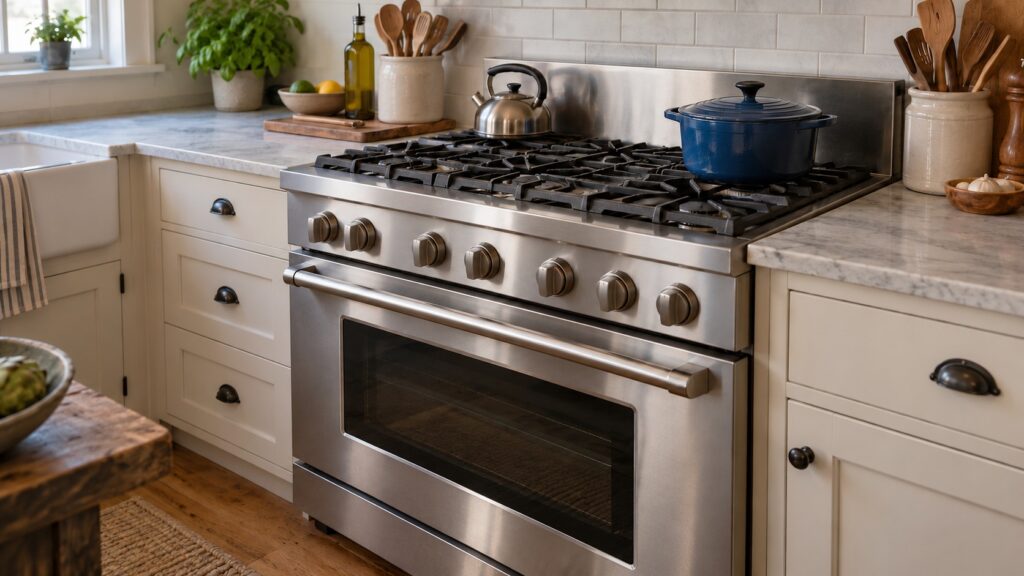
For a DCS older appliance repair or replace decision, repair almost always wins when the failure is a wear part and the stainless body is sound, and replacement starts to make sense when the structure, the sealed refrigeration system or the cost of several repairs adds up against the age of the unit. DCS builds its ranges, rangetops, grills, hoods and outdoor refrigerators in 304 stainless steel to last for decades, so age by itself is a poor reason to replace. This checklist helps you separate a tired part from a tired appliance.
Is an older DCS appliance worth repairing?
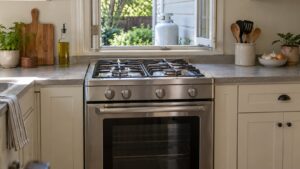
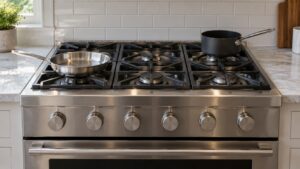
Usually, yes. These are heavy, professional-style appliances built from 304 stainless steel, with parts designed to be replaced over the years. Burners, igniters, gaskets and fans are consumables on any gas appliance, and replacing one restores the machine to normal. The questions to ask are how sound the body is, whether the problem is a single part or a string of failures, and whether the unit still fits your kitchen and the way you cook.
A good test is to ask what you would replace the appliance with. A new DCS range or grill needs the right cutout, gas type and clearances, and a built-in appliance often means work on the cabinets or the island. If a repair restores a unit that fits your kitchen perfectly, that fit is worth real money, which is part of why we lean toward repair.
Which problems are usually repair jobs?
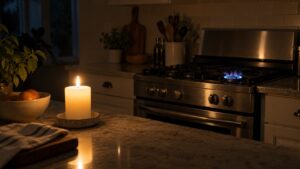
Most calls are wear. A range or rangetop that will not light a burner, or clicks continuously, usually needs a cleaned or replaced igniter or a clear burner port. A gas oven that glows and never lights usually has a weak glow bar. A grill with a flame that will not hold often has a regulator or a blocked port, and a grill that will not light may have a worn electrode. A hood that is noisy or weak points to a blower or filters, and an outdoor refrigerator with a code often has a fan, a sensor or a gasket issue.
Each of these is a contained repair with a known cure. Our pages for each family go deeper: range, grill, oven, rangetop, and cooktop.
What signs point toward replacing instead?
Four signs matter most. The first is structural damage: a firebox or cabinet that has corroded through, a body that took a fire, or a heavy impact that bent the chassis. The second is a failed sealed refrigeration system on an older outdoor refrigerator or beverage center, since compressor and refrigerant work is specialized and costs more on an older unit. The third is a pattern of several unrelated failures within months, which suggests the whole machine is wearing out. The fourth is a unit that no longer fits your needs, such as a range too small for the family.
Age alone is not on that list. A well-kept range at fifteen years can outperform a neglected one at five. For the refrigeration side, see our guide to outdoor refrigerator repair versus replace and the one for the range hood.
How do you check whether parts are still available?
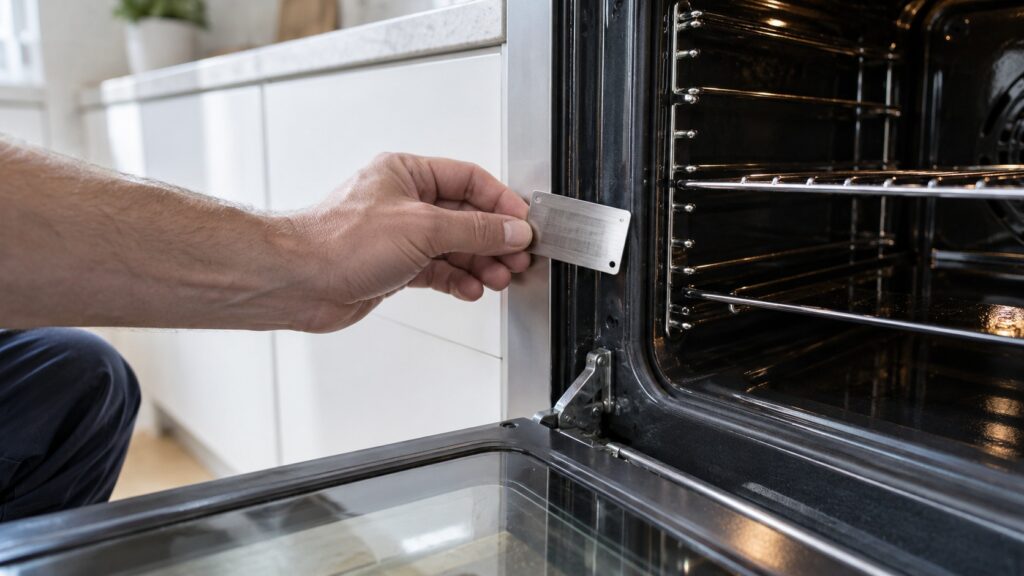
Start with the rating plate. It carries the model and serial number, which identify the exact version and year, and parts are matched from them. A part for a similar-looking unit is often not the right one. Photograph the plate, note the symptoms, and ask for a diagnosis that names the failed part. A technician who knows the part can tell you whether it can be sourced through trusted parts suppliers and how long it is likely to take, which is the single most useful piece of information for the decision. Our DCS appliance parts guide explains how parts are identified.
Do not guess. Searching for a part by a partial model number is how people end up with something that nearly fits. If a part is hard to find, say so up front, because that changes the cost and the wait, and it may tip the decision.
How should you weigh cost in practice?
Compare the repair estimate with the all-in cost of replacement, which includes the new appliance, delivery, installation, any gas or electrical work, and any cabinet or island changes. A part swap is usually far cheaper than that total. Add the cost of the disruption: for a gas range, days without a stove; for a built-in grill, a season of outdoor cooking. If a single repair is a small fraction of the replacement total and the body is sound, repair is the better value.
If the estimate is a large share of the replacement cost, or the same unit has needed repeated work, replacement deserves a serious look. Ask for the diagnosis first so that the decision is based on a named failure, and use DCS range repair or the matching service page to start.
One more thing is worth checking before you decide: whether the problem is really the appliance. A burner that will not light can be a clogged port, a gas supply issue or a tank problem on an outdoor unit, and a refrigerator that runs warm can be a blocked coil or a door that does not close. Rule those out first, because replacing a good appliance to cure a supply or housekeeping problem is the most expensive mistake of all.