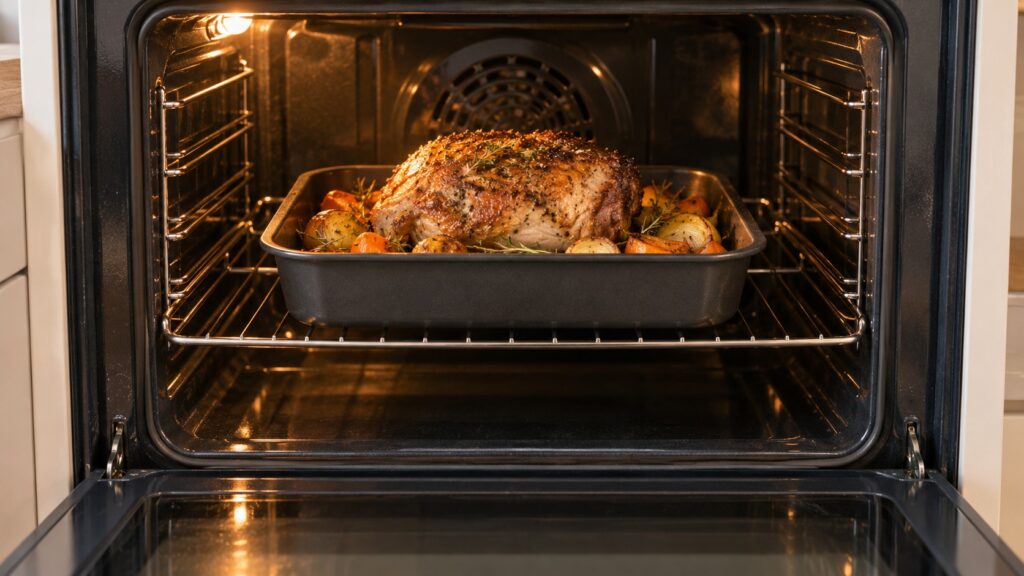
DCS oven rack position roasting results are closely linked. The oven is not perfectly uniform from top to bottom, so moving a pan up or down changes how it browns. Our rack care page gives the baseline: the center rack is the default for most baking, a lower rack suits roasting and pizza and crisp bottoms, and an upper rack suits broiling and browning tops. This guide turns that into practical roasting habits: how to choose a rack, how to use convection, and how to avoid the mistakes that make a roast brown unevenly.
Why does rack position change how a roast cooks?
In a conventional oven, heat is not the same at every height. Close to the heat source, food browns and crisps faster; near the middle, it cooks more evenly. Our oven rack tips explain that learning to use position deliberately is one of the easiest ways to improve baking and roasting. A roast on a rack that is too high may brown on top while the inside lags behind, and a pan that is too low may scorch the bottom. A rack in the middle gives the most balanced starting point for most things.
Which rack should you use for roasting?
Start with the center or a lower rack, depending on the size of the roast and the pan. The lower position puts the bottom of the pan closer to the main heat, which helps crisp and brown. A tall roast in a deep pan needs enough headroom for air to move over the top and for you to baste or check it without hitting the ceiling of the oven, so choose the rack so there is clear space above the food. A shallow pan on a sturdy rack gives better browning than a deep pan, because more of the food surface is exposed to the hot air. Set the rack before preheating so you do not have to move a hot rack.
How does convection change the roasting setup?
Our DCS convection oven guide explains that a fan moves hot air so that racks see similar temperatures, and that recipes usually call for a lower temperature and an earlier check than still-air bake. Use convection for roasting meats and vegetables when you want a crisp surface, and stagger pans so one does not shadow the other. Leave a gap between the pan and the oven walls so air can move. Delicate foods like custards may prefer still-air bake. The exact convection modes and their temperature advice depend on your model, so check your manual.
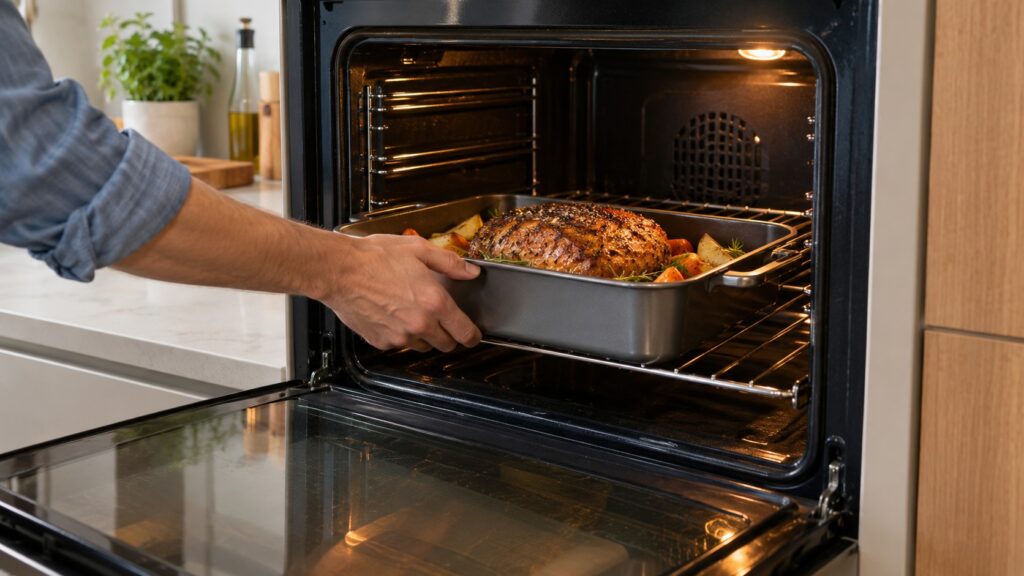
How do pans and food placement affect browning?
Shiny pans reflect heat and brown more slowly; dark pans absorb it and brown faster. A pan that nearly fills the rack blocks airflow and leaves the back of the oven starved of circulation, so choose a pan that leaves a margin on every side. Place the food in the center of the pan and the pan in the center of the rack, so edges do not run hot. Rotate a pan midway if your oven has a hot side, which a thermometer check and our oven calibration guide can help you identify. We do not give times or temperatures here, since they depend on your recipe, the cut and your oven.
How do you keep the racks and the cavity in good shape?
Wash racks in warm soapy water, scrub residue with a non-abrasive pad and dry them fully, as our rack page says. Check whether your racks are rated to stay in during self-clean before you run the cycle; our self-clean guide covers the preparation. Wipe up spills once the oven is cool, since grease baked onto the floor of the oven smokes the next time you roast. Do not line the oven with foil, which can trap heat and damage the finish. Racks that bind or do not slide smoothly are worth a look, because a stuck rack can spill a hot pan.
What if the roast still browns unevenly?
Uneven browning even with good rack habits can point to a calibration drift, a worn door gasket that lets heat leak, or a failing sensor. Check the door seal with our door seal troubleshooting guide, and test the real temperature with an oven thermometer before blaming the oven. If the oven cannot hold a steady temperature or one side stays cold, a technician should look at it; our DCS oven repair page explains how a visit works.
What is a sensible routine for a big roast?
Plan backwards from the meal. Decide the rack before you season the meat, since a tall roast may force you to a lower position. Set the racks, then preheat so the cavity and the rack are at the same temperature as the oven. Put the pan in, close the door and avoid opening it more than you need to, because each opening drops the cavity temperature and slows the browning. Let the roast rest outside the oven when it is done. If the top is browning too quickly, shield it loosely rather than moving a hot rack, and if the bottom is darkening, note it and use a higher rack next time rather than reaching into a hot oven to rearrange things.