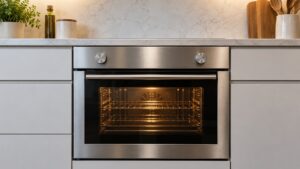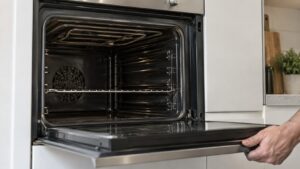
DCS oven door installation, meaning taking the door off and putting it back on, is not a job we describe step by step. The door is a heavy slab of stainless steel and glass, the hinges on some ovens are spring-loaded, and the method differs between a wall oven and a range. A wrong guess about the hinges is how fingers get hurt and doors get damaged. The safe answer is to follow the removal and installation instructions for your exact model from your owner’s manual or the manufacturer, or to have a technician do it. This guide explains why a door is ever removed, how to care for the glass and the seal without removing it, what to check afterward and when to call us.
Why would a DCS oven door ever be removed?
There are three common reasons. The first is cleaning: baked-on grease on the inside of the glass or in the frame is hard to reach with the door in place. The second is clearance, for example when the oven has to be moved or fitted into an opening. The third is a repair, such as replacing a worn gasket or having a technician look at a hinge. The first reason is almost never a good one for an owner to act on. Ordinary glass and frame cleaning does not need the door off, and it can be done with the door on, as described below.
Why do we not give removal steps?
Because we have no model-specific steps for the hinges on our site, and guessing is dangerous. On some ovens the hinges are spring-loaded, and a door that comes free the wrong way can swing, drop or trap a hand. The door is also awkward and heavy to lift and set down, and the glass edges are sharp. The manufacturer’s instructions for your model describe the exact sequence, the position of any locks and how to refit the door so it closes and seals evenly. If you cannot find them, the model number on the rating plate is the key to finding the right manual, and if you still cannot, stop and book a visit.
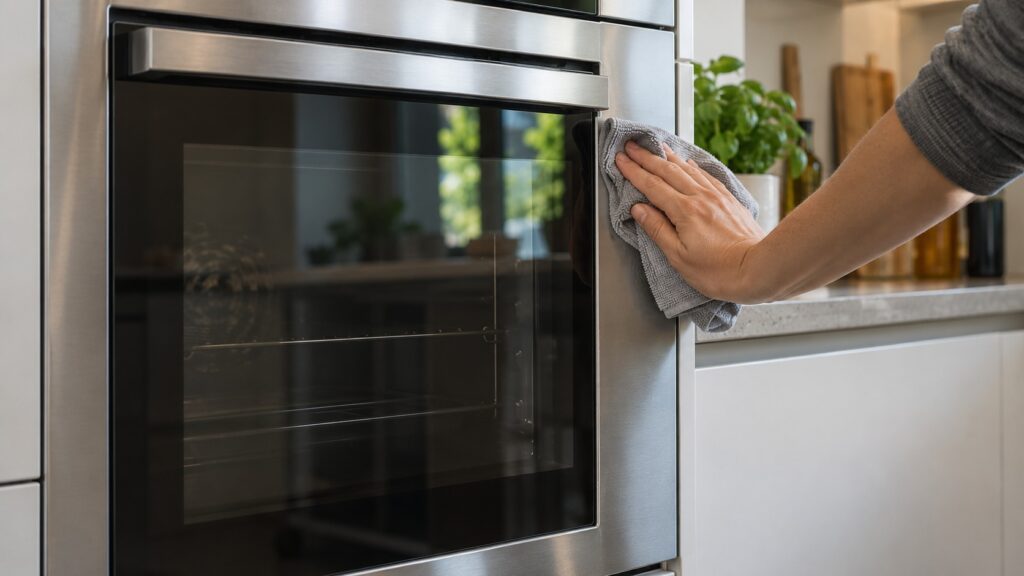
How do you care for the glass and the seal with the door on?
Wait until the oven is fully cool, then wipe the outer glass and the stainless frame with a non-abrasive cleaner on a soft cloth, sprayed on the cloth rather than the door so liquid does not run into the seams. Keep cleaner away from the gasket and the vent slots. Follow your owner’s manual for the inner glass, and do not take the glass or the inner panels apart. Check the gasket as you clean: tears, flat spots or sections that have pulled away mean it is losing heat. Our oven door seal troubleshooting guide explains what to do, and inspecting a gasket does not require removing the door.
What should you do before a technician or a helper handles the door?
Make sure the oven is off and fully cool, since a door that has just been used can burn, and switch it off at the breaker. If it is a gas oven, do not touch the gas connections and do not move the appliance. Clear the space in front of the oven and leave a place to set the door down on a protected surface. Keep children and pets away from the open cavity. If a technician is doing the job, tell them what prompted it, such as a gasket, a sag or a crack, so they bring the right parts. Never use the oven with the door off.
What should you check after a door has been refitted?
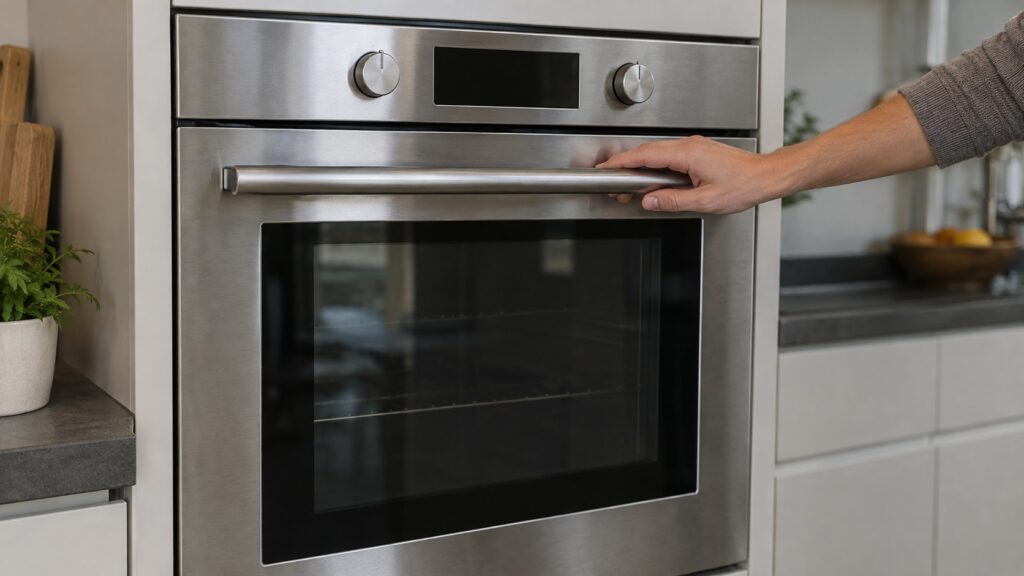
With the oven cool, open and close the door slowly several times. It should move smoothly, close flush against the frame and latch. Run a hand around the closed door and look for gaps or an uneven edge. Our oven door won’t seal page explains what an uneven seal means. If the door sits crooked, sags, drags on the frame or will not close fully, stop and call a technician rather than forcing it, since a crooked door leaks heat and spoils cooking results. The wall oven installation requirements guide covers the cutout, clearances and support an oven needs.
When should you call a technician?
Call if you cannot find the instructions for your model, if a hinge is bent, sagging or feels spring-loaded in a way you are not comfortable with, if the glass is cracked, if the door will not close flush or if the seal leaks heat. Call a gas professional for any work that touches the gas side of an oven. Our DCS oven repair page explains how a visit works. For the rack and cavity side, our oven rack care tips are a useful companion, since racks can bind if the door is out of alignment.
What does a door problem usually turn out to be?
Most door complaints are not about installation at all. A door that does not close flush is often a worn gasket, a rack or pan sticking out, or an oven that is slightly out of level. A door that leaks heat is usually the gasket. Glass that looks cloudy is usually film on the inside face. Each of these can be looked at without taking the door off, and a technician can usually tell which it is from the symptom you describe. That is why we suggest starting with the inspection and cleaning steps above and only then asking whether removal is really necessary. A door that has been taken off and refitted carelessly can sit crooked, and a crooked door leaks heat.