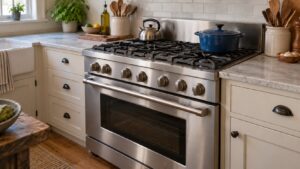
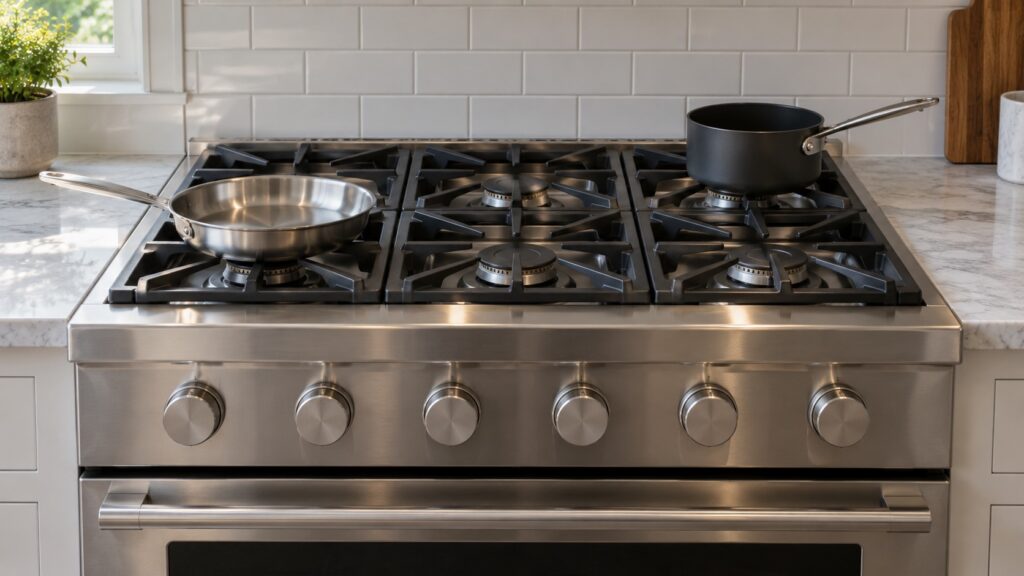
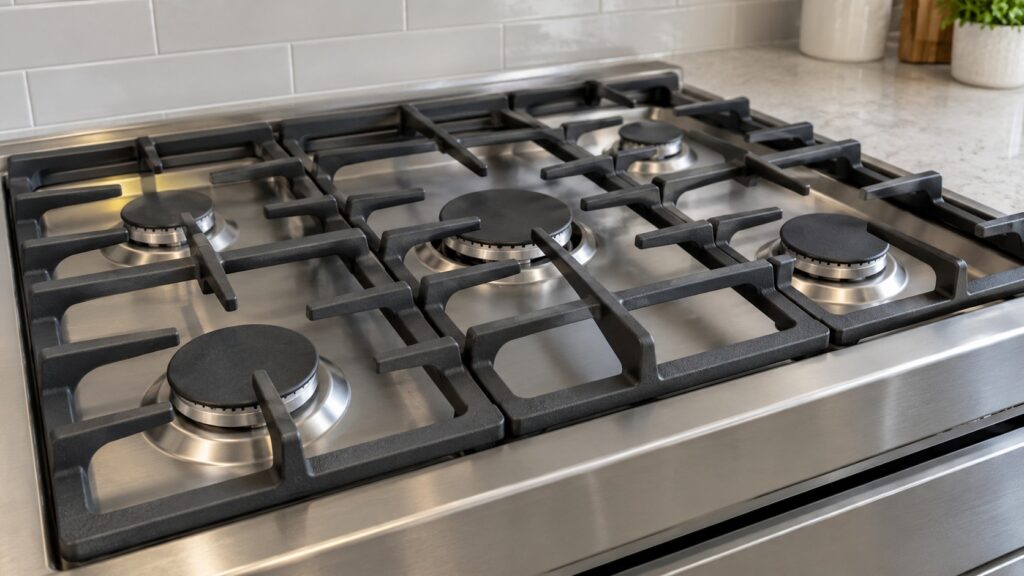
A DCS 6 burner range is a 36-inch model, and a 30-inch DCS range has four burners. That is the main difference between the two widths on our model list. The 36-inch RGV2-366 and RDV2-366 give you six sealed dual-flow burners and a slightly larger oven, while the 30-inch RGV2-305 and RDV2-305 give you four burners and a more compact oven. The 36-inch family also comes as a four-burner-plus-griddle layout, so the choice is really about how you cook and how much room you have.
How many burners do you need, four or six?
Count how many pots you run at the same time on a busy night. Four sealed burners cover most households: a large pot, a skillet, a saucepan and one spare. Six burners matter when you cook for a crowd, run a large stockpot beside a wide pan, or like to keep things warm on a low burner while you finish the main dish. If you cook for two or three people and rarely use more than three burners, the extra two on a wide range will mostly sit idle.
Think about the layout too. The 36-inch RGV2-364GL swaps two burners for a built-in griddle, which suits people who cook breakfast or pancakes in volume. A griddle takes a patch of the cooktop for good, so it only makes sense if you will use it often. For a comparison of the whole range against a separate cooktop and oven, our guide to DCS range versus rangetop is the place to start.
Budget the counter around the range as well. A wider cooktop gives you landing space only on the sides, so make sure there is a clear spot for hot pans within reach of every burner. People who step up to six burners often find the real gain is not cooking more at once but having a cool, free burner to set a pan on while they work.
What is different about the oven?
The wider range has a bigger oven: about 5.3 cubic feet on the 36-inch gas model against about 4.8 on the 30-inch, and about 5.1 against 4.6 on the dual-fuel versions. In practice the extra space is mostly width, which helps with a large roasting pan or two baking sheets side by side. If you bake a lot of cookies or entertain with full-size trays, the wider oven is a genuine advantage. If you mostly cook for a small family, the 30-inch oven is plenty.
All of these ovens are convection ovens, so a fan moves hot air around the cavity for more even results. Our guide to how DCS convection ovens work explains what the fan does, and the dual-fuel models pair gas burners with an electric oven if you prefer electric baking.
Should you choose gas or dual fuel?
The model codes tell you. The RGV2 and RGS models are all gas, with a gas oven. The RDV2 and RDT models are dual fuel: gas burners on top and an electric oven below. Many cooks like gas for the top because it responds instantly and works with any pan, and prefer an electric oven for steady baking heat. Dual fuel needs both a gas line and a high-voltage electrical circuit, while an all-gas range needs a gas line and a standard outlet for ignition and controls.
That choice interacts with the kitchen you have, since a home without a dedicated high-voltage circuit makes the all-gas model the simpler install. Our glossary entry on a DCS dual fuel range explains the term in more detail.
What does each width need from your kitchen?
Measure the opening, the gas connection and the space above. A 36-inch range needs a wider space and more clearance on the sides, and moving up from a 30-inch range often means modifying the cabinets. Check the installation sheet for the exact cutout and the clearances to combustible surfaces for your model. Every range must be secured with its anti-tip device, and a gas connection should be made by a qualified person with a leak check of every joint. Read DCS range installation requirements before you order.
Ventilation scales with the cooktop. A six-burner range puts more heat and moisture into the room than a four-burner one, so the hood over it should be sized to match and set up with make-up air where the house is tight. Our guide to DCS range hood CFM sizing helps you pick one.
What about service and everyday care?
The two widths share the same burners, ignition and grates, so the cleaning and care routine is identical. Keep burner ports clear, wipe spills promptly and follow our guide to DCS range burner cleaning. A wider range has more burners that can clog or click, which is the one place where six burners means a little more upkeep than four.
If something stops working, the symptom pages and DCS range repair are available. Whichever you choose, confirm the exact model number on the rating plate before you order parts, because the 30-inch and 36-inch ranges look alike but do not share every part.