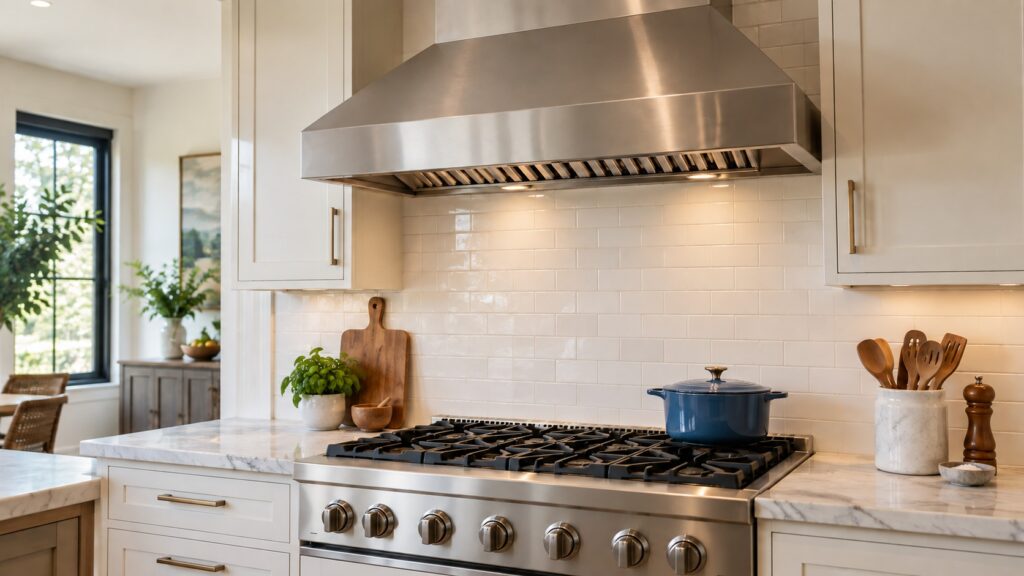
A range hood is the appliance people are quickest to write off and slowest to diagnose. It has no display, it fails gradually, and by the time anyone acts it has been performing badly for a year. The dcs range hood repair or replace question is usually easier than it looks, because a hood is a blower, a switch, some filters and a shell — and only one of those four is ever a reason to replace the unit.
Rule out the duct before pricing anything
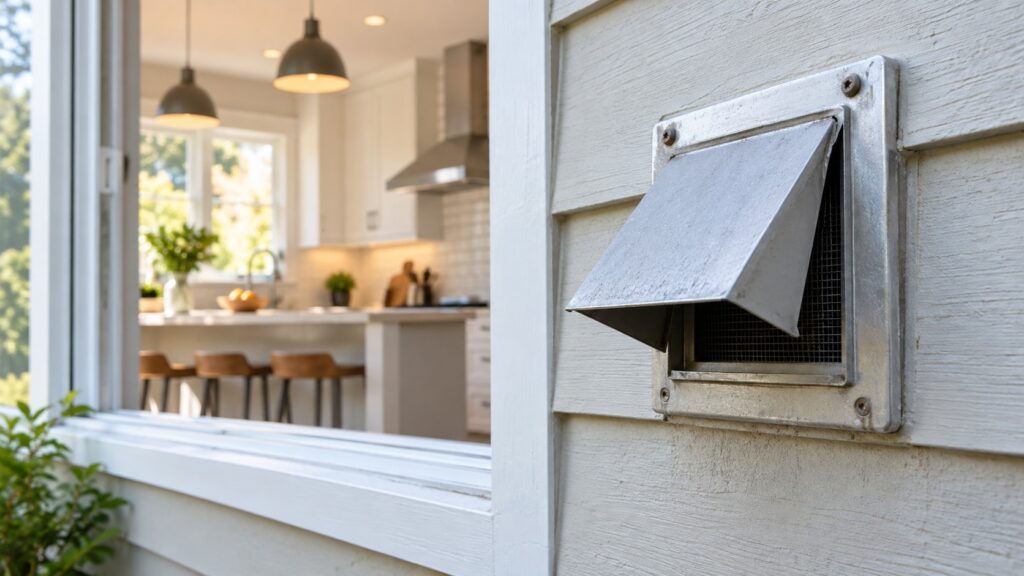
This is the single most valuable paragraph on the page. A hood moves the air its duct allows, and no hood moves air through a restriction. A mesh screen at the exterior cap, a crushed section of flexible duct in a joist bay, a damper that no longer opens, or a run with four elbows in it will all produce exactly the symptom people replace hoods for — weak capture, grease on the cabinets, a kitchen that stays smoky.
Replace the hood and the symptom returns within a month, because nothing that mattered changed. Check the cap from outside with the hood running: the flap should be visibly pushed open. If it is not, stop and fix the duct. Our CFM sizing guide covers what the run costs you.
Then rule out the filters
Baffle and mesh filters lose airflow gradually as grease accumulates, and because it is gradual nobody notices. A filter bank that has not been through a dishwasher in a year can halve what reaches the blower. This is free to test: pull them, run the hood, and see whether capture improves dramatically. If it does, you have a cleaning schedule problem rather than an appliance problem.
Our filter cleaning guide covers the routine and the interval, which is shorter than most people assume if you sear or wok-cook regularly.
What actually fails, and what it costs
With the duct and the filters cleared, there are only a few candidates. A blower that hums but will not start is usually a capacitor — a small, inexpensive part. A blower that has become noisy over months is bearings, and the assembly is replaceable. A hood stuck on one speed, or that will not turn off, is the switch or the control rather than the motor. Lights are lights.
None of that approaches the cost of a hood, and none of it touches the shell or the duct. Our pages on blower troubleshooting and hood lights cover the diagnosis.
Where replacement genuinely wins
- It was always undersized. A hood that never coped with the cooktop beneath it is not a repair candidate — it is the wrong appliance, and sizing is the fix.
- The shell has corroded. Outdoors especially, a shell that is failing at welds or seams is the hood reaching the end.
- Parts are gone. An obsolete control with no supply is the one case where an otherwise sound hood becomes uneconomic.
- The kitchen has changed. A new high-output cooktop under an old hood is a sizing decision, not a repair one.
Outdoor hoods age differently
A hood over an outdoor grill lives with salt, rain and temperature swings that an indoor hood never meets, and it is worth judging by condition rather than by age. Surface freckling on stainless is contamination and wipes off; rust at a weld or a fastener is the shell. A blower that has stood through five winters uncovered is a different proposition from the same blower indoors.
The counterweight is that outdoor hoods usually run far fewer hours. A grill hood used at weekends has a fraction of the duty cycle of a kitchen hood used twice a day, and that often makes repair the clear answer even on an older unit.
Noise is a diagnosis, not a nuisance
People tolerate hood noise for years and then replace the unit to escape it, which is often the expensive route to a cheap fix. The kind of noise says what it is. A steady rushing that has always been there is airflow, and it rises with speed — normal. A rumble that has grown gradually over months is a bearing in the blower, and the assembly is replaceable. A rattle that appeared suddenly is something loose in the airway or a filter not seated in its latch.
The one worth acting on quickly is a shriek or a grinding that changes pitch with speed. A blower running on failing bearings eventually seizes, and a seized motor in a greasy duct is a fire risk rather than an inconvenience. Our blower troubleshooting page covers separating them.
What a diagnosis establishes
Four questions decide it, and none can be answered from a description. Does the exterior cap open under airflow? Do clean filters change the capture? Does the blower start, and how does it sound? And is the shell sound at its seams? A hood that fails only the third question is a repair, every time.
Before any of that, it is worth knowing whether the hood was ever the right size — because a hood that has been undersized since installation will never satisfy, whatever is done to it.
Getting an honest number
We are an independent repair company, not a factory service arm and not a dealer, so we have nothing to sell you on the replacement side. Where a repair is not worth doing, we say so and explain why. Pricing starts from a diagnostic visit and we confirm the estimate before any work begins.
DCS range hood repair covers blowers, controls, lights and dampers, and you can schedule a visit online. If capture is the complaint, read our guide to using a hood well first — a hood switched on when the room fills is working with a dispersed plume and cannot win.