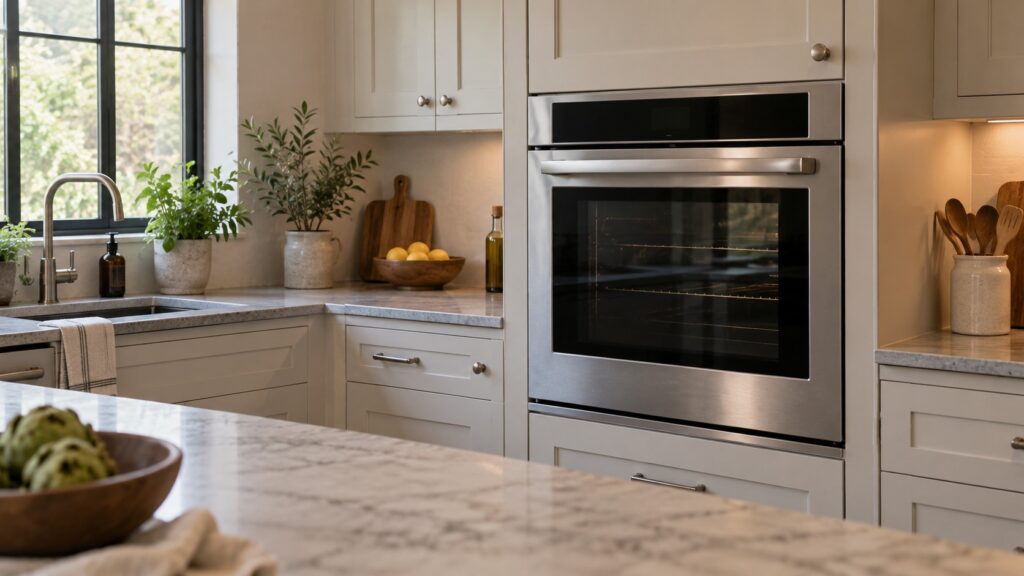
When a DCS oven won’t turn on, the cause is usually at the power end, not inside the oven: a breaker that tripped, a power cut that has not cleared, a setting such as a lockout, a timer or a delayed start that is holding the oven back, or a door that is not registering as closed. Those are the things an owner can safely look at. If none of them explains it, the cause is inside the range, and that part is for a technician. This guide covers the checks in order, explains why a gas oven also needs household electricity and says where to stop. Note that this is about an oven that will not switch on at all. An oven that comes on but does not heat is a different problem, covered in our heating guide.
Why won’t my DCS oven turn on?
Start with the plain reasons. An oven needs household power even when it burns gas, because the controls and the igniter run on electricity. Our guide to a range during a power outage explains that a gas DCS oven lights with an electric glow bar that must heat before the safety valve will open, so with no power the oven will not light. That is not a fault; it is the range protecting you from gas flowing with nothing to light it. A dual-fuel oven is electric and does not work at all without power.
The first question is therefore whether power is reaching the range. Look at the clock or any light on the range. Check whether other things in the kitchen have power, and whether the power has gone out recently. If power was cut and has come back, give it a few minutes and try again.
Has a breaker tripped?
Go to the electrical panel and look for a breaker in the tripped or middle position. Our oven heating guide lists a tripped breaker among the first checks for an electric or dual-fuel oven. If you find one, switch it fully off and then on once. If it trips again straight away, do not keep resetting it. A breaker that will not stay on points to a fault in the range or its wiring, and repeated resets only add heat to the problem. Leave the oven off and book a visit.
Do this with dry hands, standing on a dry floor. If the panel is wet, if you smell burning or if you see scorching on an outlet or the range, do not touch it. Switch the main breaker off only if you can reach it safely and call for help.
Is a setting stopping it?
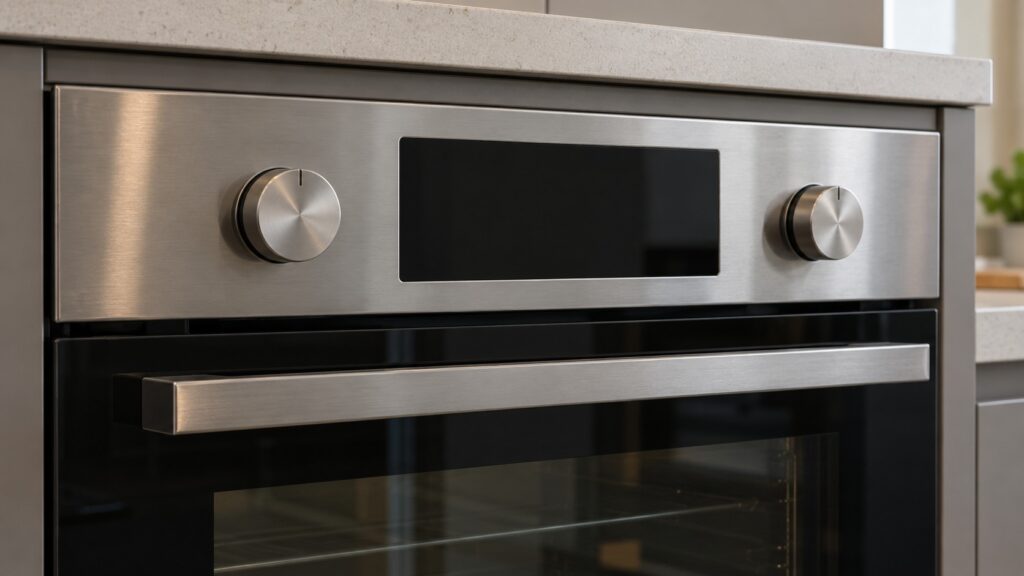
Many ovens will not start because a setting is active. Make sure no lockout, timer or delayed start mode is on, as our oven heating guide advises. If your oven has a control lock, release it as your owner’s manual describes. If a timer or a delayed start has been set by accident, cancel it. The steps differ between models, and this article cannot give a button sequence, so read the section of your manual on the controls.
Check the door too. A door that is not fully closed, a latch that is not engaging or something caught in the seal can stop the oven from starting. Our oven door seal troubleshooting guide explains the seal and what a damaged one looks like. Do not force a door that will not close.
What if the oven turns on but does not heat?
If the oven switches on, the clock or lights work, but the cavity stays cold, you are not looking at a power problem. Read our oven not heating guide and the page on an oven that will not heat. On a gas oven, a weak glow bar that no longer lets the burner light is a common cause, as our glossary on the glow bar explains. If the oven light is out but the oven works, see the page on an oven light that is out.
If you smell gas at any time, do not switch anything on or off and do not light anything. Leave the house and call the gas company or 911 from outside. Our guide on gas smell safety steps explains the sequence.
When should you call a technician?
Call when the oven is dead after the breaker and the settings are ruled out, when the breaker keeps tripping, when you see or smell anything burning or when the range has no power at all although the rest of the kitchen does. Do not open the range, remove the back or touch the wiring or the controls behind the panel, because that area holds live parts and gas components. If you see water near the range or an outlet, switch the breaker off at the panel while standing on a dry floor, and never pull a plug from a wet outlet. We cannot tell a cause without looking, so we do not guess at one over the phone.
We are an independent repair company, not the manufacturer. Our oven repair page explains how a visit works, and you can schedule a visit online.