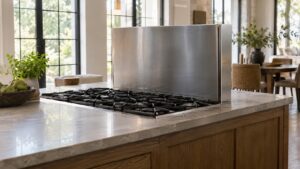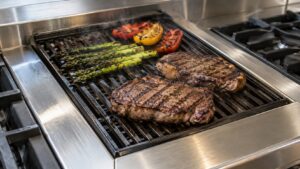
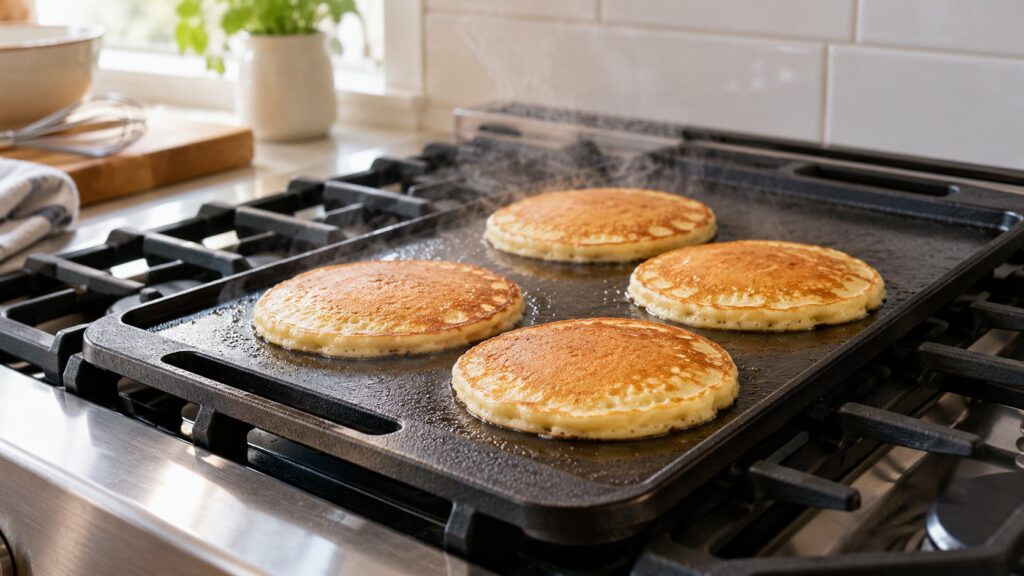
A DCS rangetop griddle heats from below: a gas burner under the plate warms the metal, and the plate carries that heat across its surface to the food. How evenly it does that depends on the burner, the plate and how you preheat. That is what the DCS griddle heat distribution question comes down to. A griddle is not a flat grill and it is not a frying pan, and understanding the path of the heat explains why the area over the burner is hotter, why a long preheat helps and why a griddle that is warped or has dirty burner ports cooks unevenly. This guide explains the principle in plain terms. Settings, temperatures and module details for your rangetop are in your owner’s manual.
How does a DCS rangetop griddle heat?
A DCS rangetop is a gas, knob-controlled appliance, and our guide on how DCS rangetops work explains the basics of the gas and the burners. The griddle is an optional module that sits in the rangetop and uses a burner below its plate. When you turn the knob, gas flows to the burner and the flame heats the underside of the plate. The metal conducts that heat upward and sideways, so the cooking surface warms from the point nearest the flame outward. Our glossary entry on rangetop modules places the griddle among the other modules.
Because the heat starts at the burner, the area over the flame is naturally the hottest. The plate spreads that heat sideways, but never perfectly. A griddle plate is generally slower to heat than a thin pan and steadier once it is hot.
Why does preheating matter so much?
The plate has to soak up heat before it is even. At first the area above the burner is hotter than the edges. Given time, the heat spreads outward and the surface evens out. If you put food on too soon, the middle is hot and the edges are cool, and pancakes brown in a pattern that mirrors the burner. Our page on griddle uneven heat lists insufficient preheat as a common cause. The manual for your module tells you how to know when it is ready, so follow it and do not guess from the color of the metal.
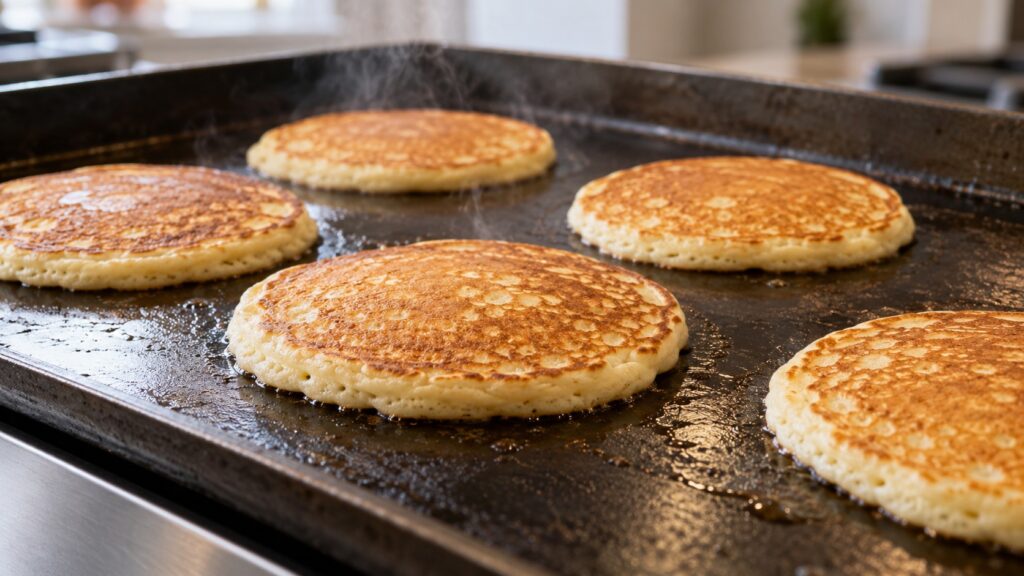
Start with a lower flame than you think you need and give the plate time. Turning the knob to maximum does not make the heat spread faster, it only makes the area over the burner hotter. If you need to adjust, change the knob in small steps and wait; the plate responds slowly because the metal holds so much heat.
What makes a griddle heat unevenly?
Three things cause most hot and cold spots. The first is a burner whose ports are partly clogged, which gives a weak or lopsided flame and heats part of the plate more than the rest. The second is a warped plate that does not make good contact with the heat, so some areas stay cooler. The third is an unfinished preheat. Our page on griddle uneven heat also mentions an orifice or gas pressure issue, which is a job for a technician and not for the owner. Watch the pattern: food that cooks faster on one side, visible hot and cold zones or slow, patchy heating all point to the same group of causes.
Keep the burner area clean. Our rangetop burner cleaning guide explains how, and a clean burner gives an even flame. Never poke at gas ports or the orifice with a tool; that is a technician’s job.
How do seasoning and grease affect the heat?
A well-seasoned plate has a smooth layer of baked-on oil that helps food release and protects the metal. Our griddle care guide explains how to scrape the surface while it is warm, wipe it, add a thin film of oil and keep it dry to prevent rust. Grease is scraped toward the grease trough, and a trough that is full or blocked can lead to smoke or spills. Residue that builds up in layers can also make the surface uneven, so scrape and wipe after each use.
Use a spatula and a scraper that suit the surface and do not use anything that cuts into the metal. Keep a lid or cloth ready for emergencies and never leave a griddle with oil on a high flame unattended. If oil or grease catches fire, put a lid over it if you can do so safely, turn the burner off and do not use water. Do not run the range hood to blow smoke away from a fire.
When should you call a technician?
If the griddle stays uneven after a thorough preheat, a clean burner and a flat plate, or if the flame itself looks wrong, stop using it and book a visit. If you smell gas, do not touch switches, leave the house and call the gas company or 911 from outside. Gas parts, orifices and pressure are for a qualified professional only. We are an independent repair company, not the manufacturer. Our rangetop repair page explains how a visit works, and you can schedule a visit online.