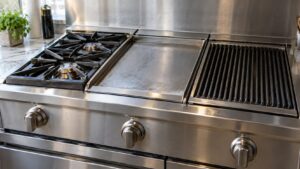
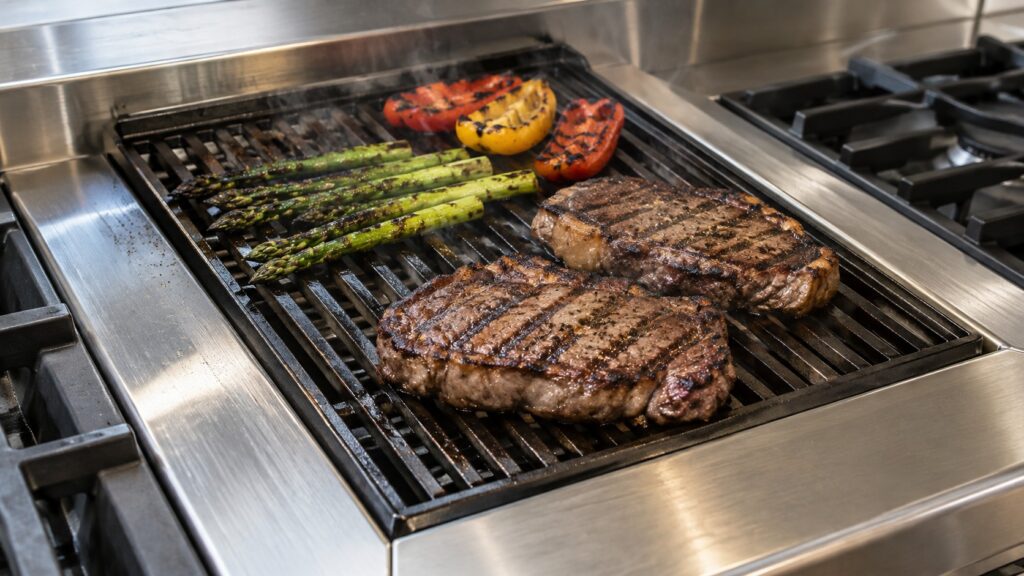
A DCS rangetop grill module earns its keep by putting grill marks on food without needing a separate outdoor grill, but it only stays reliable if it is treated a little differently from the sealed burners around it. Grease drips straight onto an open burner port instead of running off to a drain the way it would on a full-size grill, and that single difference is behind most grill-module complaints. A short cleaning and use routine avoids nearly all of them.
How do I keep grease from clogging the grill module’s burner?
Wipe the grate down while it is still warm, right after use, rather than waiting until the next cook. Grease that cools and hardens on the grate migrates toward the port openings underneath over repeated cycles, and that buildup is the single biggest cause of the ignition problems covered on our rangetop grill module troubleshooting page. A warm wipe-down with a grill brush and a damp cloth takes under a minute and prevents nearly all of it.
How often should I lift the module to clean underneath?
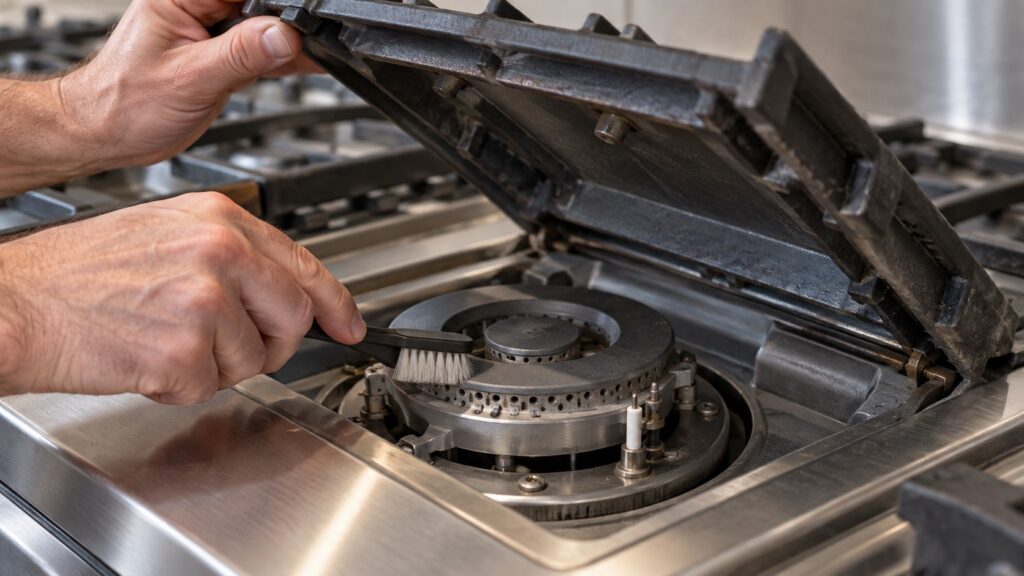
With regular weekly use, lift the module off its bay once a week and brush out the burner port with a soft, non-metal brush. This is where spillover actually collects, not on the visible grate surface, and it is invisible until ignition starts getting sluggish. Our rangetop module glossary covers how the module sits in the bay if you are unsure how it lifts free.
How long should I preheat the grill module before cooking?
Give the grate 2-3 minutes after ignition before food goes on, longer in cool or windy outdoor conditions. The point of a grill module is searing heat at the grate surface, and food placed on a grate that has only just lit will stick and steam rather than sear. If the module still feels lukewarm after several minutes of preheat, that is worth checking against our troubleshooting page rather than just cooking through it — a weak flame pattern rarely improves with more time.
What should I never use to clean the grate or the port?
Skip metal scrapers and wire brushes directly on or near the burner ports; they can bend the port opening slightly, and a bent port changes the flame pattern in a way that is hard to see but easy to notice as uneven heat afterward. A grill brush is fine on the grate itself, away from the port area. For the port, a soft nylon or brass brush and a light touch does the job without risking the metal.
Does the type of grate on the grill module matter for cleaning?
DCS grill modules use cast grates, which hold heat differently from the thinner stamped grates found on some griddle attachments. Cast grates take slightly longer to reach full searing temperature during preheat, but they also hold that heat more evenly once hot, which is part of why the preheat time above matters more on a grill module than it might on a lighter-gauge cooking surface. Season a new or newly cleaned cast grate lightly with high-heat cooking oil before its first use after a deep clean; it protects the surface and makes the next warm wipe-down easier. A neutral high-smoke-point oil such as grapeseed or avocado oil works better for this than butter or a low-smoke-point oil, which can leave a sticky residue on the cast surface instead of a smooth seasoned layer once it has been through a few hot cycles.
How do I know the module needs more than routine cleaning?
Watch for ignition that gets progressively harder to catch over several uses, or a flame pattern that looks uneven — strong on one side of the grate, weak or yellow on the other. Both point toward buildup deeper in the port than a weekly brush reaches, or toward the module itself needing service rather than cleaning. Compare what you are seeing against our rangetop common problems guide, which covers the wider set of ignition issues across all bay types, not just the grill module.
Does switching between modules on the same bay need any extra care?
Whenever you swap a grill module out for a griddle or wok module on the same bay, take the moment to check the port underneath while it is exposed rather than waiting for the weekly cleaning schedule. It is the easiest time to spot buildup, and it costs nothing extra since the module is already lifted out. Our griddle care guide covers the equivalent routine for the griddle module if that is the swap you are making.
Is it worth covering the grill module between uses?
A light cover over the entire rangetop, or at minimum over the grill module’s grate, cuts down on the dust, pollen and insects that otherwise settle into a warm, slightly greasy grate between cooks. It will not replace the warm wipe-down after use, since a cover placed over a still-hot grate traps residual heat and moisture against the grease rather than letting it air out, so cover only once the module has fully cooled. On units near landscaping or under trees, this single habit noticeably cuts down on the debris that ends up worked into the burner port over a season, and it is one of the cheapest steps available to reduce how often the port needs a deeper cleaning than the weekly brush-out described above. A breathable, purpose-made outdoor appliance cover works better here than a plastic tarp, since a fully sealed plastic cover can trap moisture against the stainless surface and encourage the exact staining a cover is meant to prevent.
We are an independent repair company, not a factory service arm, and we can service a grill module that routine cleaning has not fixed. DCS rangetop repair covers module bays and burners, and pricing starts from a diagnostic visit with the estimate confirmed before any work begins. Schedule a visit online or call 1-844-487-0065.