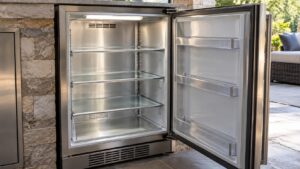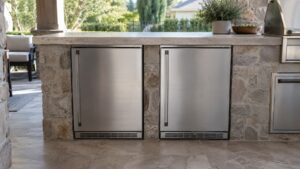
A DCS outdoor refrigerator compressor problem is a sealed-system problem, and sealed-system work is for a technician, not an owner. The compressor, the condenser and the refrigerant circuit are a closed loop that cannot be opened at home. What you can do is rule out the cheaper causes that look like a compressor failure, then weigh a repair against replacement with a diagnosis in hand. For a built-in DCS outdoor refrigerator, repair often wins, but a confirmed sealed-system failure on an older unit is the one case where replacement deserves a serious look.
What does the compressor do in a DCS outdoor refrigerator?
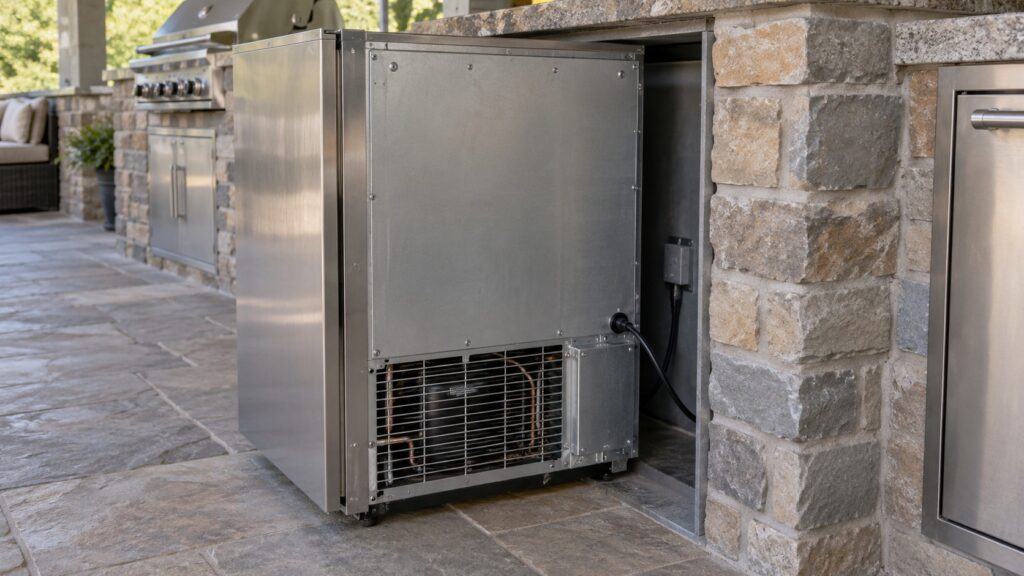
It circulates refrigerant through a sealed loop, so heat leaves the cabinet and is released outside. Our guide on how DCS outdoor refrigerators work describes the sealed system, the ActiveSmart control that adapts cooling to conditions, and the need for ventilation. The control board and sensors tell the compressor when to run, which is why a cabinet that is not cold is not automatically a compressor failure. A sensor reading wrongly, a fan that is not moving air or a board that is not asking for cooling can all produce the same symptom.
What looks like a compressor failure but is not?
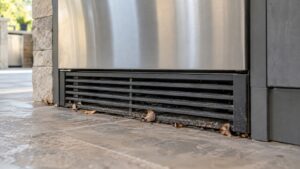
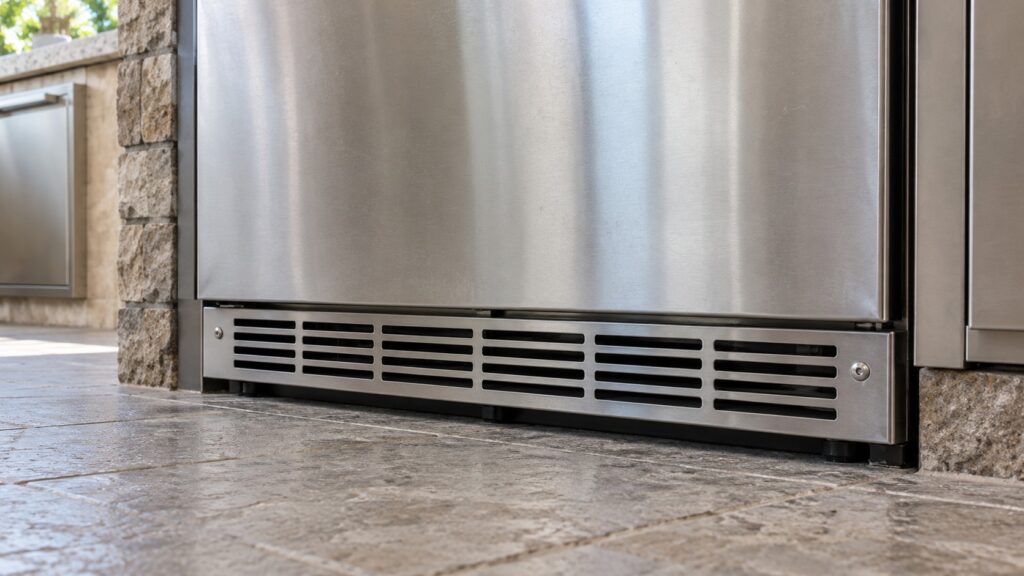
Several things. A blocked front grille stops the unit releasing heat, so it runs constantly and the cabinet stays warm; see our condenser and vent cleaning guide. A worn door seal lets humid air in; see the door seal maintenance guide. An overloaded cabinet and direct sun make it hard to hold temperature. A power interruption can leave codes behind. Check the codes against the fault codes guide, because sensor, door switch and communication codes point to parts that are not the compressor.
How does a technician decide whether it is the sealed system?
By ruling out the easy causes first and then testing the cooling system with the right instruments. That work happens inside the unit, around electrical parts and a pressurized circuit, and we do not describe it as an owner task. You can help by giving the technician a clear history: what the cabinet temperature does over the day, when it started, any codes you saw and whether the unit has been moved, shaded or reloaded recently. Our DCS outdoor refrigerator repair page explains how a visit works.
When does repair make sense?
Our own outdoor refrigerator repair vs replace guide says that for most problems, including sensors, switches, fans, boards and seals, repair is the sensible choice, particularly for a built-in unit where replacement means matching the cutout and ventilation and paying to reinstall. If the technician finds a problem outside the sealed system, repair is normally the right answer even on an older refrigerator. A repair is also the right answer when the unit is otherwise sound, the finish is good and the cutout is tight.
When does replacement make sense?
When the technician confirms that the sealed system has failed, the unit is old, and the repair quote approaches the price of a new unit, replacement is reasonable. Include the cost of removing and reinstalling a built-in in that comparison, and check that a new unit fits the cutout and the ventilation requirements. Remodeling the outdoor kitchen is the other common reason. Our repair cost guide explains how we think about costs, and our 24 inch models comparison helps you choose a replacement. We do not quote numbers for compressor repairs here, since they depend on the model and on what is found.
What questions should you ask before deciding?
Ask the technician whether the fault is in the sealed system or somewhere else, since the answer changes everything. Ask whether the repair covers only the failed part or the whole cooling circuit, and what is checked before the unit is handed back. Ask how old the unit is by looking at the rating plate with your model number, and what else is wearing: seals, hinges, fan, finish. Then compare the repair with a replacement that includes removal, a new unit that fits the cutout, the ventilation requirements and the reinstallation of a built-in. A repair that leaves an otherwise sound unit in place is often the sensible option, while a repair on a unit with several other worn parts is often not.
It also helps to think about how you use the refrigerator. If the unit is the center of an outdoor kitchen that is used every weekend, reliability matters, and a clean diagnosis from a technician is worth having before you decide. If the unit is rarely used and the kitchen is due for a remodel, replacement may be easier to justify. Neither answer is wrong; the point is to decide with a diagnosis rather than a guess, and not to replace a refrigerator because of a blocked grille.
Does a new warranty or an old one matter?
It can. If the unit is still under a DCS limited warranty, a sealed-system failure may be covered, and you should read your warranty documents before paying for anything; our warranty coverage guide explains how DCS, a Fisher & Paykel company, describes it. We are an independent service company, so we cannot make a warranty decision on the manufacturer’s behalf, but we can tell you what we find when we diagnose the unit and give you a written estimate before work starts.