DCS outdoor refrigerator condenser cleaning, as an owner can safely do it, means keeping the front grille and the air path around it clear of dust, pollen, spider webs and leaf litter. The condenser is the part that releases heat from the cooling system, and our guide to how DCS outdoor refrigerators work explains that ventilation is as important as the sealed system. Anything beyond the grille, such as the coils behind a panel, is a job for a technician.
Why does an outdoor refrigerator need a clean condenser area?
The cooling system pulls heat out of the cabinet and releases it to the surrounding air. If dust, pollen or debris coats the area where that heat leaves, the system cannot reject it, the compressor runs longer and the cabinet warms up. Outdoors, there is much more of that material than in a kitchen: wind carries leaves and pollen, and a built-in unit in an enclosure collects whatever settles in front of it. A dirty airflow path is a common reason for a cabinet that is slightly warm, a refrigerator that never seems to stop running and temperature codes in hot weather. It is also one of the few causes you can fix yourself.
What can you safely clean?
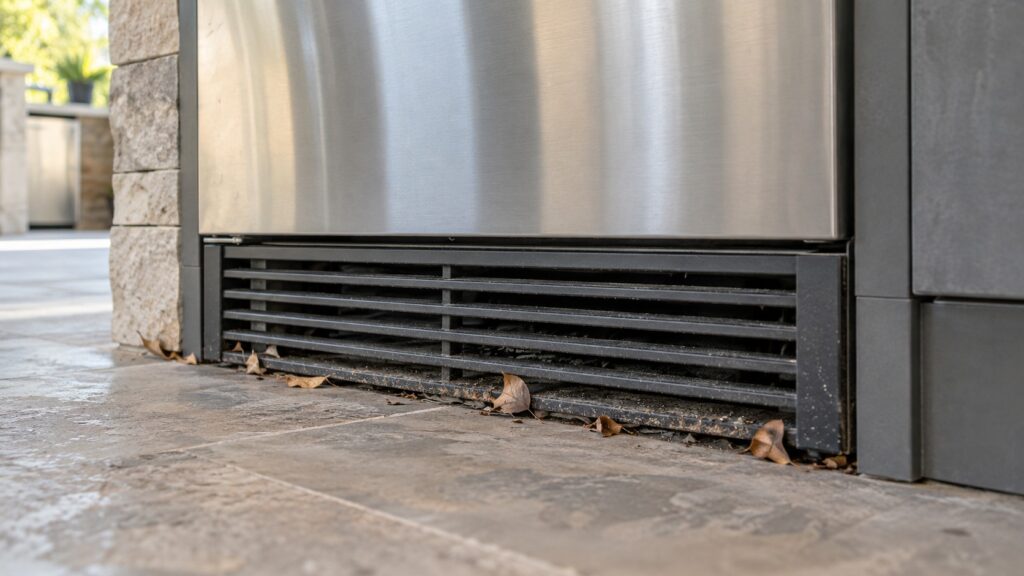
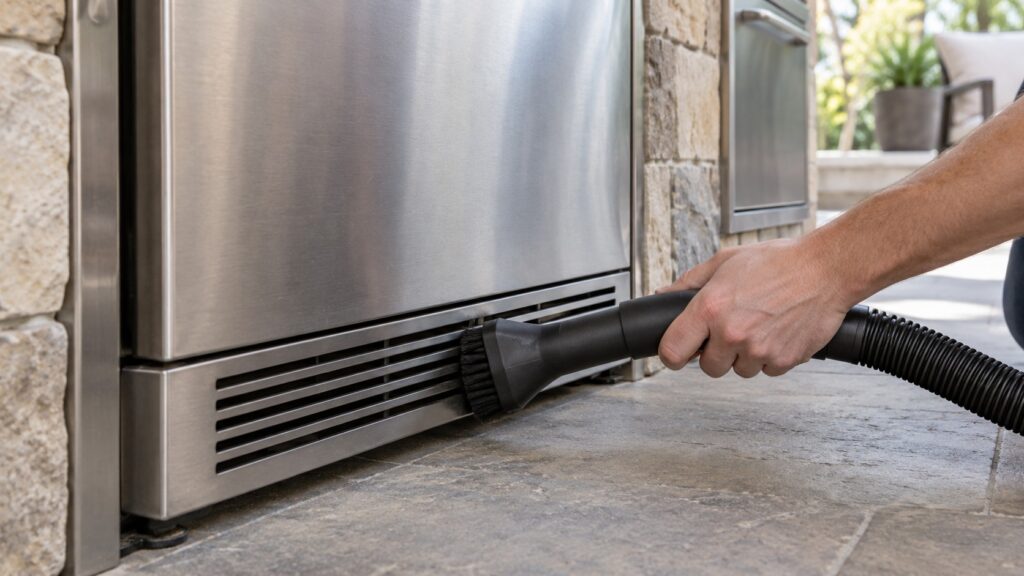
Only what you can reach without tools. On a built-in unit that is the front grille at the base. Switch the refrigerator off first, using the breaker if you cannot reach the plug, and leave the door closed so the cold stays in. Use a vacuum cleaner with a soft brush attachment and move it gently across the grille, then go over it with a dry soft brush for webs and fine dust. Wipe the grille and the surrounding stainless with a microfiber cloth dampened with water and a little mild soap, wrung nearly dry. Do not spray water through the grille, and do not use a pressure washer, since water inside the lower area is exactly what you do not want. For stainless care, our 304 stainless glossary covers the finish.
What should you leave alone?
Do not take off the grille or any panel to reach the coils behind it. Those parts sit near electrical connections and sharp edges, and fins bend easily. Do not push a brush or a hose into the gaps, and do not use compressed air at close range, which can blow debris deeper or damage components. If the grille is held on by fasteners, or if you can see that the area behind it is dirty, that is a technician’s job. Our DCS outdoor refrigerator repair page explains how a visit works, and a technician can clean the coil area as part of a service call.
How do you keep the air path clear between cleanings?
Keep storage, bins and decorative items away from the front of the unit, and leave the vent openings in the enclosure as the installation instructions require. Trim plants that drop leaves onto the unit, and shade it from direct sun if you can. Check the grille after storms, after leaf fall and after a dusty season. If you also keep a cover on the refrigerator over winter, make sure it is removed before the unit runs again; our winterizing guide explains the shutdown and restart.
How can you tell that the condenser area needs attention?
A cabinet that is warmer than it used to be, a refrigerator that runs almost all the time, or a temperature code in hot weather are all clues. A visibly clogged grille is the clearest one. If the grille is clean and the symptoms stay, look at the door seal with the door seal maintenance guide and at the codes in the fault codes guide. Cleaning is not a repair; it removes one common cause so you can see whether another remains.
What does a good cleaning routine look like?
Pick a day at the start of each season and make it a habit. First, check that nothing is stored in front of the grille and that the vent openings in the enclosure are open. Second, switch the unit off, vacuum the grille with the soft brush attachment, and brush away webs. Third, wipe the stainless around the grille. Fourth, switch the unit back on and listen: a refrigerator that starts and settles into a steady cycle is working normally. Finally, check the cabinet temperature with a separate thermometer later that day and again the next morning. If the readings are better than before, a dirty airflow path was part of the problem.
Spiders and insects like the warm, sheltered space near a running refrigerator, and so do leaves and dust in a built-in enclosure. If you find nesting material, remove what you can reach with the vacuum, and have a technician check behind the grille if there is more. Do not use insecticide sprays near the unit or inside the cabinet, since residue can end up on food and on electrical parts.
If the unit sits in a tight enclosure, shine a flashlight along the front of the grille while it is off to look for webs or a felt of lint that the vacuum may have missed, and wipe the edge of the opening where dust collects. Take a photo before and after your first cleaning, so you can see how fast the dirt returns in your own yard and set a sensible schedule from that.