
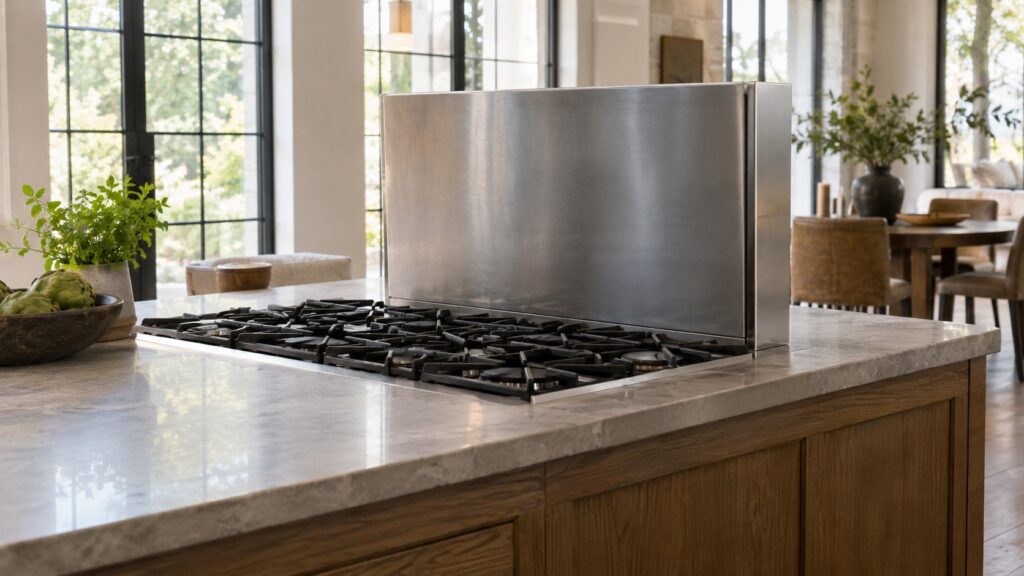
DCS rangetop backguard questions come up when planning a kitchen: what protects the wall behind a rangetop, and what finishes the back of one that stands in an island? A backguard is a raised panel along the back of a rangetop, behind the burners; an island installation has no wall behind it, so the back, the clearances and the ventilation have to be handled differently. Which backguard options, trim kits and island finishes exist for your model is set out in the model’s installation instructions and specification sheet, and we do not list them here because our site does not. What follows is the general picture, so you ask the right questions.
What is a rangetop backguard?
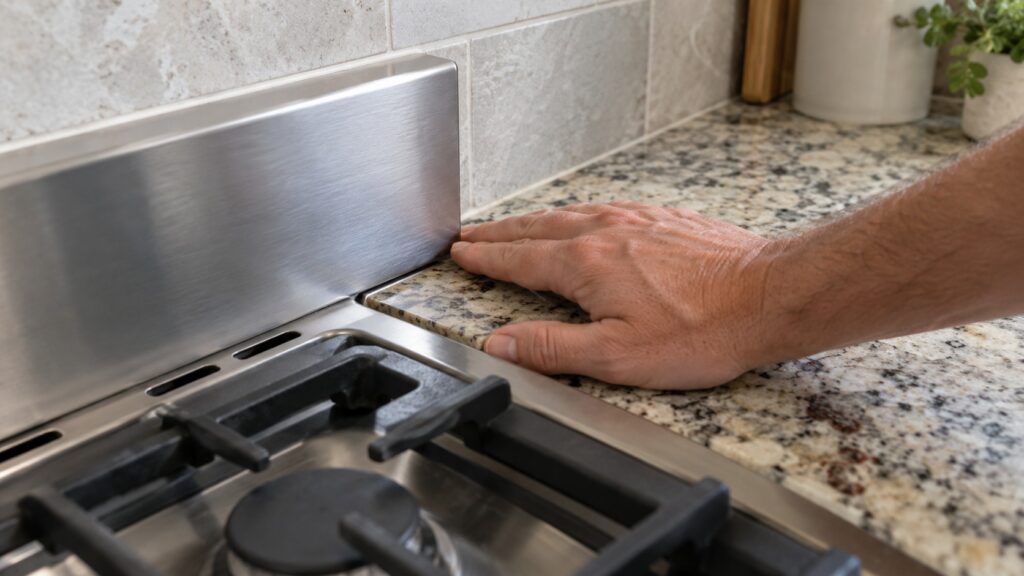
A rangetop is a professional cooking surface that drops into a countertop with cabinetry below, as our guide on how DCS rangetops work explains. A backguard is a panel that rises behind the burners. In general terms it protects the wall from heat and splatter and gives the rangetop a finished back edge. Not every model takes one, and the ones that do have specific parts. If you want one, look up your exact model in the specification and installation instructions, because a backguard that was made for one model is not a match for another.
How does a wall installation differ from an island?
Against a wall, the wall behind the rangetop takes the heat and splatter, and the clearances to combustible surfaces in the instructions decide how close the rangetop can sit and what protection is needed. In an island, there is no wall: the back of the rangetop faces the room, so the finish, the trim and the clearances on every side matter, and so does what rises above it. Our rangetop installation requirements say to cut the countertop to the exact model dimensions, build the cabinetry to the specified clearances and maintain the required clearances to walls and combustibles. Those apply to both layouts, and an island adds extra planning.
What does an island do to ventilation?
A lot. A hood over an island is exposed on all sides, and our range hood CFM sizing guide says that an island hood loses capture on all sides and needs more width and airflow than a wall hood to capture the same plume. A pro rangetop with a griddle or grill module puts out a lot of heat and grease, and a hood that is too small leaves residue in the kitchen. Plan the hood with the rangetop, and make sure the hood is at least as wide as the rangetop. Our range hood installation requirements cover the next step.
What should you decide before the countertop is cut?
Choose the model and confirm its dimensions and cutout. Decide whether you want a backguard or an island finish and confirm the part for your model. Plan the cabinetry below, because our rangetop guide says it must be planned into the kitchen from the start, not retrofitted: the cutout, the cabinet clearances and the gas and ventilation routing all need coordinating with the cabinetmaker and installer before the countertop is cut. Decide on the hood and its duct route. Check how the rangetop pairs with your ovens; our range vs rangetop buying guide explains why rangetops pair with separate wall ovens.
What about gas, clearances and finishing materials?
Gas connections are made and leak-tested by a licensed professional, with a correctly sized line, an accessible shutoff and the right orifices for natural gas or propane. Clearances to combustible materials are published for each model, and finishing materials near the burners must respect them, including trim, tile, wood and any decorative panels. Do not assume a material is fine because it looks sturdy. Ask the installer to confirm every material within the clearance zone against the instructions, particularly in an island where wood paneling and stone are common. Our rangetop modules glossary explains the grill, griddle and wok inserts, which also affect the heat output near the back.
When should you ask for help?
Ask a licensed installer for the cutout, gas, ventilation and finishing, and read the installation instructions before the designer finalizes drawings. If a rangetop is already installed and you notice scorching or discoloring on the wall, backguard or trim, switch it off and ask a technician or installer to check the clearances. Our DCS rangetop repair page explains how a visit works.
What should you ask the retailer or designer?
Ask for the installation instructions and the specification sheet for the exact rangetop model before the drawings are final. Ask whether a backguard is available for that model, what it is made of and how it attaches, and whether the model can be installed in an island with an open back and what finishing it needs. Ask what clearance to the hood, to side walls and to the countertop edge is required, and who will confirm the choice of surrounding materials. Ask for the answers in writing and keep them with the installation documents. A rangetop is a long-lived purchase, and the questions cost nothing at the planning stage but are expensive to answer after the stone is cut.
It is also worth asking how the rangetop will be serviced. Leave a service route to the gas shutoff and the cabinet below, and do not seal the rangetop in with trim that has to be cut away for a repair. A technician has to be able to reach the unit, and a design that allows it is a design that will cost less to live with.