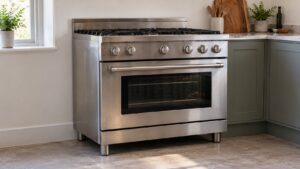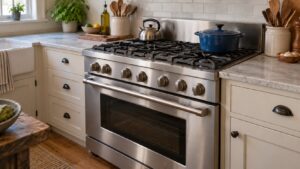
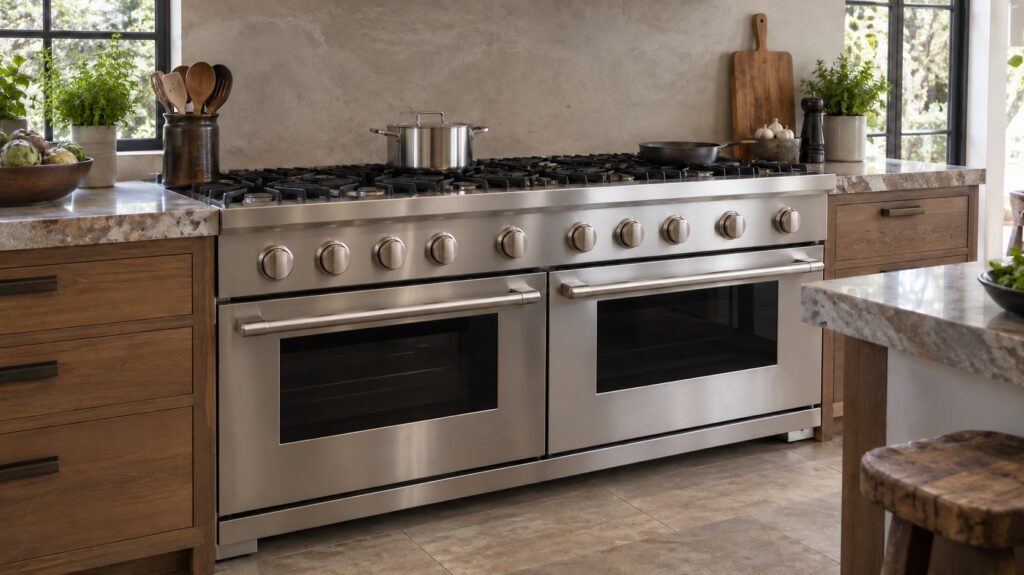
A dcs 48 inch range or rangetop adds more than width: on our model pages the 48-inch appliances carry eight burners, or five or six burners with a griddle, and the ranges have two ovens side by side. That makes the jump from 36 to 48 inches a decision about how many things you cook at once and how much oven you need, not a matter of simply having a bigger stove. This guide compares the five 48-inch DCS models on our site, the RGV2-488, RDV2-485GD, RGSC-485GD, CPV2-488 and VRT-485GD, using only what their pages say. DCS, a Fisher & Paykel company, makes them, and we are an independent repair service that does not sell appliances.
What does a DCS 48 inch range add over a 36?
Two things stand out. The first is surface area: our 48-inch pages list eight sealed burners on the gas models without a griddle, or five or six with one. The second is the oven layout: the 48-inch ranges have two ovens. Whether both can run at once at different temperatures is set out in the owner’s manual for your model, so check it before you count on that. Our site’s 30 and 36-inch pages describe the smaller models, so compare them side by side. If you often cook for a crowd, entertain or use several pots at once, the extra width earns its place. If you cook for one or two, it may be more range than you will use.
All five 48-inch models list 304-grade stainless steel, sealed dual-flow burners and continuous heavy cast-iron grates, with a simmer that runs from low to high-output sear. Our guide to how DCS sealed burners work explains the burner design.
Which 48-inch range suits you: gas or dual fuel?
This is the first choice. The RGV2-488 and RGSC-485GD are gas ranges with two gas convection ovens, while the RDV2-485GD is a dual-fuel range, with gas burners on top and electric convection ovens below. Which one suits you depends on the oven type you prefer and on what your kitchen can supply. We do not rank them. What you do need is the right supply: a gas line sized for the appliance, and for dual fuel an electrical circuit as well. Our DCS range installation requirements guide lists them.
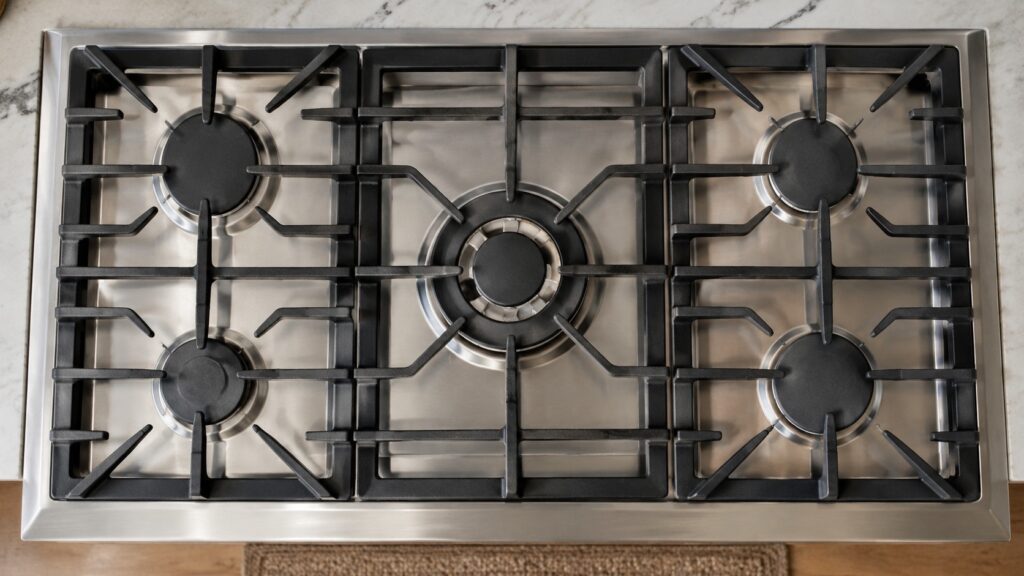
Eight burners or five burners and a griddle?
Think about how you cook. Eight burners give you the most pots at once. A griddle gives you a flat, wide surface for pancakes, eggs, smash burgers and the like, and trades away some burner positions to get it. The RDV2-485GD and RGSC-485GD pair five burners with a griddle, and the rangetop VRT-485GD pairs six burners with one. If you rarely use a griddle, the all-burner models make more sense. If you do use one, check our guide to rangetop griddle care before you commit, because a griddle has its own care routine.
Range or rangetop at 48 inches?
A range combines the burners and the ovens in one freestanding unit, and a rangetop is cooktop-only, dropped into a countertop with cabinetry below and paired with separate wall ovens. The CPV2-488 and VRT-485GD are rangetops. A rangetop gives you design freedom, such as wall ovens at eye level, and usually means a bigger kitchen project with custom counters and cabinets. A range is simpler: one appliance, one opening. Our guide to DCS range vs rangetop goes through the trade-offs, and our rangetop installation requirements guide lists what the cutout and the utilities need.
What does a 48-inch appliance demand from your kitchen?
Quite a lot. The floor and the cabinetry must carry the weight and match the width. Clearances to combustible surfaces must follow the installation instructions. The gas line and shutoff must be sized correctly, and a licensed installer should make the gas and electrical connections. Ventilation matters more as the burner count rises, and our guide to range hood CFM sizing explains how to size a hood for a large cooking surface. On a 48-inch unit the hood needs to be at least as wide as the appliance, as our installation guide says.
Gas: only a specialist. Gas connections and conversions belong to a qualified gas professional. If you smell gas, do not light anything and do not switch anything on or off. Leave the area, turn off the gas at the source if you can do so safely, and call your gas company or 911 from a safe distance.
How do the two ovens change the way you cook?
Two oven cavities side by side are what sets the 48-inch ranges apart from a single-oven range. How the two ovens work together, and whether both can run at once, is in your owner’s manual. The pages for the 48-inch ranges list convection in the ovens, porcelain-enameled interiors that are self-clean capable and heavy-duty racks with full-extension glide. Our guide to how DCS convection ovens work explains what the fan does for baking. A word of caution: two ovens mean two sets of doors, seals and racks to look after, so allow for a little more upkeep than on a single-oven range. Weigh that against how often you would use the second oven.
What about upkeep and repairs?
A larger range has more of everything to clean: more burners, more caps, a bigger oven. Our range burner cleaning guide covers the burners. When something fails, repair is often cheaper than replacement on a range of this class, and our range repair or replace guide sets out the cases where it does not. Our DCS range repair page explains how a visit works.