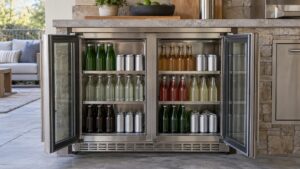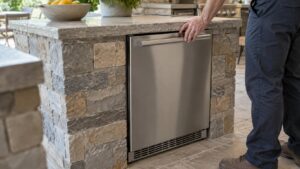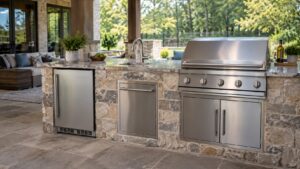
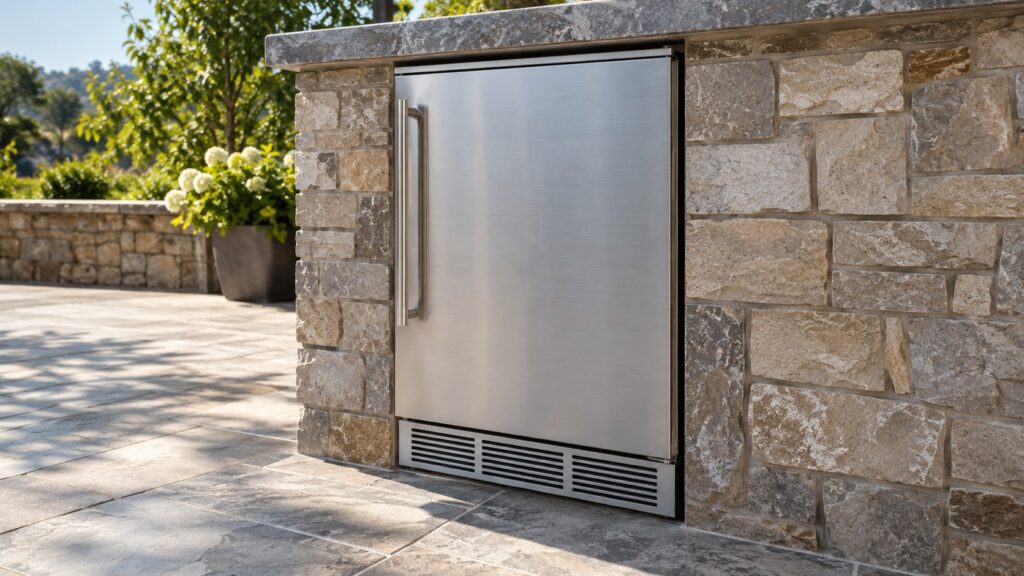
A DCS clear ice maker is a self-contained clear-ice module built into a 24-inch stainless cabinet: water comes in through a fill valve, freezes in the module’s mold under the cabinet’s cooling, is released in a harvest cycle and drops into the bin. The RF24IM3 and RF24IM4 models on our list are built this way, with the RF24IM4 adding a high-capacity bin. Knowing the four stages makes it far easier to tell whether a problem is the water, the cold, the heat of the day or the module.
How does a DCS outdoor ice maker make ice?
The cycle starts when water reaches the module. A fill valve opens, water runs through a fill tube into the mold, and the valve closes when the mold has taken its measured amount. Next the cooling system takes over. It is a self-contained, thermostatically controlled refrigeration circuit, so it needs no separate refrigerator to supply cold. The mold chills until the water is frozen through, and a sensor tells the module when the ice is ready.
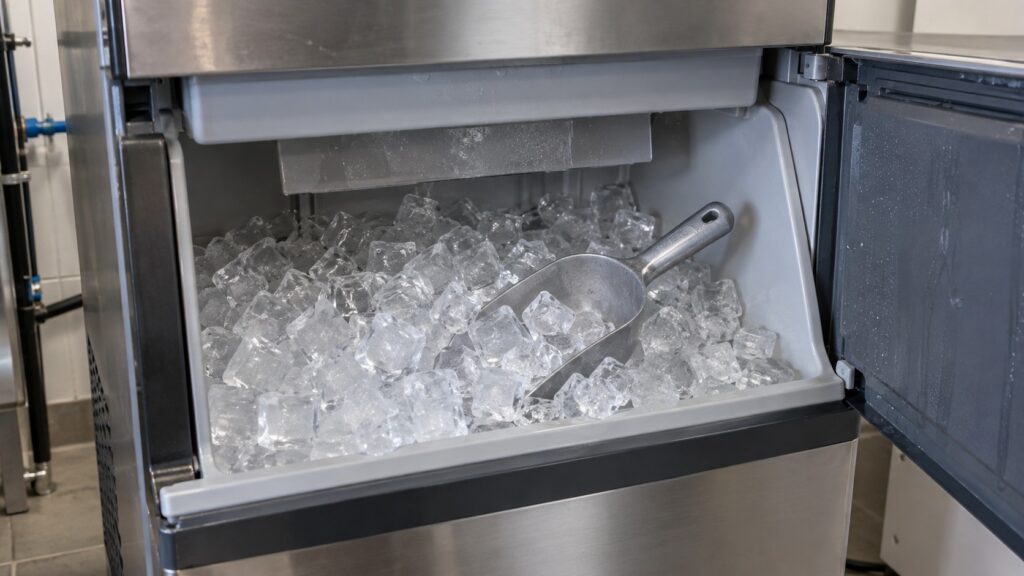
Then comes the harvest. The module warms the mold slightly so the ice lets go, and the cubes fall into the bin below. A new fill begins, and the cycle repeats until the bin is full and a sensing arm or switch pauses the process. It is a gentle, slow rhythm, which is why a bin may take a day to fill from empty and why the first batches after a power-up are not a sign of failure.
What makes the ice clear?
Cloudy ice is ice that froze quickly and trapped tiny air bubbles and dissolved minerals. A clear-ice maker is designed to freeze the water gradually, so the air and minerals are pushed out of the ice as it forms. That is the reason a clear-ice cube looks like glass and melts slowly in a drink, which suits the kind of outdoor bar these units are built for.
Clear ice is only as clean as the water that feeds it. Hard water leaves mineral scale in the fill tube and on the mold, and that scale narrows the water path over a season. The result is small or hollow cubes, because a short fill freezes only an outer shell. Our guide to DCS outdoor ice maker troubleshooting covers that symptom in detail.
Why does heat outdoors matter so much?
An outdoor unit works harder than an indoor one. The cooling system rejects heat through a condenser coil, and that coil needs a clear path for air. Cottonwood fluff, pollen and dust blocking the base grille cut the heat the system can shed. On a hot afternoon, the whole cabinet gets pushed warm, and the ice maker is the first thing to show it: harvest slows, ice melts between cycles, and the bin never quite fills.
A useful clue is timing. A unit that struggles only between noon and early evening is pointing at the coil and the ambient heat. A unit that struggles at every hour points toward the water supply or the fill valve instead. Keeping the coil clear is a regular maintenance chore, covered in our guide to DCS outdoor ice maker maintenance.
How is this different from the ice maker in a DCS outdoor refrigerator?
The two are not the same system. The RF24RE and RF24DE outdoor refrigerators use a sealed-system ice maker that reports its faults through the cabinet display as letters such as IF, IM and IW. The ice maker in the RF24IM and RF24BC beverage cabinets is a simpler standalone module with no code display; it shows trouble as a plain symptom such as no ice, small ice or a slow harvest. Diagnosing one with the other’s code list sends you looking for a display that is not there. Our guide to outdoor refrigerator ice maker codes covers the refrigerator side.
If you are still deciding what to buy, the outdoor beverage buying guide compares the cabinets, and our outdoor refrigerator explainer shows how the cooling side works in the larger units.
What does the module need from you to keep working?
Four things keep it healthy. The first is a steady water supply: a clear, unkinked line with the shutoff open and no frozen section, since outdoor lines pass through masonry and exterior walls. The second is a clear coil and base grille. The third is a door that closes flush, because a poor seal lets in humid air that melts ice and loads the cooling. The fourth is attention at the end of the season. If the unit sits through freezing weather, the line and the module need to be drained and protected, as our guide to winterizing outdoor appliances explains.
When the checks come up clean and the module still will not harvest, the fill valve, the harvest control or the module itself is the suspect, and that needs testing equipment. DCS outdoor beverage repair handles ice makers, fill valves and door seals.