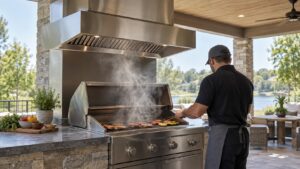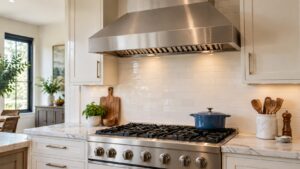
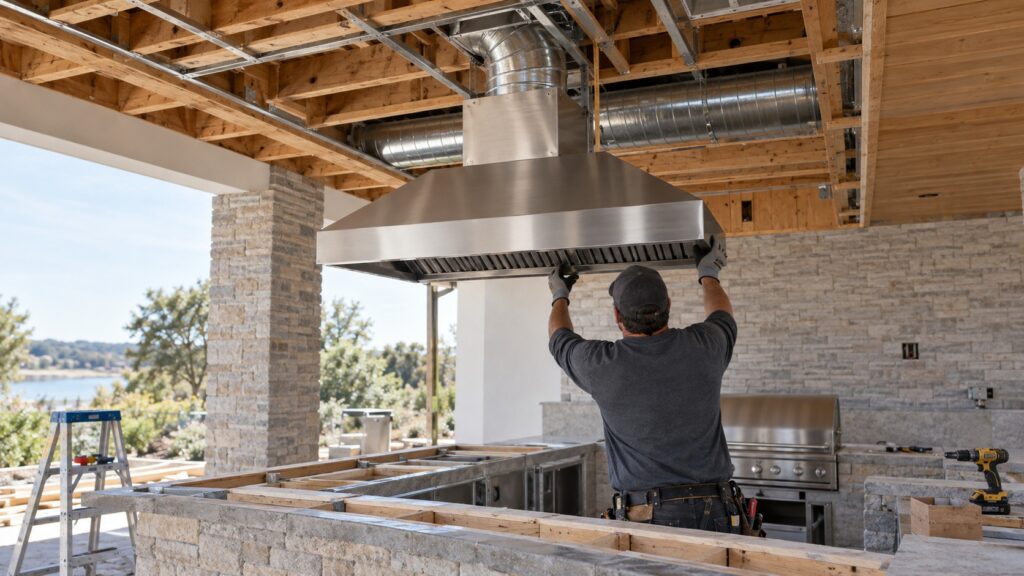
A DCS range hood installation over an outdoor grill takes more planning than an indoor hood because the duct run, the mounting height and the makeup-air path all have to work inside a structure that is open to weather on at least one side. Getting the clearance and duct sizing right before construction avoids the alternative — cutting into finished soffits or masonry to fix a hood that was hung too low or ducted through too many turns.
How high should a DCS range hood be mounted over the grill?
Mounting height is a balance: too low and the hood traps heat and blocks a cook’s view of the grill; too high and it loses capture efficiency, letting smoke escape around the edges before the blower can pull it in. DCS specifies a mounting range for each hood width rather than a single number, because the correct height also depends on the grill’s own BTU output below it — a higher-output grill throws heat and smoke further upward, and needs the hood mounted slightly higher to avoid crowding the flame. Confirm the exact range for your hood and grill pairing against the rating plates on both before cutting any structural opening.
What duct diameter does the installation need?
Duct diameter is set by the hood’s CFM rating, not by whatever diameter duct happens to be on hand. An undersized duct forces the same volume of air through a smaller opening, which increases resistance, raises blower noise, and can reduce the effective exhaust volume well below the hood’s rating — the blower works harder while moving less air. Use the duct size specified for your hood’s exact CFM tier; do not assume a smaller duct just because the run is short.
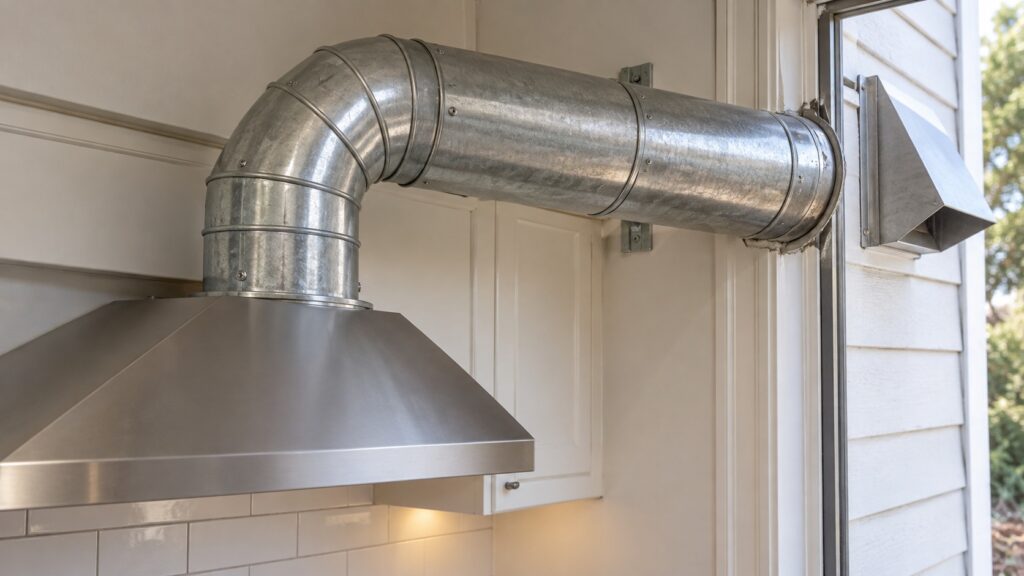
How many elbows can the duct run have before it hurts performance?
Every 90-degree turn in the duct adds resistance roughly equivalent to several feet of straight duct, and outdoor installations often need at least one turn to get from the hood to an exterior wall or roof. Plan the shortest, straightest path available, and if the layout forces more than two turns, consider a higher-CFM hood to compensate for the added resistance rather than accepting reduced exhaust performance. A duct run that snakes through multiple turns to reach a distant termination point is the single most common reason a correctly sized hood still underperforms.
Where should the duct terminate?
Terminate the duct at a wall cap or roof cap positioned away from the direction the prevailing wind usually comes from at that location, and away from windows, doors or seating areas that would catch the exhausted air and grease. A cap facing directly into regular wind is the layout most likely to produce the backdraft symptoms covered in our range hood makeup air explainer — wind pressure works against the damper’s ability to stay sealed between uses. If the structure’s design limits your termination options, a cap with a stronger built-in damper spring can partly compensate, but positioning away from wind is the more reliable fix.
Does an outdoor hood need a dedicated electrical circuit?
Yes. The blower motor and any hood lighting should run on their own weather-rated circuit sized to the hood’s electrical specification, not shared with other outdoor outlets that could trip a breaker mid-cook or introduce voltage drop on a long run. Outdoor electrical work is also where local code requirements are strictest, so confirm the circuit and any required disconnect with a licensed electrician alongside the gas and duct rough-ins.
Voltage drop matters more on outdoor runs than most homeowners expect, since the electrical panel is often much farther from an outdoor kitchen than from an indoor one. A run that is technically within the wire gauge’s rated capacity can still deliver a few volts less than the blower motor expects if the distance is long enough, and that shortfall shows up as a motor that runs hotter and louder than it should. Have the electrician confirm the run length against the wire gauge, not just the amperage, when sizing this circuit.
What should be finished before the hood itself is hung?
Complete the duct run, the electrical circuit, and the structural opening for the mounting bracket before the hood arrives on site — hoods are heavy enough that temporary support during a delayed rough-in is not practical. If the same project includes a grill, side burner or rangetop below the hood, coordinate the gas rough-ins for those appliances at the same stage; our outdoor kitchen planning guide covers sequencing the whole island. For the grill itself, our grill installation requirements guide covers the clearances the hood height depends on.
What does a DCS range hood installation cost in rework if it is done out of order?
Hanging the hood before the duct and electrical rough-ins are finalized is the single most expensive sequencing mistake on this list. A hood mounted to a bracket sized for the wrong duct diameter, or positioned before the electrician has run the dedicated circuit, usually means removing and remounting the unit once the real requirements are known — work that is straightforward on an open frame and disruptive on a finished structure with soffits, stone veneer or a covered ceiling already in place. Confirming duct size, circuit specification and mounting height against the actual hood and grill model, before any of it is installed, is worth the extra week of planning it takes.
We install and service DCS range hoods as an independent company, not a factory service arm, and can review a rough-in plan before construction starts. DCS range hood service covers installation review as well as repair, and pricing starts from a diagnostic visit. Schedule a visit online or call 1-844-487-0065.