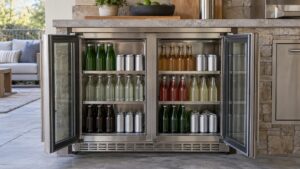
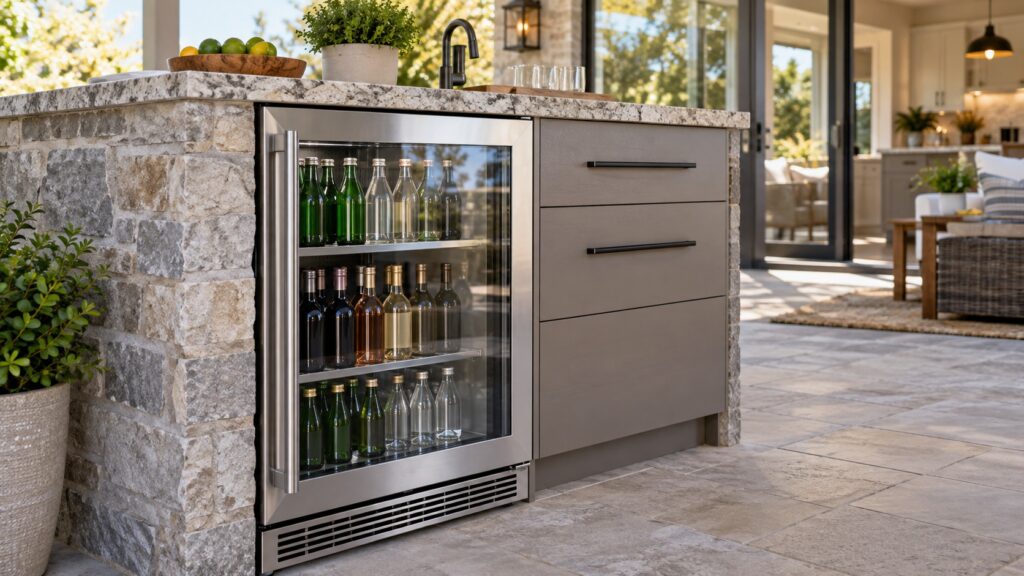
A DCS beverage chiller and a DCS kegerator occupy the same cabinet opening and answer completely different questions. One holds bottles and cans at a drinking temperature; the other dispenses draft beer and brings a gas system, a coupler and a cleaning routine with it. Choosing between them on capacity alone is how people end up with a kegerator they stopped using or a chiller they wish poured.
The question is upkeep, not capacity
Almost everybody chooses on volume — how many bottles, how big a keg — and almost every regret is about routine. A beverage chiller asks nothing of you beyond a wipe and a vacuum at the grille. A kegerator is a small dispensing system, and a dispensing system that is not cleaned produces beer that tastes progressively worse until nobody drinks it and the appliance becomes storage.
That is not an argument against a kegerator. It is an argument for being honest about whether the line cleaning will happen. If the answer is yes, it is the better appliance by a distance for anyone who drinks draft. If the answer is probably not, a chiller full of bottles will make you happier — see our line cleaning guide for exactly what the routine involves.
Temperature: they are not the same appliance inside
A beverage chiller holds a set point chosen for drinking rather than for food safety, and it is usually a single zone across the whole cabinet. A kegerator has to hold a keg at a stable dispensing temperature, and stability matters far more than the exact number — beer that warms and re-cools foams at the tap and pours as half a glass of head.
This is why a kegerator is more sensitive to siting than a chiller. A chiller that drifts a couple of degrees on a hot afternoon is unnoticeable. A kegerator that does the same pours badly all evening. Our temperature guide covers the ranges, and how a kegerator works covers the dispensing side.
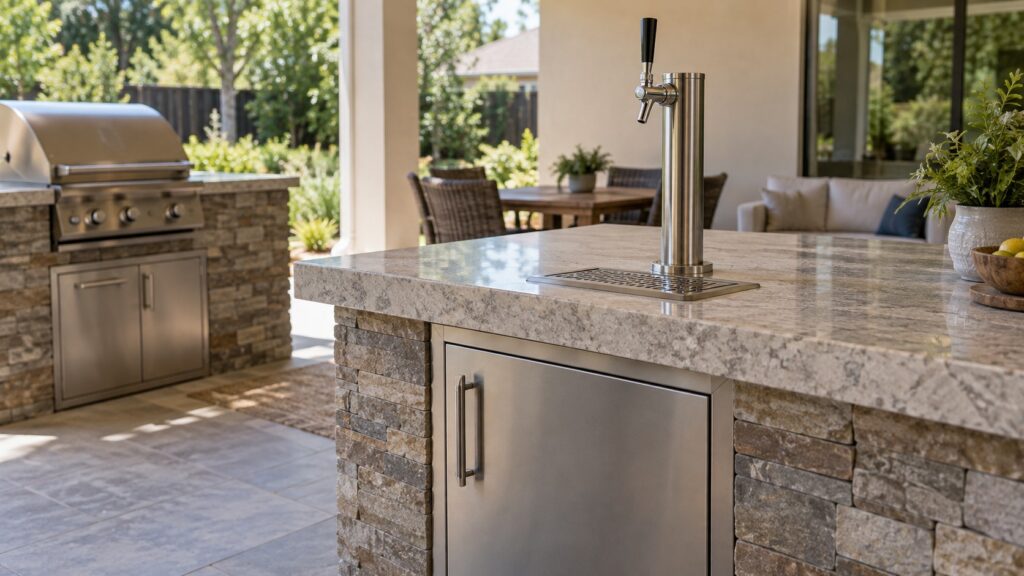
What a kegerator adds to the installation
- CO2. A cylinder lives in or beside the cabinet, and it has to be reachable to change. Plan that access before the island is built — see our CO2 setup guide.
- A tower or a tap. A tower stands on the counter and needs a hole through it; a through-door tap does not, but fixes where the glass goes.
- Drip management. Outdoors, a drip tray that does not drain becomes a bowl of stale beer and wasps within a day.
- Keg logistics. A full keg is heavy and has to be lifted into a cabinet at ankle height. Try that once before deciding.
Where each one wins
A chiller wins when the drinking is varied — wine, sparkling water, soft drinks, a few beers — and when the appliance has to work for guests who want different things. It wins again when the outdoor kitchen is used a handful of times a month, because there is nothing to go stale.
A kegerator wins when one beer is drunk regularly and in quantity, and when the outdoor kitchen is used most weeks. Per serving it is cheaper and it produces less packaging waste, which is a real argument. What it is not is a party appliance that sits idle for two months and then performs on demand.
Both are outdoor appliances first
Whatever you choose, the outdoor requirements are identical and they matter more than the choice between the two. The grille has to breathe: a decorative panel across the front of an island, or leaf litter at ankle height, produces a unit that runs constantly and never quite reaches its set point. The ambient rating has to suit the site — an uncovered island in full afternoon sun is outside what these units are specified for.
And the electrical supply has to be outdoor-rated and protected. Our guide on weather versus real faults covers what happens when those are compromised, and the outdoor beverage buying guide covers the range as a whole.
Winter changes the calculation
In a climate with freezing nights, a kegerator is the more demanding appliance to own. A keg left connected through a freeze is a problem; lines that are not drained can split; and a unit shut down for the season needs its lines cleaned before it goes away rather than after. A chiller, by contrast, is emptied, wiped and switched off.
Our winterizing guide covers the drain-down for both, and it is worth reading before buying rather than after the first frost.
Sizing, and the mistake of counting bottles
Capacity figures for a beverage cabinet are quoted in cans, and cans are the smallest thing anyone puts in one. Load the same cabinet with wine bottles, tall sparkling water and a few growlers and the real number drops sharply, because shelf spacing rather than volume is the constraint. If most of what you chill is tall, check the shelf pitch and the number of adjustable positions rather than the headline figure.
On the kegerator side the equivalent trap is keg format. A cabinet sized for one keg size will not take a taller one, and the difference between formats is measured in inches of headroom that the coupler also needs. Settle which kegs you will actually buy locally before choosing the cabinet, not after.
Before you replace either one
A unit that has stopped cooling is often a blocked grille, a door seal, or an ambient problem rather than a failed compressor — and the symptoms are indistinguishable from outside. We are an independent repair company, not a dealer, so we have nothing to sell you on the buying side. DCS outdoor beverage repair starts with a diagnostic visit, we confirm the estimate before any work begins, and you can schedule a visit online.