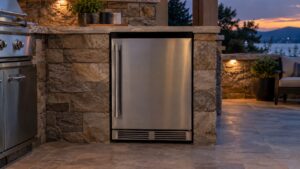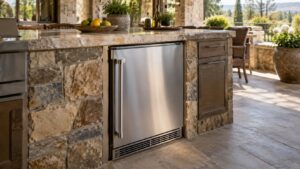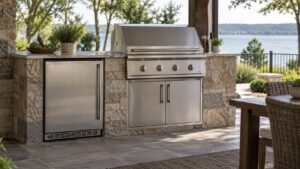
Knowing how to winterize outdoor refrigerator units protects your DCS investment in cold climates. Whether you shut it down or keep it running depends on your winter and the unit’s rating. This guide covers both paths.
Decide: shut down or keep running
DCS outdoor refrigerators are UL outdoor-rated, but extreme cold can affect performance and water/ice components. If your winters dip well below freezing for long periods, shutting down is often safest unless the model is rated for those temperatures – confirm on the manufacturer’s site at dcsappliances.com.
Shutting down for winter
- Empty the cabinet and any ice bin completely.
- Disconnect and drain the water supply line to ice makers or dispensers so nothing freezes and cracks.
- Clean the interior and dry it fully.
- Turn the unit off and prop the door slightly open to prevent mold and odor.
- Protect the exterior with a cover if the unit is exposed.
Keeping it running
- Confirm the model’s rated ambient temperature range.
- Keep it stocked – a fuller fridge holds temperature better.
- Watch for cold-weather CL codes; see our error codes guide.
Spring restart
When you bring it back, clean it, reconnect and check the water line for leaks, power up, and let it stabilize before loading – see our temperature setup guide.
Need help?
If a water line cracked over winter or the unit will not cool on restart, our outdoor refrigerator repair team can help – schedule a visit.
Why water lines are the big risk
The single most common winter damage to an outdoor fridge is a frozen, burst water line feeding the ice maker or dispenser. Draining that line is the most important winterizing step. A cracked valve or line is a wet, expensive surprise come spring.
Preventing odor and mold
- Clean and dry the interior before shutdown.
- Prop the door so air circulates.
- Place a moisture absorber or baking soda inside.
Covers and pests
A breathable cover protects the stainless from winter weather while keeping pests out of the cabinet and mechanicals. Avoid sealing it airtight, which traps condensation. Come spring, inspect for any nesting before powering up. For long-term finish care, see our 304 stainless guide.
Winterize Outdoor Refrigerator: Key Takeaways
To recap on winterize outdoor refrigerator: work through the simple checks first, keep the appliance clean and correctly set up, and address small symptoms before they grow. The guidance above on winterize outdoor refrigerator reflects how our certified technicians approach the same issues in the field, and following it keeps your DCS appliance performing the way it was built to.
- Start with the easiest, lowest-cost checks and confirm the basics before replacing parts.
- Use only genuine DCS-specified parts so performance and safety are not compromised.
- Keep up a regular maintenance routine, which prevents most problems and protects long-term value.
- Know when a job needs a professional, especially anything involving gas, sealed-system refrigeration, or mains wiring.
If the steps here do not resolve your situation, the next move is a proper diagnosis rather than guesswork. Our team covers DCS cooking and outdoor appliances across all 50 states and 120+ metro areas, and the booking form accepts requests 24/7. You can schedule a service appointment at any time, review full specifications on the manufacturer’s site at dcsappliances.com, or browse comparable units on our model pages. Acting early on winterize outdoor refrigerator almost always means a smaller, simpler, and less expensive repair down the line.
When to call a DCS technician
It is worth being clear about the line between sensible owner maintenance and work that belongs with a professional. Routine cleaning, simple resets, and basic setup are well within reach for most owners and are exactly where this guide focuses. Anything involving a gas connection, a sealed refrigeration system, internal wiring, or a part that must be calibrated or pressure-tested is different: those repairs carry real safety and warranty implications and should be handled by a certified technician with the correct tools and genuine DCS parts. A DCS appliance is a long-term investment built from 304 stainless to last for decades, so it is almost always worth maintaining and repairing properly rather than letting a small problem compound. When in doubt, a quick diagnostic visit removes the guesswork, protects the appliance, and gives you a clear, written quote before any work begins so there are never surprises.