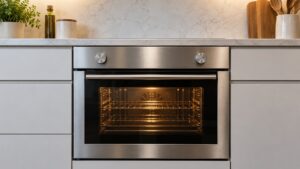
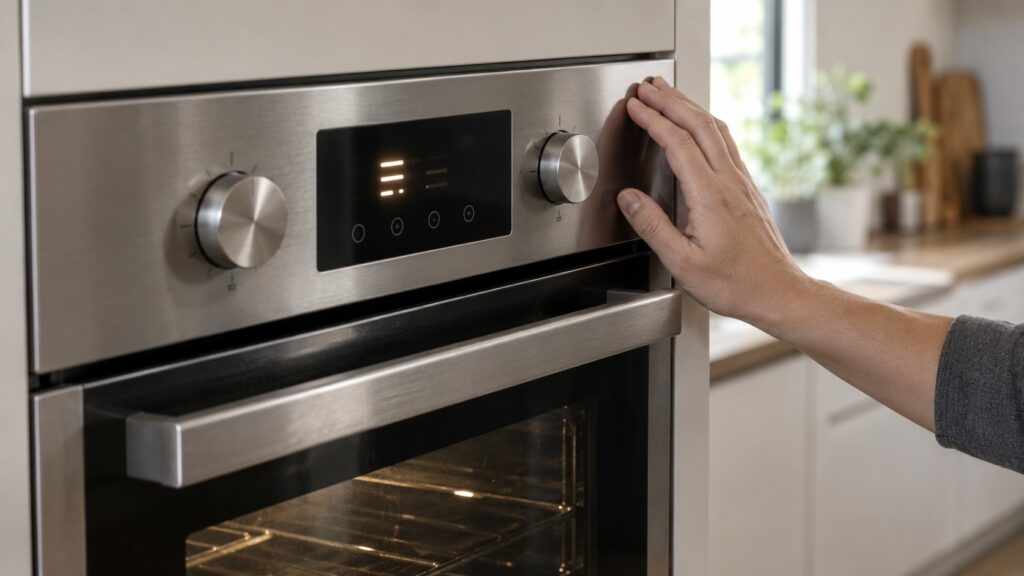
The DCS oven control board repair or replace question starts with a check that surprises people: does your oven have a control board at all? Our oven pages state that DCS wall ovens rely on conventional gas or electric heating with analog thermostatic control, so most models display no numeric error codes and report trouble as a heating symptom. Some ovens and ranges add electronic controls for the clock, timer or ignition, and those can fail. This guide explains how to tell a control problem from the far more common igniter, element, sensor or door switch problems, and how to weigh repair against replacement once a technician has diagnosed it.
What does an oven control board do?
On an oven that has one, the control reads your settings and the oven’s temperature sensor, and switches the heat sources, fans and locks on and off. It does not make heat; it decides when heat is called for. That is why a control fault can look like any other fault: an oven that does not heat, a display that is blank, a clock that is wrong or a function that does nothing. Our guide on how a DCS refrigerator control board works describes a board on the refrigerator side, which is a different appliance; ovens differ by model, so the manual for your oven is the reference.
Is it really the control board?
Usually not. Our oven not heating guide says an oven that will not heat is most often a weak gas igniter, a failed bake element, a tripped breaker or a faulty sensor, and it suggests testing whether broil works when bake does not. A door switch that is stuck open can also stop heating. These are all cheaper to fix than a control, and checking them first is how a technician avoids replacing the wrong part. The symptom pages for oven won’t heat and oven temperature runs off list the components behind each symptom.
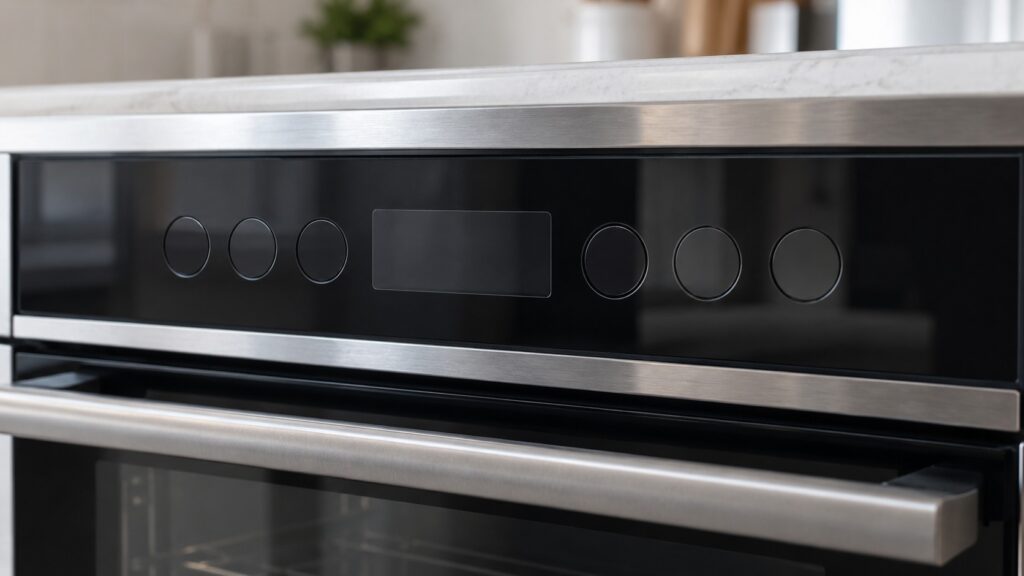
What are the signs of a failing electronic control?
A blank or garbled display, controls that do not respond, settings that change on their own, an oven that heats without being told to or fails to stop, and a clock that keeps resetting are all possible signs, though a power problem can cause the same things. Check that the oven has power, that a breaker has not tripped, and that no lockout or delay-start mode is active, since those can look like a failure. If water or a spill reached the control panel, or there is a burning smell, sparks or a hot panel, switch off the breaker at the panel while standing on a dry floor and call a technician. Do not press more buttons or open the panel to see what is inside.
When does repair make sense?
Our oven repair vs replace guide says that for a built-in wall oven, repair almost always beats replacement, because replacing means matching the cutout and paying to remove and reinstall. It lists control board and relay issues as worthwhile repairs on a premium built-in. If the fault is a single component and the oven is otherwise in good condition, repair keeps a well-built appliance in service and protects the kitchen. Repair also makes sense when the oven has a high-quality finish, a precise cutout and a layout you do not want to change.
When does replacement make sense?
Replacement becomes reasonable after catastrophic damage, such as a fire or flood, during a remodel when the cutout is changing anyway, or when an older oven has several worn systems and the repair estimate approaches the cost of a new one. Add the cost of removal and reinstallation to the comparison, and check that the new oven fits the cutout. Our oven repair cost guide describes how we think about costs, and the wall oven installation requirements guide covers what a new unit needs. We do not quote numbers here, because the right figure depends on the model and the diagnosis.
What should you do before the visit?
Write down the model number from the rating plate, what the oven does and does not do, whether bake, broil and convection work, and any events before it started, such as a power cut, a self-clean cycle or a spill. Note whether the clock or display changed. Do not try to reset the oven by taking off the control panel. Our DCS oven repair page explains how a visit works. A clear description and a model number are the most useful thing you can give a technician, and they often decide whether the first visit can fix the problem.
What should you expect from a diagnosis?
A technician starts with the symptom and works inward: power, door switch, igniter or element, sensor and then the control. The order matters because the cheapest and most common causes come first, and a control is replaced only when everything around it checks out. Ask what was found and which part is recommended, and whether the quote covers the part alone or also a second fault the technician noticed. A written estimate before the work begins makes the repair-or-replace comparison much easier, because you are comparing two real figures rather than two guesses. If the oven is old, ask about its overall condition at the same visit, so the decision covers the whole appliance.