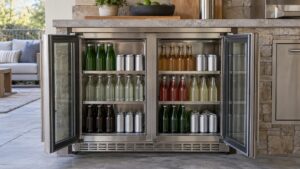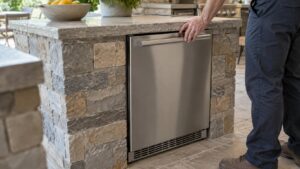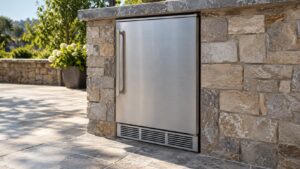
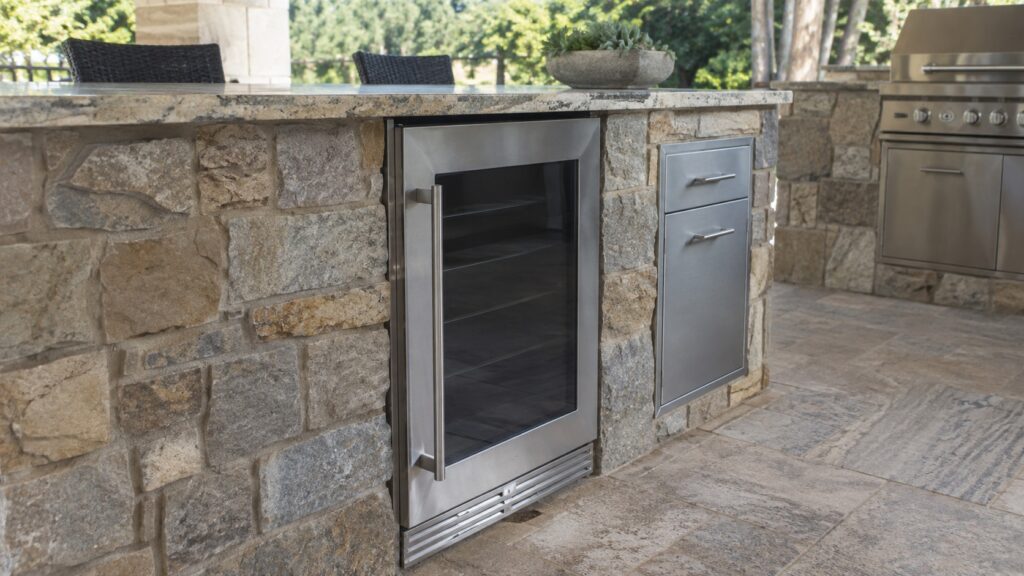
A DCS outdoor beverage center that is struggling to hold temperature, making bad ice, or leaking around the door deserves a real DCS outdoor beverage center repair or replace comparison before you assume the smaller footprint means a smaller decision. These units are built into cabinetry with matched cutout dimensions, and a replacement is rarely a drop-in swap — it can mean modifying the surround, not just ordering a new appliance. That changes the math compared to a freestanding unit you could simply roll out and replace.
What typically fails first on a DCS outdoor beverage center?
Door seals, fans and ice-maker modules fail well before the sealed refrigeration system on most units, because they take the direct brunt of outdoor heat, humidity and UV exposure. Our ice maker troubleshooting guide covers the most common of these, and a door seal problem is often mistaken for a cooling failure when it is really a component that is simple and inexpensive to replace. These part-level failures are the strongest case for repair over replacement, regardless of the unit’s age, because the part cost is a small fraction of a new cabinet-matched appliance.
Why does the built-in cutout matter more here than for a standalone refrigerator?
Outdoor beverage centers are almost always installed into a finished island opening sized to the exact appliance dimensions, with countertop and side panels built around it. Replacing the unit with a different model, even from the same maker, can mean the new appliance does not match the existing cutout width, depth or door swing — turning what should be a straightforward swap into a cabinetry rework. Before deciding to replace rather than repair, confirm that a compatible replacement model actually exists for the current opening; this is the single factor that most often tips the decision toward repair even on an older unit.
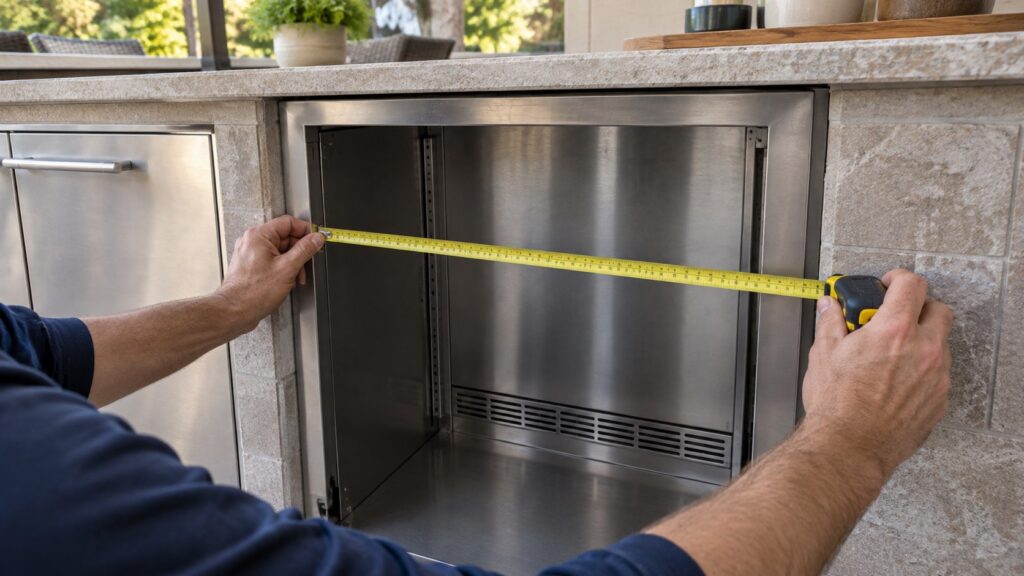
Is a sealed-system failure worth repairing on an outdoor beverage center?
It depends heavily on age and on the built-in constraint above. A compressor or refrigerant leak repair on a unit under 6-8 years old is usually worth doing, since the rest of the cabinet, the ice-maker module if present, and the cabinetry fit are all still sound. On a unit past 10-12 years, a sealed-system repair carries a higher chance that another major component fails soon after, and if a matching replacement model is available for the existing cutout, replacement becomes the more predictable option even though it costs more upfront.
How does the cost of repair compare to a new built-in unit?
Built-in outdoor beverage centers cost meaningfully more than a comparable freestanding cooler, both to buy and to repair, because parts and labor reflect the same cabinet-grade construction. As a rough guide, a repair priced at roughly a third or less of a comparable new unit’s installed cost is usually worth doing on a unit with no other known issues; a repair approaching half the replacement cost, especially alongside a cutout-matching constraint, tips the balance toward replacement. Get the actual diagnostic and quote before assuming either direction — the specific part failed and the specific model’s availability both move this number more than general age alone.
Does a repair extend the unit’s life, or just delay the same decision?
A door seal, fan or ice-maker module repair genuinely extends the unit’s working life, since none of those parts are tied to the sealed refrigeration system’s own lifespan. A sealed-system repair is different — it fixes the immediate failure but does not reset the compressor’s overall wear, so on an older unit it is reasonable to expect the clock is still running on a second major failure. Weigh that against how disruptive a full replacement would be to the surrounding cabinetry before deciding.
What happens if I do nothing and just keep using the unit as-is?
Ignoring a door seal or ice-maker fault does not usually stop the unit from running, but it does compound the problem it started with. A gasket left unrepaired lets the compressor run longer against a constant heat and humidity leak, which shortens the life of the sealed system that was otherwise fine — turning a cheap part-level fix into an eventual sealed-system failure on its own timeline. Deciding to repair sooner rather than later is often the choice that keeps this a small job instead of letting it grow into the larger one.
Does the type of ice maker affect the decision?
On the RF24IM models, the ice maker is a significant part of what makes the unit worth keeping, since replacing an ice-maker-equipped beverage center with a plain refrigeration-only model changes what the appliance can do for the household, not just how it looks. If the ice maker itself has failed but the sealed system is sound, repairing the ice-maker module specifically is usually the better move — it is a self-contained part, distinct from the compressor, and replacing it does not require touching the refrigeration side at all.
What should I ask before booking either repair or replacement?
- Is the exact failed part available and priced by our technician before any work starts?
- Is a replacement model available that matches the current cutout, if replacement is being considered?
- What is the unit’s actual age, from the rating plate, rather than an estimate?
- Has this unit had other repairs in the past two years that suggest a broader pattern of wear?
We are an independent repair company, not a factory service arm, and we will tell you honestly when replacement is the better value rather than pushing a repair that will not hold. DCS outdoor beverage center repair covers diagnosis for exactly this decision, and pricing starts from a diagnostic visit with the estimate confirmed before any work begins. If you are choosing between a beverage center and a kegerator for a rebuild, our buying guide covers that comparison. Schedule a visit online or call 1-844-487-0065.