
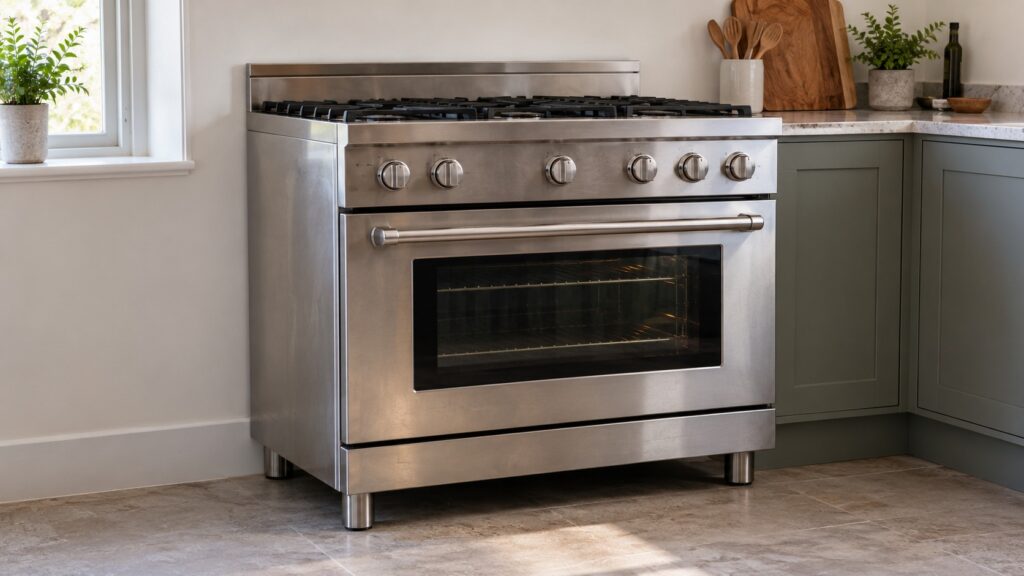
The DCS range anti tip bracket is a small safety part with a big job: it stops a heavy range from tipping forward if weight is put on an open oven door, such as a child climbing on it or a heavy pan being set on it. A pro-style range can be heavy and front-loaded when the door is open, so the bracket matters just as much as on any range. Level is the second half of the story: a range that is not level cooks unevenly, lets grease run to one side and rocks on its feet. This guide explains what to check, what to leave to an installer and why the instructions for your exact model have the final word.
What does the anti-tip bracket do?
An open oven door acts like a lever. A heavy pan, a child sitting on the door or a person leaning on it can move the center of gravity forward and tip the range. The bracket anchors the range, usually at the back, so that the range cannot rise and tip. The exact design, where it attaches and how it engages with the range depend on the model, and the installation instructions for your range show them. Never run a range without it, and never assume it is there because the range feels heavy; weight alone does not stop a range tipping.
How do you check that it is installed and engaged?
Do not pull a gas range away from the wall to look; the gas connection can be damaged, and the range is heavy. The installation instructions for your model describe how to confirm the bracket is engaged. Do not test it by pushing or tilting the range, and do not put weight on the open oven door. If you are not sure, or if you cannot confirm it, treat the range as unprotected and have an installer or technician check it. Make sure children do not climb on the open oven door in any case. If you bought the range new, ask the installer to show you the bracket and give you the documentation.
When should the bracket be rechecked?
Whenever the range has been moved, for example for floor work or deep cleaning behind it, whenever the floor or cabinetry has changed, and whenever the range feels loose or rocks. A bracket that was screwed into a floor that was later replaced may no longer be holding anything. Our range installation requirements say that a pro range demands more than sliding it into a gap, and that gas and electrical connections need a licensed installer. If someone else did a kitchen renovation around your range, a recheck of the bracket and the connections is cheap insurance.
Why does leveling matter on a range?
A range that is out of level has several problems at once. Liquids and fats run to one side of a pan or a griddle, baking browns unevenly, an oven door may not close flush, and the range can rock on its feet and put strain on the connections. The installation guide says to confirm the floor is level and rated for the range’s weight. Adjustable feet or legs let the installer correct small differences. The range should sit steady on all of them, with no wobble, and square to the cabinets on each side. A cooktop surface that is level front to back and side to side is the target; the manual describes how to adjust the feet on your model.
How do you check that the range is level?
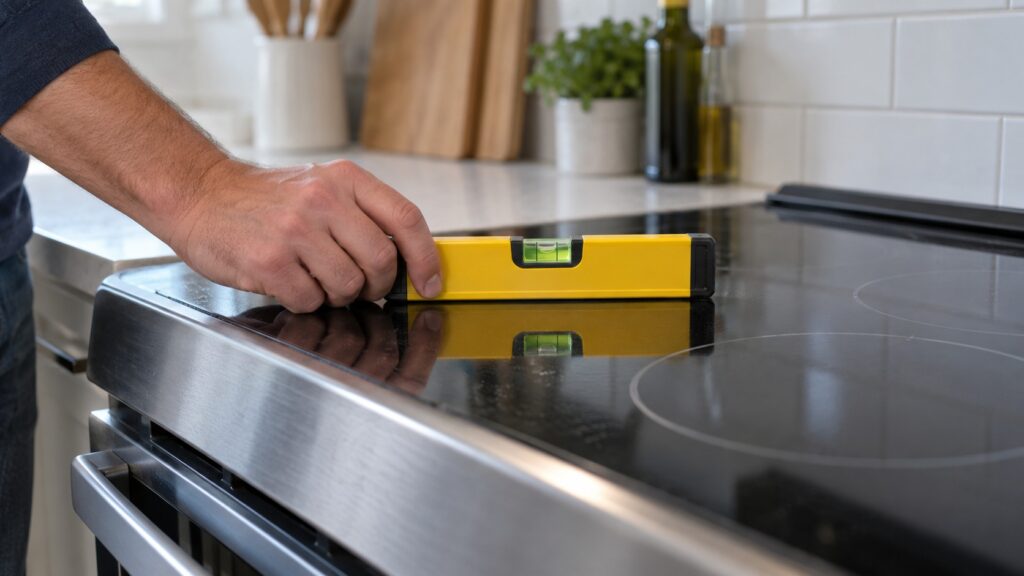
Use a bubble level on the cooking surface, and on an oven rack in the oven, in both directions. Place the level on the surface, not on a pan, and read it front to back and side to side. If the range is out of level, do not wedge shims under it. Adjusting the feet is described in your manual, but on a gas range it means moving or tilting the range, which is a job for an installer, because the gas connection and the anti-tip bracket are both affected. Check the oven door after leveling; it should close flush and evenly. Our oven door seal troubleshooting guide helps if it does not.
When should you call an installer or technician?
Call if the bracket is missing, bent, loose or never installed; if the range rocks or the floor slopes; if you smell gas; or if you need the range moved. A licensed installer should handle gas and electrical connections, and a technician can check the bracket and the leveling as part of a visit. Our DCS range repair page explains how a visit works, and the range vs rangetop buying guide may help if you are rethinking the layout.
It also helps to keep the paperwork. The installation instructions, the model number and any notes from the installer tell you what was done and which bracket was fitted. If you move house, show the next owner where the bracket is and what it does. If you ever replace the flooring, have the bracket reinstalled and checked by the installer afterward.