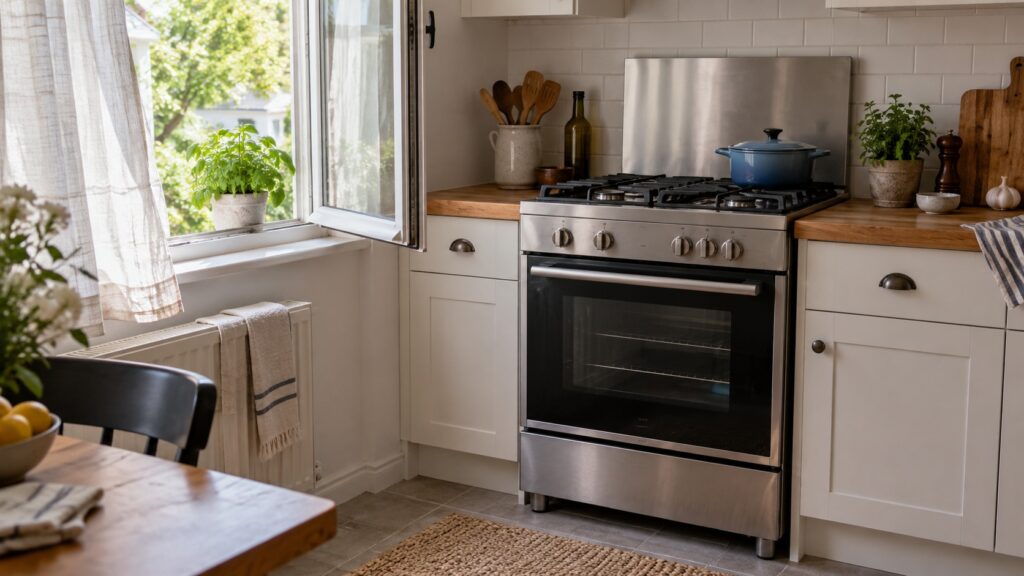
DCS gas leak safety starts with one rule: if you smell gas strongly, do not cook, do not touch switches and do not look for the cause yourself. Leave the house, then call your gas utility or emergency services from outside. A faint smell for a few seconds after you light a burner or the oven is a different and common situation, but it is still worth understanding, and this guide explains how to tell the two apart and what a technician looks for.
What should you do first if you smell gas near a DCS appliance?
Treat a real gas smell as an emergency. If you can reach the burner knobs or the oven control without delay, turn everything off, but do not search for the source. Open a door on your way out if it is easy, and leave the house with everyone inside. Do not light a match, flip a light switch, use a lighter or start a car in the garage. Even a small spark can ignite gas that has built up in a room.
Once you are outside and away from the building, call your gas utility’s emergency line or emergency services. Do not go back in until they say it is safe. Do not use the appliance again until a qualified technician has inspected it and the gas system has been tested. These steps matter more than any troubleshooting, and nothing in the rest of this guide replaces them. Our symptom pages for an oven gas smell and a range gas smell repeat the safety steps.
Is a brief gas smell at ignition normal?
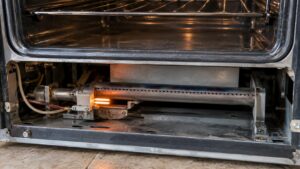
A brief smell can be normal. When an oven burner or a cooktop burner takes a moment to light, a little unburned gas escapes before the flame catches, and you may smell it for a second or two. A new appliance can also give off an odor when manufacturing oils burn off the first few times it is used. Neither case involves a leak in the supply line, and the smell clears quickly once the burner is lit.
The warning signs are a smell that lingers after the flame is lit, a smell when nothing is turned on, a hissing sound, a burner that clicks without lighting for a long time or a smell that returns each time you cook. A slow-lighting burner is a sign of a weak igniter or a dirty burner port, and it is worth fixing, because a longer delay means more unburned gas. If a burner clicks without lighting, turn it off and wait a few minutes for the gas to clear before you try again. Our guide to DCS range burner ignition troubleshooting covers the igniter side.
What can cause a gas smell in a DCS oven or range?
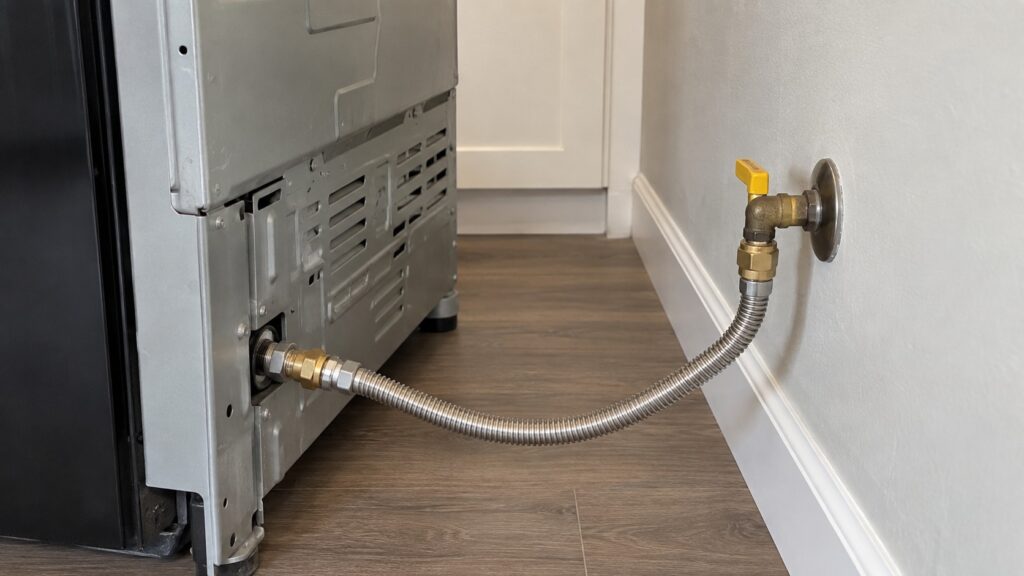
The possibilities range from harmless to serious. A slow ignition leaves a puff of gas. A dirty or partly blocked burner can burn badly and give off an unburned smell. A loose or worn connector at the back of the range, a faulty valve or a damaged supply line can leak. Food spills burning inside the oven can also smell like gas to some people, which is why a technician checks for an actual leak and does not rely on the nose alone.
An oven that has not been used for a while may smell of dust, grease and burnt residue when you first run it, and a self-clean cycle gives off a strong smell that is not gas. If you are unsure what you are smelling, the safe move is the same: stop and ask for an inspection. A gas smell near an outdoor grill is a related case, covered by our guide to the DCS grill igniter, where the lid should always be open when lighting.
What can you safely check yourself?
If the smell is faint, brief and tied to lighting, you can check the cheap things once the room is aired out. Clean the burner caps and ports with a soft brush, make sure the caps are seated and make sure the oven vent is not blocked by foil or a pan. Keep the area ventilated and pay attention to how quickly each burner lights. If a particular burner always delays, note it.
Do not test for leaks with a flame. A soap-and-water solution brushed on an external joint can show bubbles at a leak, but gas fittings should be tested and tightened by a qualified person with the right equipment, so we advise against doing it as a routine owner task. Do not tighten fittings, remove the back panel or adjust the pressure regulator. Those are technician jobs, and a mistake can create the danger you are trying to remove.
When should a technician inspect the appliance?
Any time you have smelled gas beyond a brief puff at lighting, and any time a burner is slow to ignite or burns yellow and sooty. Also call after a move, a new installation or work on the gas line, because connectors and shutoff valves should be checked once everything is in place. Tell the technician which appliance, what you smelled and when, and whether the gas utility has been involved.
A visit for a slow igniter or a dirty burner is usually a small repair, and it is far cheaper than ignoring the symptom. Our DCS oven repair page explains what happens on a visit. You can describe the problem and schedule a visit online, but if you smell gas right now, put the phone down, leave the house and call the gas utility from outside.