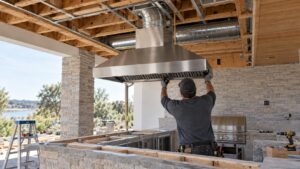

A DCS range hood does more than pull smoke upward — every cubic foot of air it exhausts has to be replaced by air coming from somewhere else, and how that replacement air arrives is what decides whether the hood works quietly or lets outdoor air and odors flow straight back into a covered kitchen. Understanding how DCS range hood makeup air and the backdraft damper work together is the fastest way to tell a mechanical problem from a windy afternoon, and it explains most range hood complaints that are not the blower motor or a dirty filter.
What does a backdraft damper actually do?
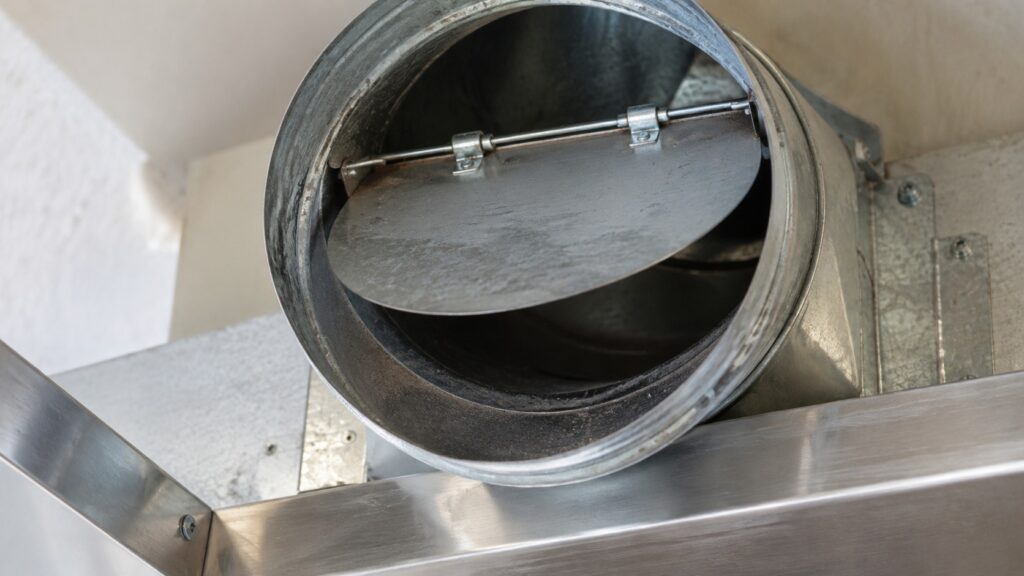
The damper is a hinged flap inside the duct, close to where it exits the hood or the wall cap. When the blower runs, air pressure pushes the flap open and exhaust flows out. When the blower stops, the flap is meant to fall closed under its own weight or a light spring, sealing the duct so outside air, insects and weather cannot travel back down it into the kitchen. A damper that has collected grease, or one whose hinge has corroded from outdoor exposure, stops closing fully — and that gap is exactly what lets outdoor air, and the smells riding on it, drift back into a covered patio kitchen between uses.
Why does makeup air matter more for an outdoor hood than an indoor one?
Indoors, a range hood exhausting air is offset by air leaking in through the rest of the house — gaps around doors, other vents, general infiltration. A covered outdoor kitchen is a much more open structure, so in principle makeup air is rarely scarce. The problem runs the other way: wind moving across an open-sided structure creates pressure differences at the hood opening itself, and that pressure fights the exhaust stream rather than replacing it cleanly. A hood sized correctly for a sealed indoor space can struggle in a windy outdoor location for reasons that have nothing to do with the blower’s condition.
How does CFM rating connect to the backdraft and makeup-air behavior?
A hood’s CFM (cubic feet per minute) rating describes how much air it can move outward. A higher-CFM hood exhausts faster, which means the damper has to open wider and stay open longer during use — more mechanical cycling, and more grease passing directly over the hinge. It also means more air needs to move past the hood opening to replace what left, which is why an undersized hood on a large grill bay often shows backdraft symptoms even with a perfectly clean damper: the airflow at the opening is simply not strong enough to keep outdoor air from finding its way back in around the edges.
Why does a DCS range hood sometimes seem to run in reverse?
What feels like the hood pulling air backward is almost always the damper failing to seal combined with wind pressure at the duct termination outdoors. Wind hitting an exterior wall cap head-on can push air back through a damper that is not closing tightly, and on a gusty day that shows up as smoke or odor drifting back into the covered area even while the blower is running normally. This is a mechanical and positional problem, not an electrical one, which is why cleaning and testing the damper comes before checking the blower motor.
Does the season change how a DCS range hood’s backdraft behaves?
Yes, more than most owners expect. Cold, dense outdoor air sinks and can settle into a duct run more readily than warm air, which makes a marginal damper seal noticeably worse on a cold morning than on a warm afternoon even with nothing mechanically different about the hood. Prevailing wind direction also shifts with the season in a lot of climates, which changes how hard wind loads the duct termination at different times of year. A damper that sealed fine all summer and starts showing backdraft symptoms once fall wind patterns set in is not necessarily failing — it may simply be facing a wind direction it was not tested against before.
How do I know if this is a mechanism problem or an installation problem?
Test the damper by hand with the blower off and the duct disconnected if you can reach it: it should swing freely and return to a fully closed position under its own weight. If it does, and the backdraft symptom is worse on windy days and better on calm ones, the duct termination point or the wall cap’s orientation relative to prevailing wind is the more likely cause, and that is an installation question rather than a parts question — covered from the ducting side in our range hood installation requirements guide. If the damper itself is stiff, corroded or coated in grease and will not swing freely, that is the part to clean or replace first.
A quick way to separate the two without disassembling anything: note the wind direction on a day the symptom is bad, and check it again on a calm day. A mechanism that behaves the same regardless of wind points squarely at the damper hardware; one that only misbehaves when wind is blowing toward the termination point points at the duct’s exit position instead, which is a placement question rather than a parts question.
It is also worth checking the damper on a still day and again on a windy one before drawing a conclusion, since the same hardware can look fine in calm conditions and fail only when wind is pushing against it. If the symptom is consistent regardless of weather, that points more strongly at the damper hinge itself needing cleaning or replacement rather than at the duct termination or the surrounding structure.
Our range hood backdraft troubleshooting page walks through the same checks with the specific symptoms to look for, and our range hood usage tips cover running the blower a few minutes after cooking to clear residual heat before the damper closes. We are an independent repair company, not a factory service arm. DCS range hood repair covers dampers, blowers and duct issues, and pricing starts from a diagnostic visit with the estimate confirmed before any work begins. Schedule a visit online or call 1-844-487-0065.