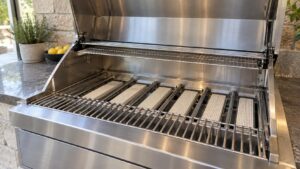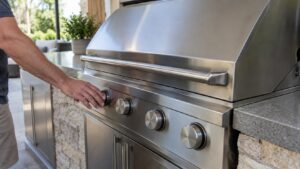

The term rotisserie infrared burner describes the dedicated rear burner on DCS grills used for spit roasting. This glossary entry explains what it is and how it differs from the main burners.
What it is
Mounted at the back of the grill, the rotisserie infrared burner radiates concentrated, even heat horizontally onto food turning on the spit. Unlike the main U-shaped burners below the grate, it is positioned and shaped for roasting rather than direct grilling.
Why infrared
- Infrared heat browns the surface evenly as the spit turns.
- It cooks from the side, ideal for whole chickens, roasts, and lamb.
- The turning motion self-bastes the food in its own juices.
How it is used
For rotisserie cooking you run the rear infrared burner with the main burners off, close the lid, and let the motor turn the balanced load. See our rotisserie setup guide for the full procedure.
Caring for it
Keep the burner area clear of drippings and confirm it ignites cleanly. For specifications on which models include it, see the manufacturer’s site at dcsappliances.com.
Service
If the rear infrared burner will not light after cleaning, it is a mechanical ignition issue – our grill repair team can service it; schedule a visit.
Infrared vs convection roasting
An oven roasts with convection heat surrounding the food. The rotisserie infrared burner roasts with direct radiant heat from the side as the food turns into and out of it. The result is a deeply browned, crisp exterior with a juicy interior – the classic rotisserie texture that a still oven cannot quite match.
Balance is essential
- An unbalanced spit makes the motor labor and browns unevenly.
- Use the counterweight so the load turns smoothly.
- Center the food in front of the burner.
Related terms
The rotisserie infrared burner complements the U-shaped burners and Grill Tower for direct grilling. Understanding all three shows how versatile a DCS grill is. To roast successfully, follow our rotisserie setup guide.
Rotisserie Infrared Burner: Key Takeaways
To recap on rotisserie infrared burner: work through the simple checks first, keep the appliance clean and correctly set up, and address small symptoms before they grow. The guidance above on rotisserie infrared burner reflects how our certified technicians approach the same issues in the field, and following it keeps your DCS appliance performing the way it was built to.
- Start with the easiest, lowest-cost checks and confirm the basics before replacing parts.
- Use only genuine DCS-specified parts so performance and safety are not compromised.
- Keep up a regular maintenance routine, which prevents most problems and protects long-term value.
- Know when a job needs a professional, especially anything involving gas, sealed-system refrigeration, or mains wiring.
If the steps here do not resolve your situation, the next move is a proper diagnosis rather than guesswork. Our team covers DCS cooking and outdoor appliances across all 50 states and 120+ metro areas, and the booking form accepts requests 24/7. You can schedule a service appointment at any time, review full specifications on the manufacturer’s site at dcsappliances.com, or browse comparable units on our model pages. Acting early on rotisserie infrared burner almost always means a smaller, simpler, and less expensive repair down the line.
When to call a DCS technician
It is worth being clear about the line between sensible owner maintenance and work that belongs with a professional. Routine cleaning, simple resets, and basic setup are well within reach for most owners and are exactly where this guide focuses. Anything involving a gas connection, a sealed refrigeration system, internal wiring, or a part that must be calibrated or pressure-tested is different: those repairs carry real safety and warranty implications and should be handled by a certified technician with the correct tools and genuine DCS parts. A DCS appliance is a long-term investment built from 304 stainless to last for decades, so it is almost always worth maintaining and repairing properly rather than letting a small problem compound. When in doubt, a quick diagnostic visit removes the guesswork, protects the appliance, and gives you a clear, written quote before any work begins so there are never surprises.