The DCS ranges lineup
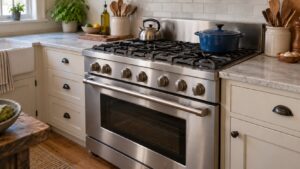
DCS ranges are pro-style indoor cooking ranges built by DCS (Dynamic Cooking Systems), a Fisher & Paykel company, from 304-grade stainless steel and engineered for serious home cooks. The lineup spans 30, 36, and 48-inch widths in both all-gas and dual-fuel (DF) configurations. Gas models carry the RGV prefix — for example RGV2-305 and RGV2-485GDL — while dual-fuel builds use the RDV and RDT prefixes, such as RDV2-485GD, pairing gas burners with an electric convection oven. Older units may wear the RGS or RGSC codes. Up top, sealed dual-flow burners deliver a wide simmer-to-sear range, and the oven cavities run true convection. You can review the current catalog on the manufacturer’s site at dcsappliances.com, and browse the configurations we service in our model directory.
Burner technology and dual-fuel design
The defining feature of the rangetop is the sealed dual-flow burner, which combines a high-output flame for boiling and searing with a true low simmer from the same burner. On dual-fuel models the gas burners sit above an electric convection oven, giving precise, dry baking heat alongside lively gas cooking. The larger 48-inch ranges add extra burners, optional griddle modules, and a second oven cavity. Because each range is configured by size, fuel type, and module layout, the exact igniter, valve, thermostat, or element a unit was built with varies — which is why model-matched parts matter for any repair.
Gas versus dual-fuel
Choosing between an all-gas RGV and a dual-fuel RDV/RDT comes down to how you bake. The gas oven offers the moist, lively radiant heat many cooks prefer for roasting, while the dual-fuel electric oven delivers steady, precise temperatures favored for pastry and baking. From a service standpoint the two diagnose differently: the gas oven centers on its glow-bar igniter, safety valve, and thermostat, while the electric oven depends on its element, sensor, and control board. Identifying which circuit is misbehaving is the first step toward a correct repair.
Common DCS range problems
DCS ranges use mechanical and electromechanical controls, so they report trouble as symptoms rather than digital error codes. The issues we see most often:
- Burner won’t ignite — clogged burner ports or a wet, dirty, or cracked igniter electrode.
- Continuous clicking — moisture after cleaning keeps the spark module firing.
- Weak or yellow flame — a clogged orifice or air-shutter misadjustment, sometimes after an LP/NG conversion.
- Oven not heating — a weak glow-bar igniter that no longer opens the safety valve.
- Uneven baking — thermostat calibration drift or a failing convection fan.
- Stuck burner knob or valve — dried grease or a worn valve stem.
These are symptom diagnostics, not coded problems — see our range symptom guides for step-by-step troubleshooting.
Maintenance essentials
A well-kept DCS range will last for decades:
- Clear sealed-burner ports with a pin after spills to keep flames even.
- Wipe the 304-stainless surfaces with the grain using a non-abrasive cleaner.
- Verify oven calibration with a thermometer if results drift hot or cold.
- Inspect the oven door gasket annually for heat loss.
- Keep grates and burner caps seated correctly after cleaning.
Why DCS ranges last
DCS ranges are built around commercial-kitchen logic: heavy 304-stainless construction, serviceable burners, and components designed to be replaced rather than discarded. That makes them strong candidates for repair rather than replacement, even on units a decade or more old, because the sealed burners, igniters, valves, and elements are individually available. When you weigh repair against replacement, the deciding factors are usually the cost of the failed part and whether the cabinet and gas/electrical infrastructure are still sound — and on a pro-grade DCS range, they almost always are. Confirming the exact RGV, RDV, or RDT model and serial lets a technician source the correct genuine part the first time instead of guessing at a generic substitute.
When to call a professional
Gas valves, dual-fuel control boards, igniters, and convection elements are best left to certified technicians. Our techs carry common DCS parts and diagnose by configuration and model number. Diagnostic visits start from $129; final cost depends on parts and configuration. Schedule DCS range repair or book an appointment online.