
How DCS rangetops work
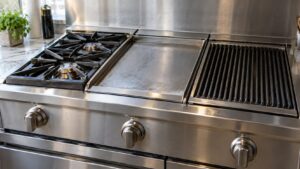
Expert DCS rangetop repair begins with the fact that a DCS Rangetop is a cooktop-only unit designed to drop into custom cabinetry above a wall oven or cabinetry of the owner’s choosing. Built by Fisher & Paykel company DCS in 30″, 36″, and 48″ widths from 304-grade stainless steel, the CPV and VRT families use the same sealed dual-flow burners as the ranges, delivering both a high sear output and a controlled low simmer. Many rangetops add an integrated griddle or grill module, which broadens the cooking options but also adds dedicated burners and thermostats to the appliance. Because each rangetop is configured individually — burner count, griddle or grill modules, fuel type — service starts by confirming exactly which modules are installed.
Burner and module technology
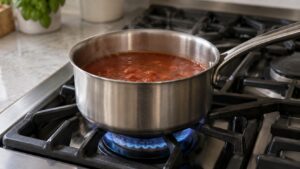
The sealed burners are fed through manifold valves with electronic spark ignition, and flame quality depends on clean ports, the correct orifice, and an air shutter set for the installed fuel. An integrated griddle module uses its own burner and thermostat to hold a flat-plate temperature, while a grill module burns gas beneath radiants and needs the ports and radiants kept clean for even heat. A DCS Rangetop is a mechanical appliance — there is no digital problem display — so problems present as symptoms such as a burner that won’t ignite, a flame that lifts off, or a griddle that won’t heat. Each symptom is diagnosed by component-level testing rather than by reading a code; our rangetop symptom guides explain the most common ones.
Common DCS rangetop repair problems
Typical rangetop repairs include a single burner that clicks but won’t ignite, continuous clicking from trapped moisture or a cracked electrode, a weak or yellow flame, a simmer setting that runs too hot, and a griddle or grill module that fails to reach temperature. A flame that lifts off the burner usually means over-pressure from a misadjusted regulator, an air shutter open too far, or the wrong orifice for the fuel. Corroded grates and burner caps are cleaned and re-protected, or replaced when pitting is deep. A gas odor at any fitting is treated as urgent — shut off the rangetop and request service immediately rather than continuing to use it. Most DCS rangetop repair work is completed in one visit once the affected module and burner are identified.
Maintenance for a DCS rangetop
A rangetop installed above a wall oven shares its ventilation and cabinetry, so keeping the surrounding area clear matters as much as cleaning the burners. Brushing out the port set, drying the electrodes after washing, and keeping the griddle or grill module free of carbonized grease all reduce the most common service calls. The simmer plate and griddle thermostat hold calibration longer when the plate is wiped down warm rather than scraped cold, and cast grates last far longer when they are dried and lightly oiled instead of left wet. If the rangetop drops into a custom outdoor or indoor kitchen, confirming the gas supply pressure and regulator match the installed fuel keeps the sealed burners delivering full sear output. Keeping the area around the unit clear of clutter also protects the manifold valves and supply connections from accidental knocks that can loosen a fitting. Model references such as CPV2-304 and CPV2-486GD on our model pages list the matching burners, valves, and module parts for each width, so the right components can be sourced before a technician arrives.
Service, parts, and warranty
Repairs use genuine OEM burners, electrodes, valves, orifices, and module components matched to the installed configuration. Our certified technicians serve all 50 states and 120+ metro areas, and you can book through the scheduling page any time — the form accepts requests 24/7, with same-day visits where availability allows. Diagnostic visits start from $129; the final cost depends on which modules and parts are involved. Module options and specifications are published by the manufacturer at dcsappliances.com. To compare a rangetop against a drop-in cooktop, see our cooktop repair page.